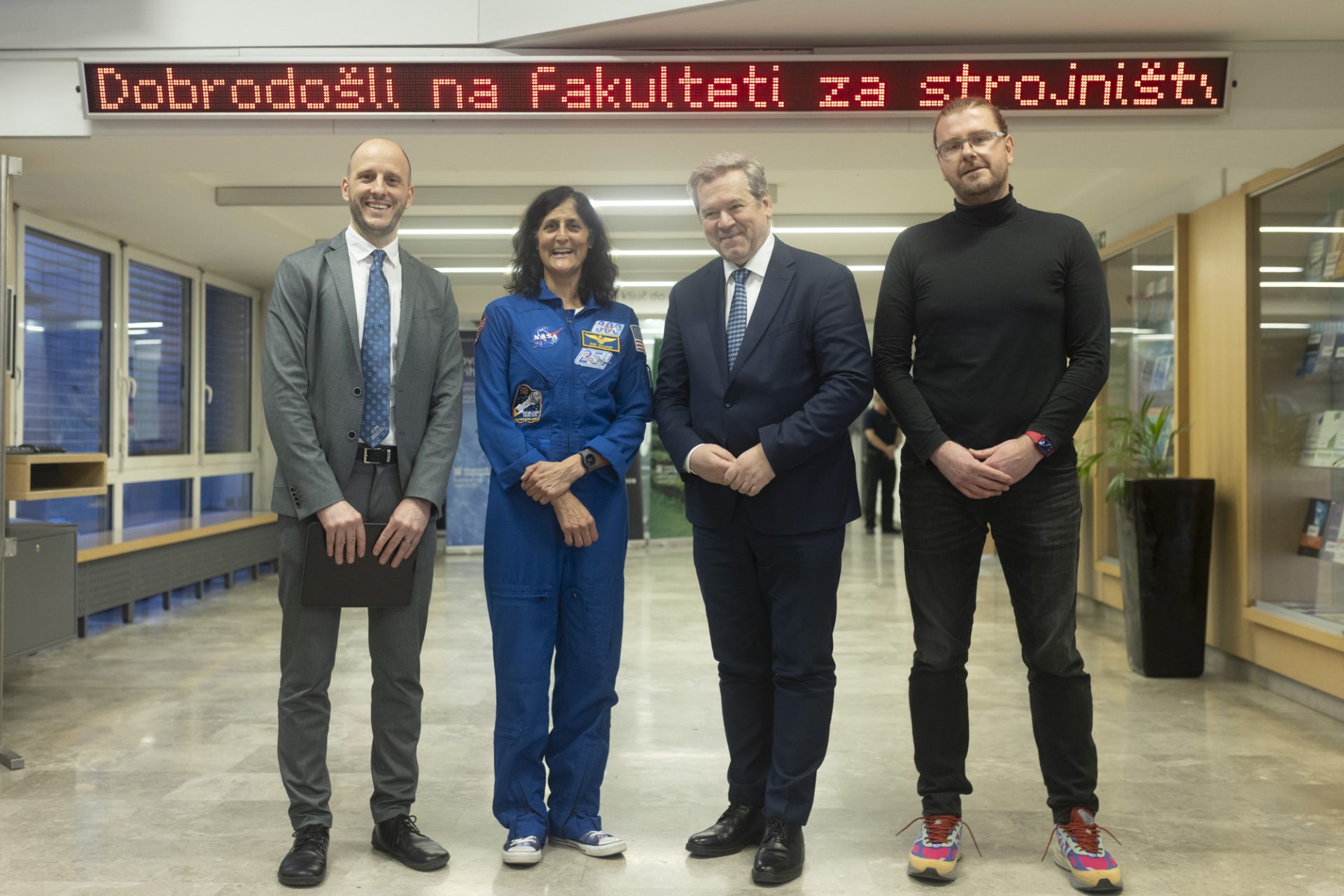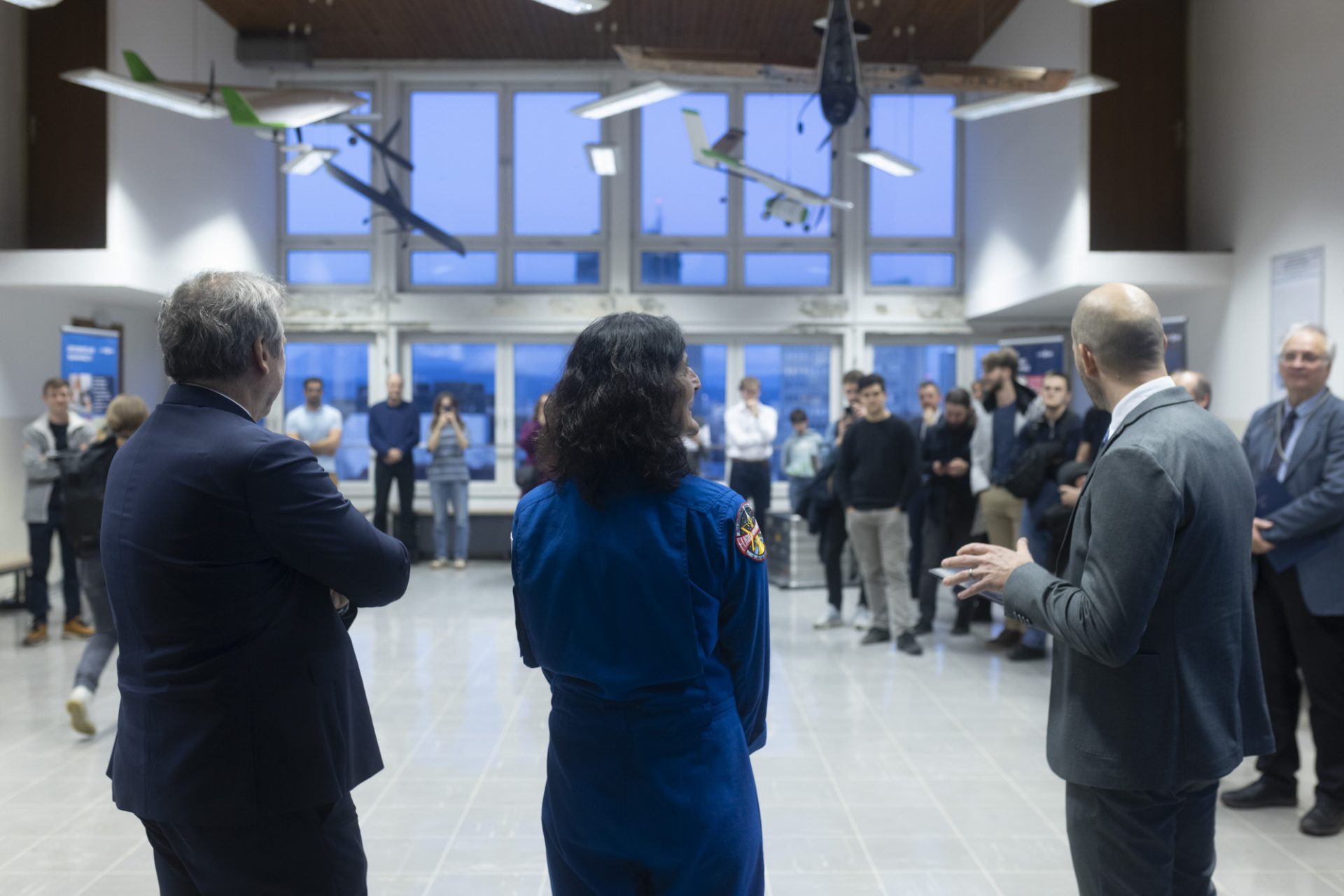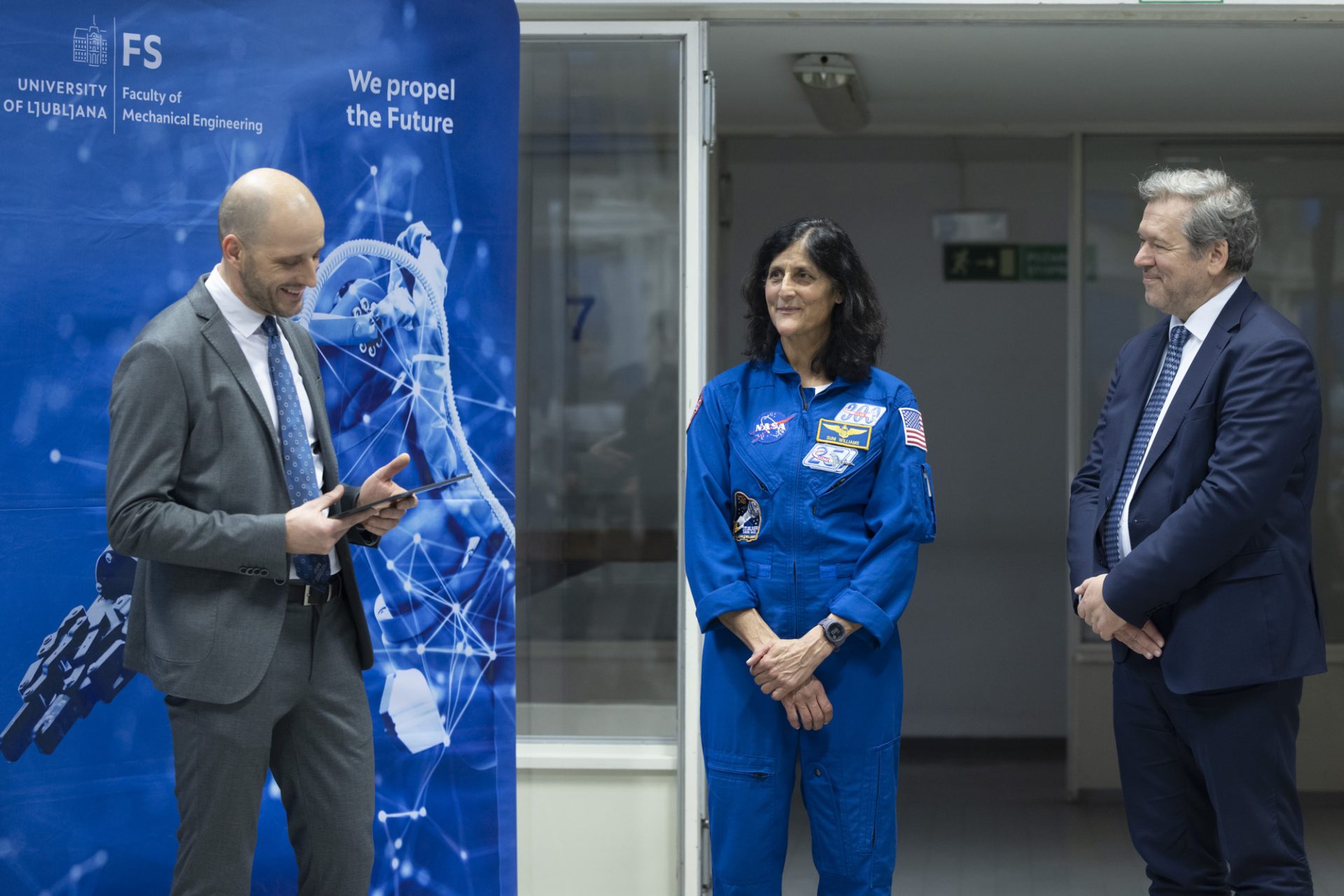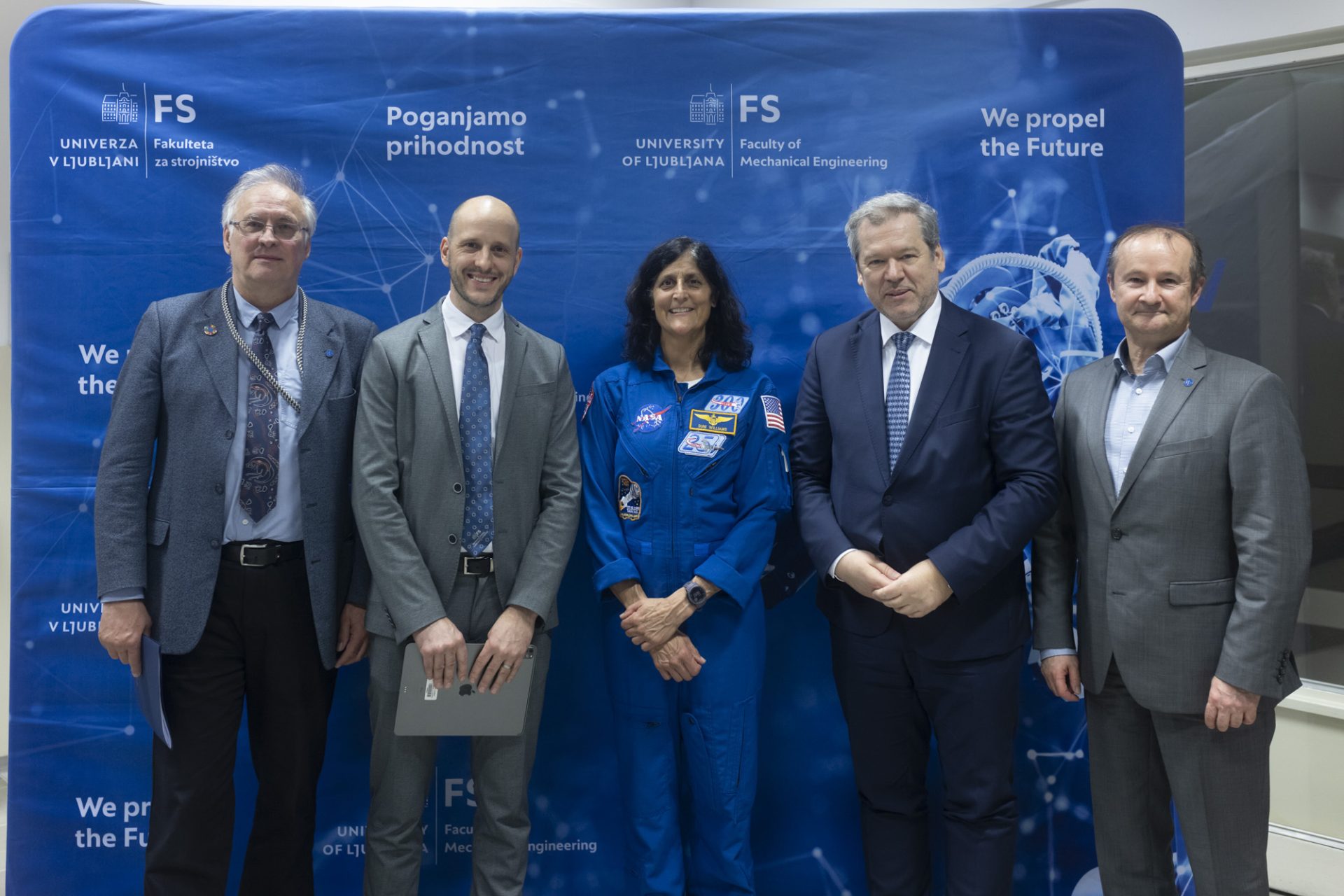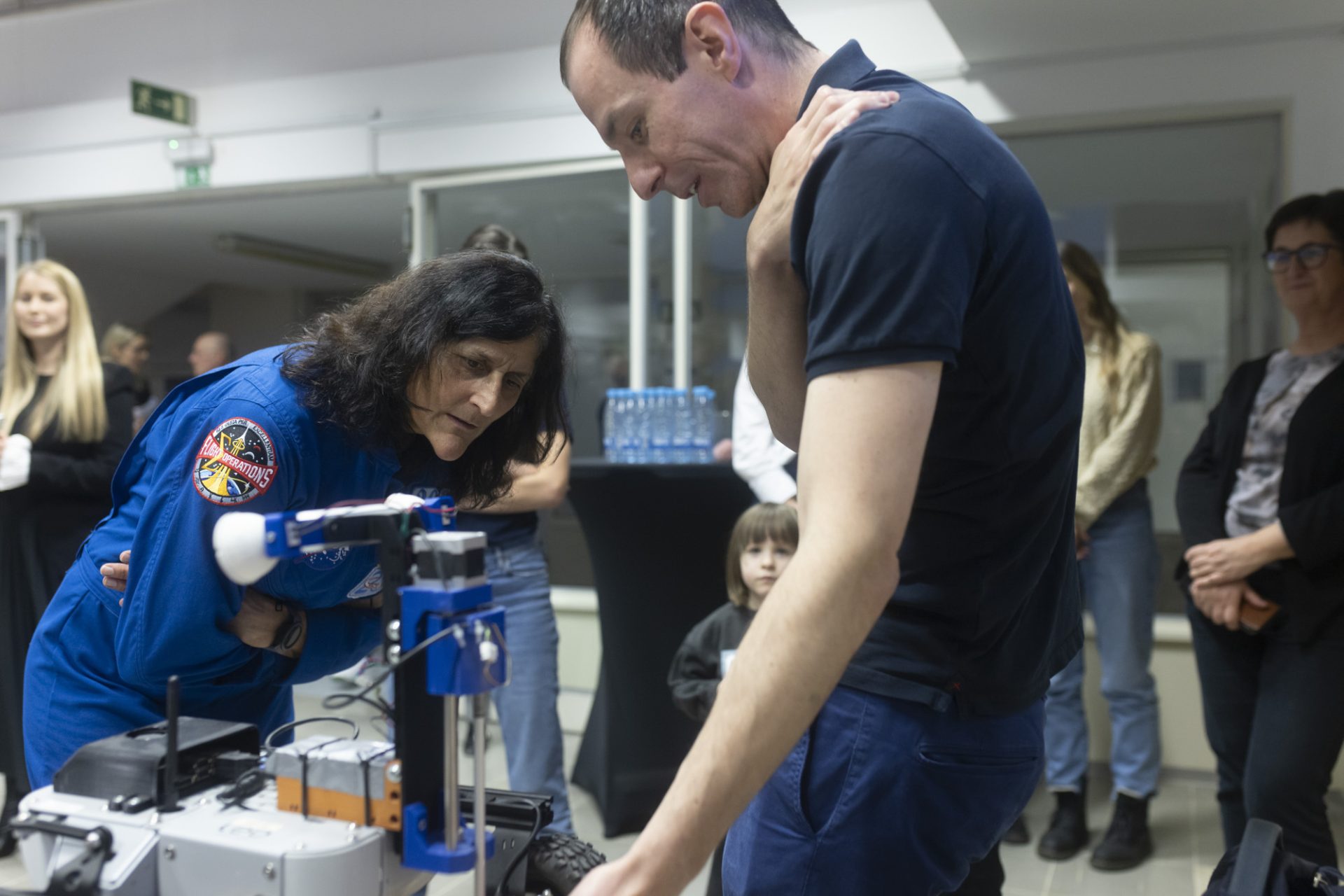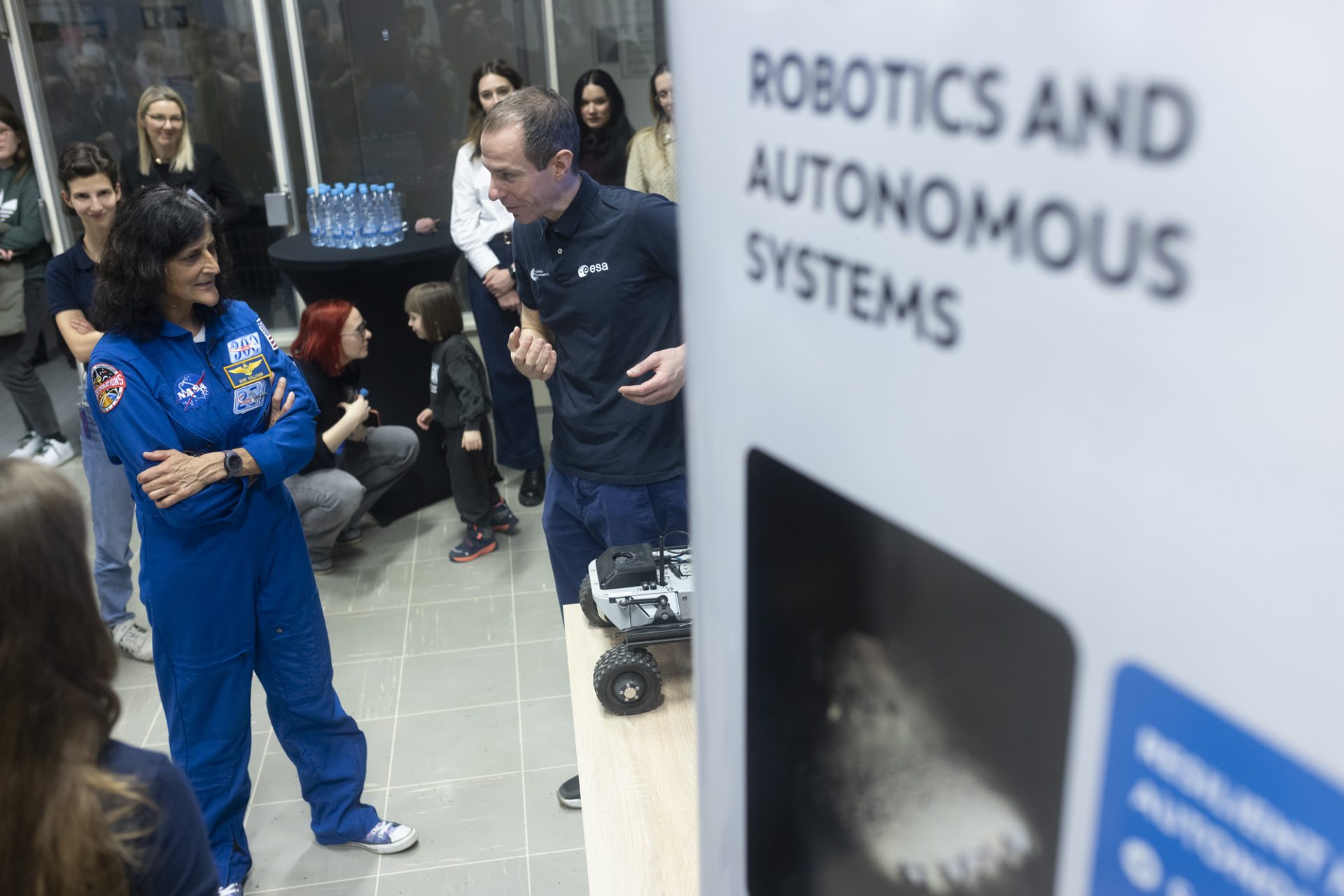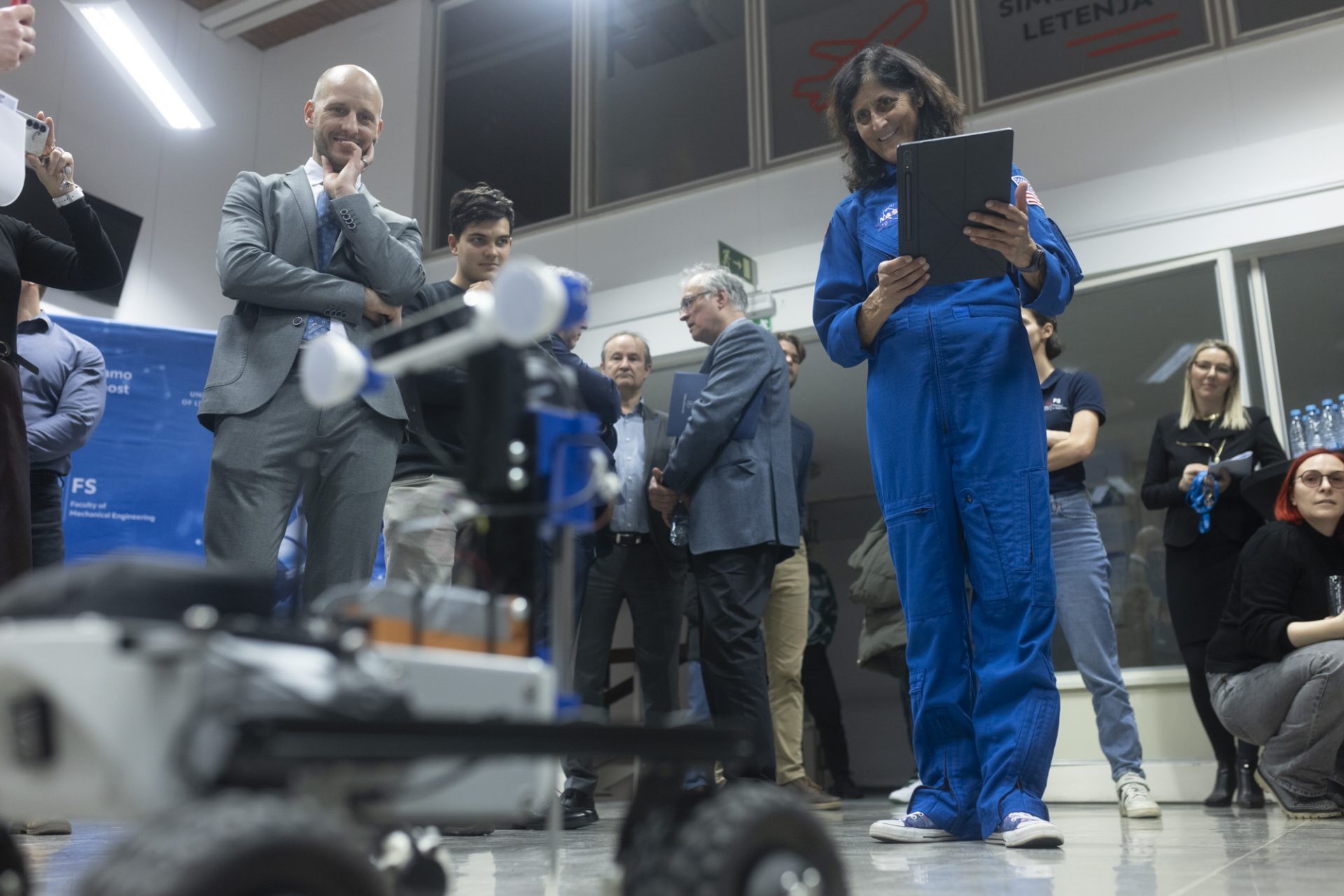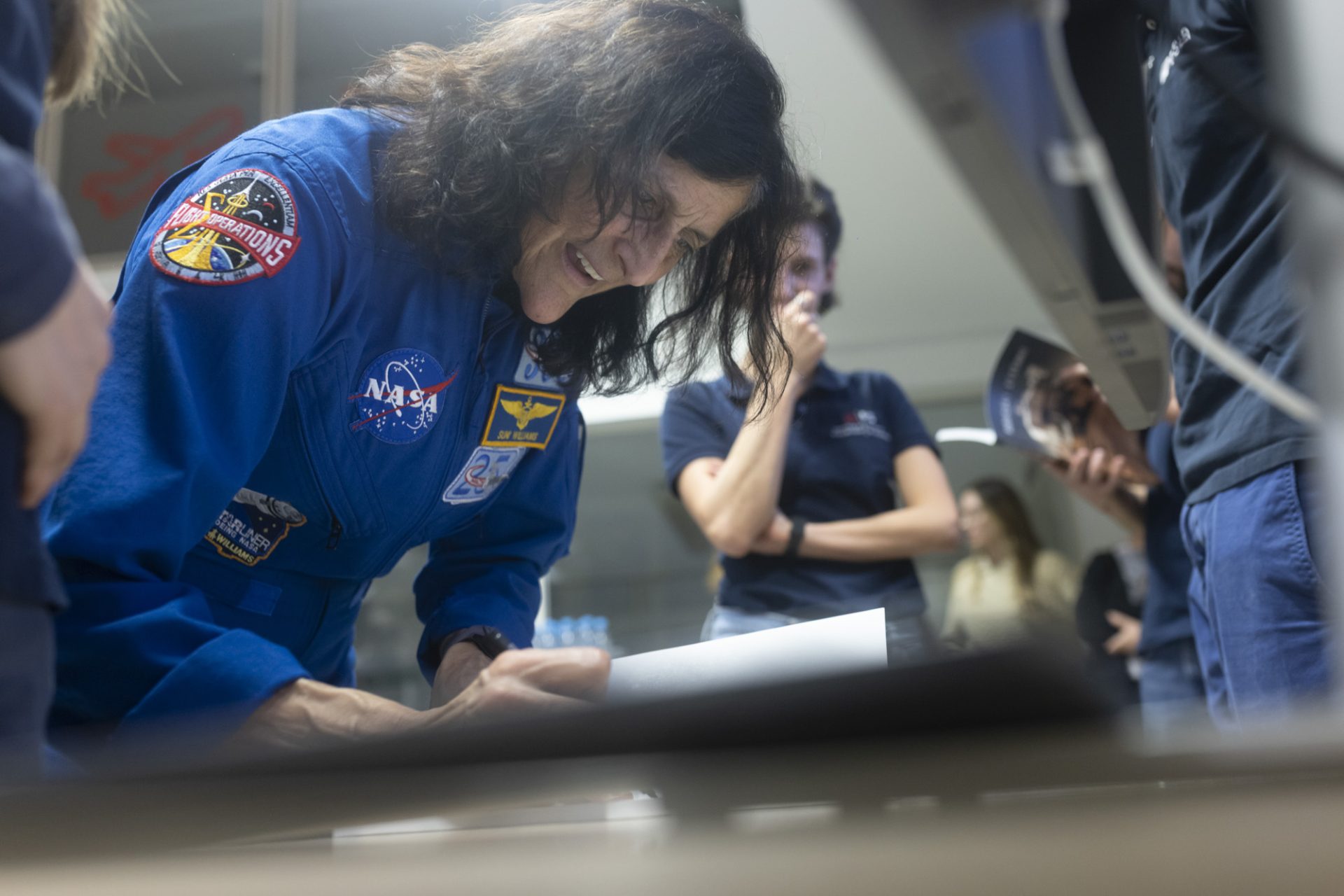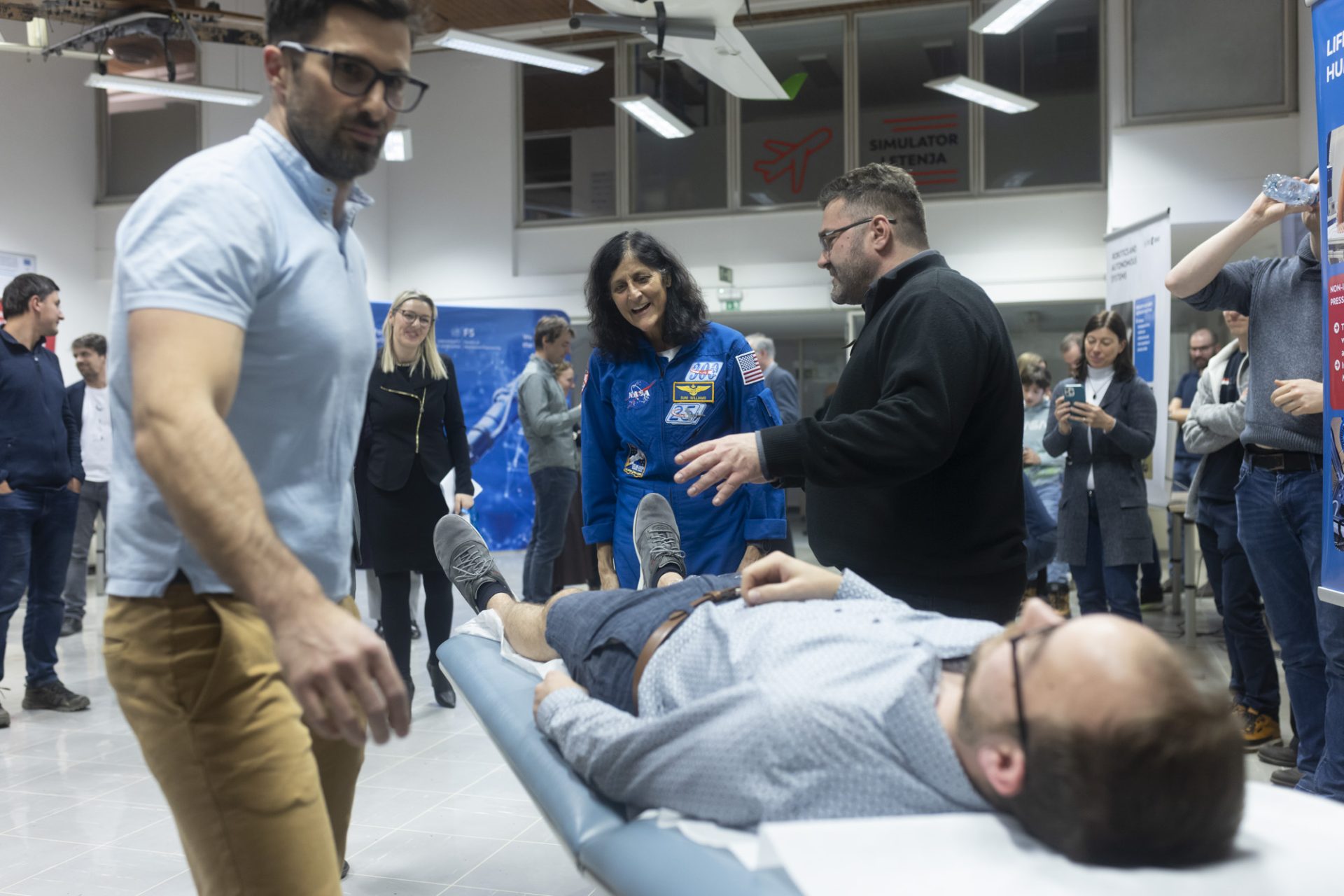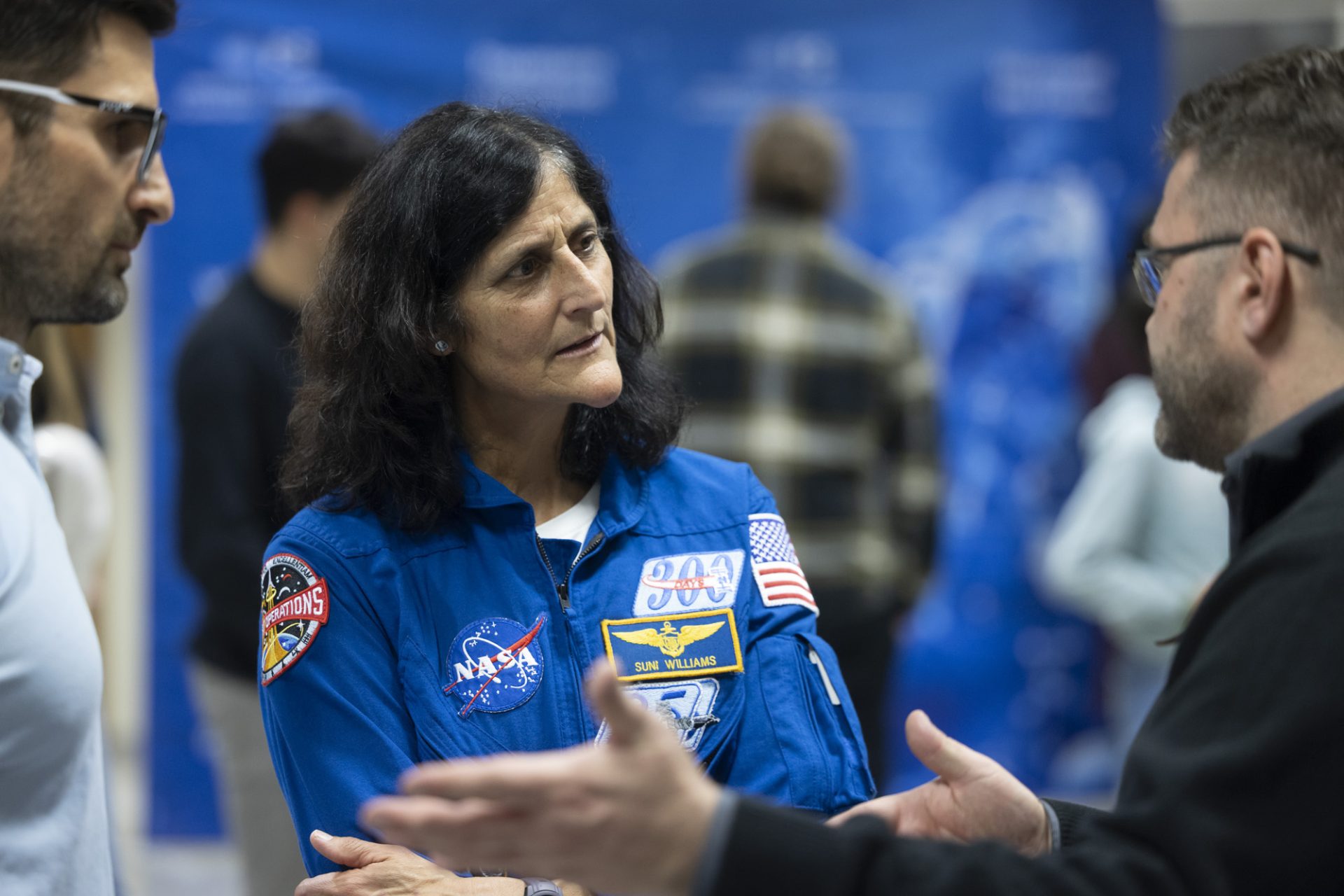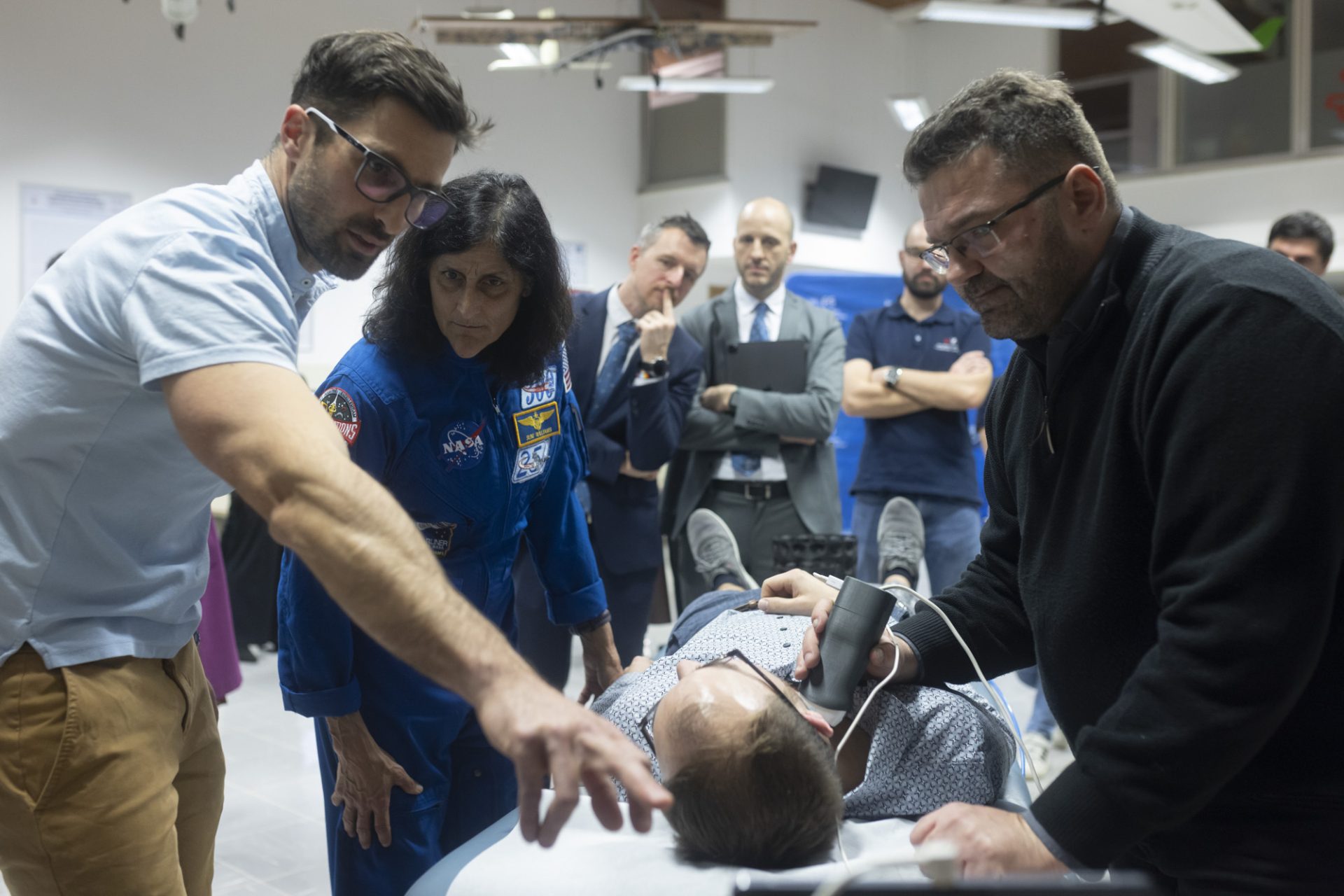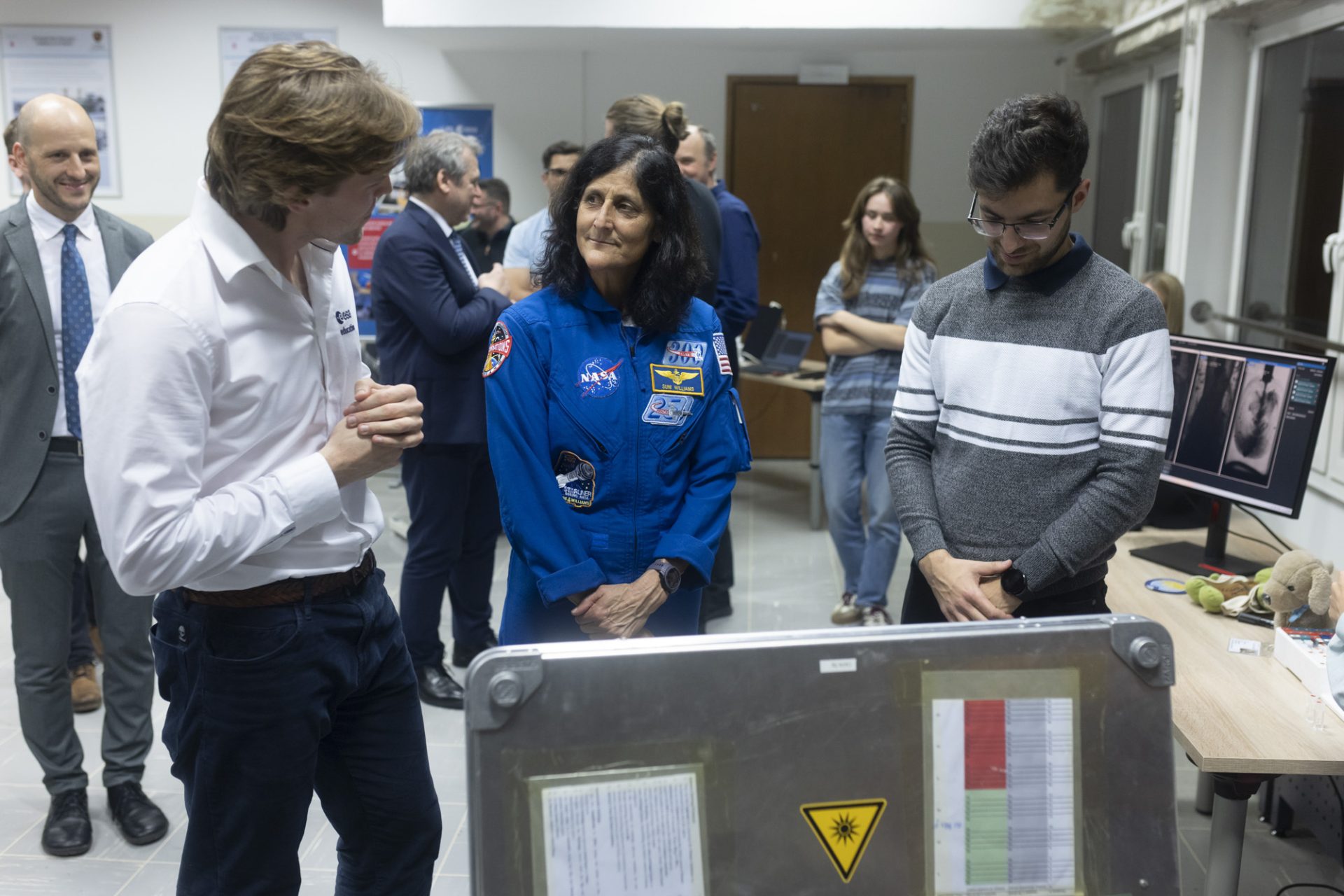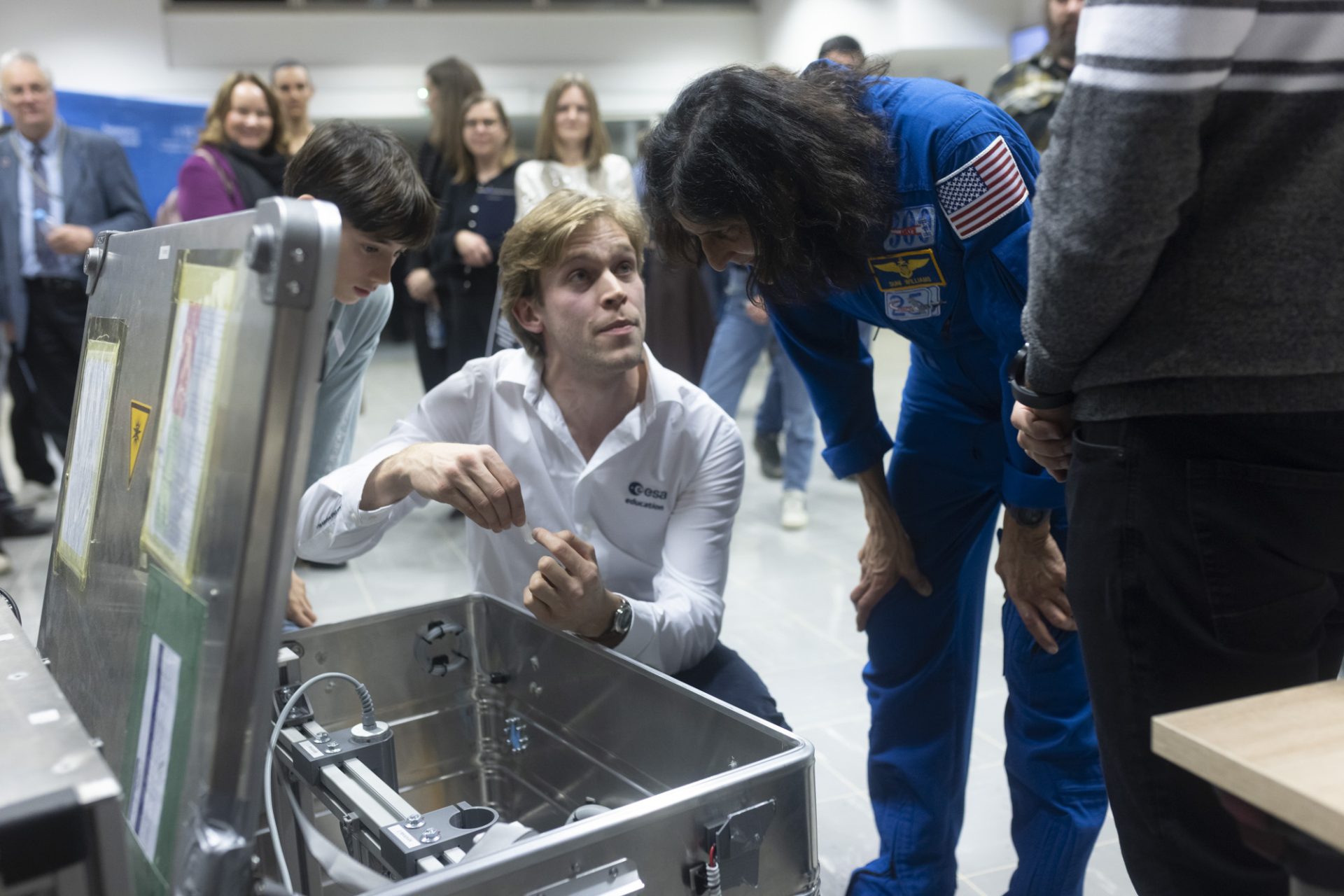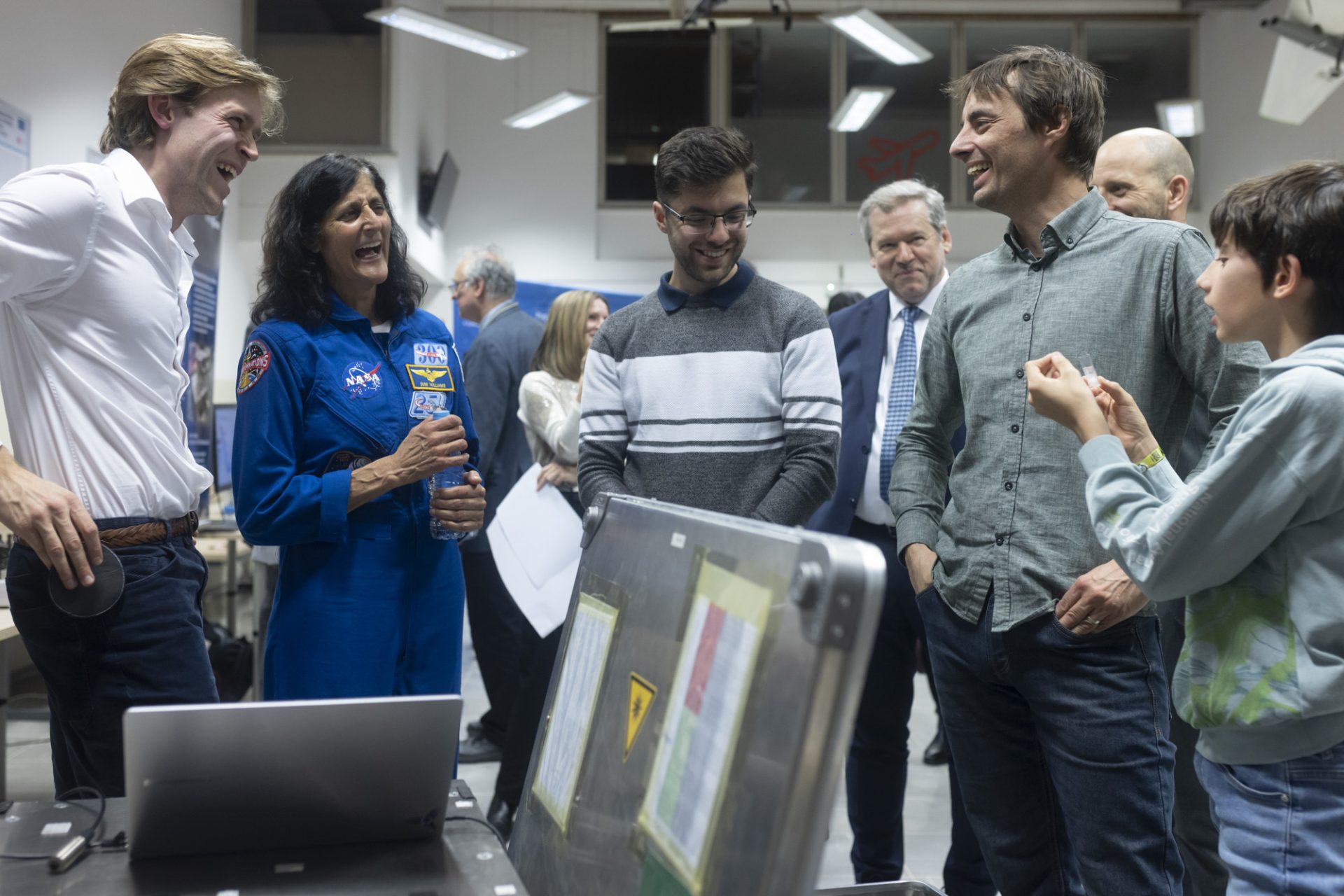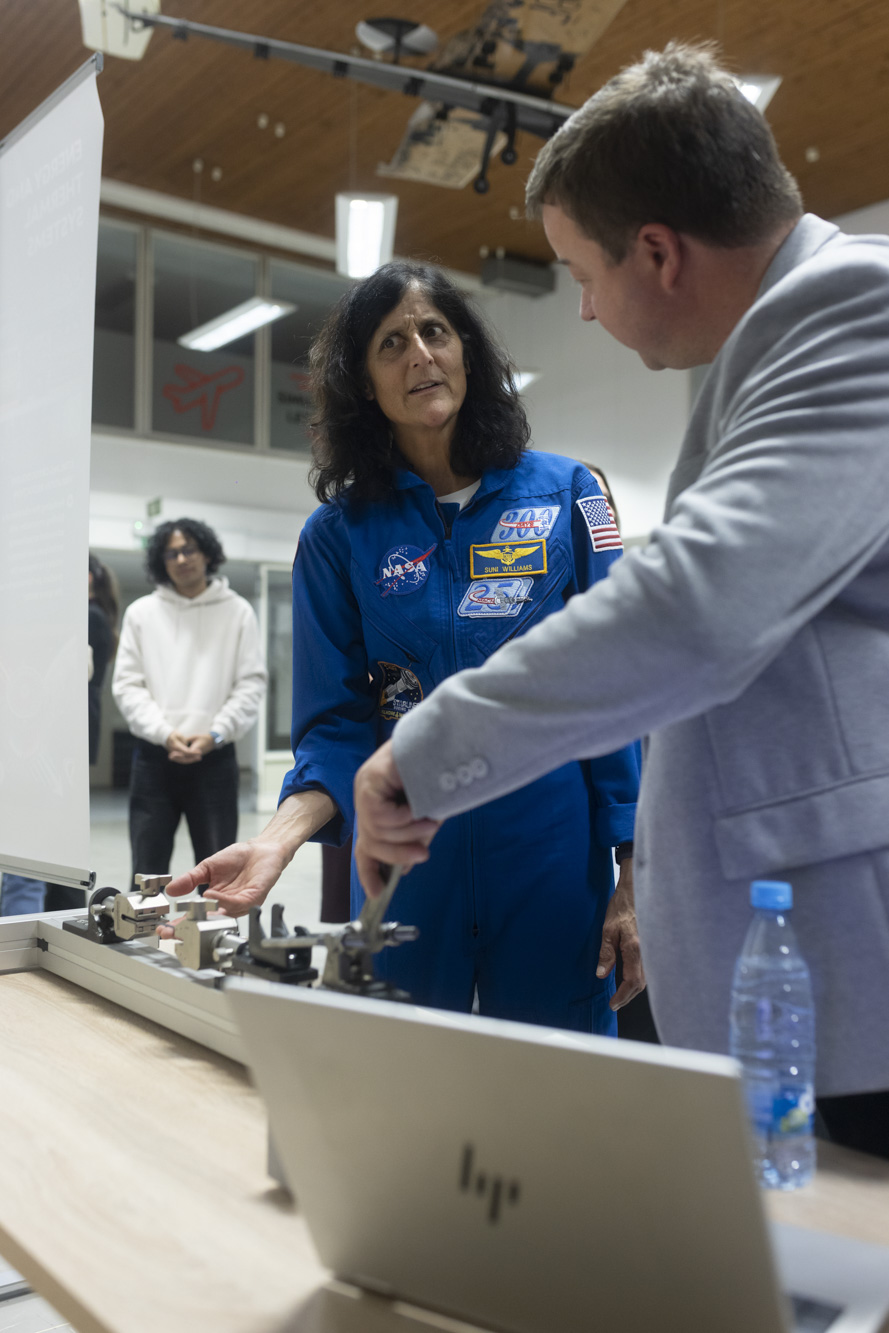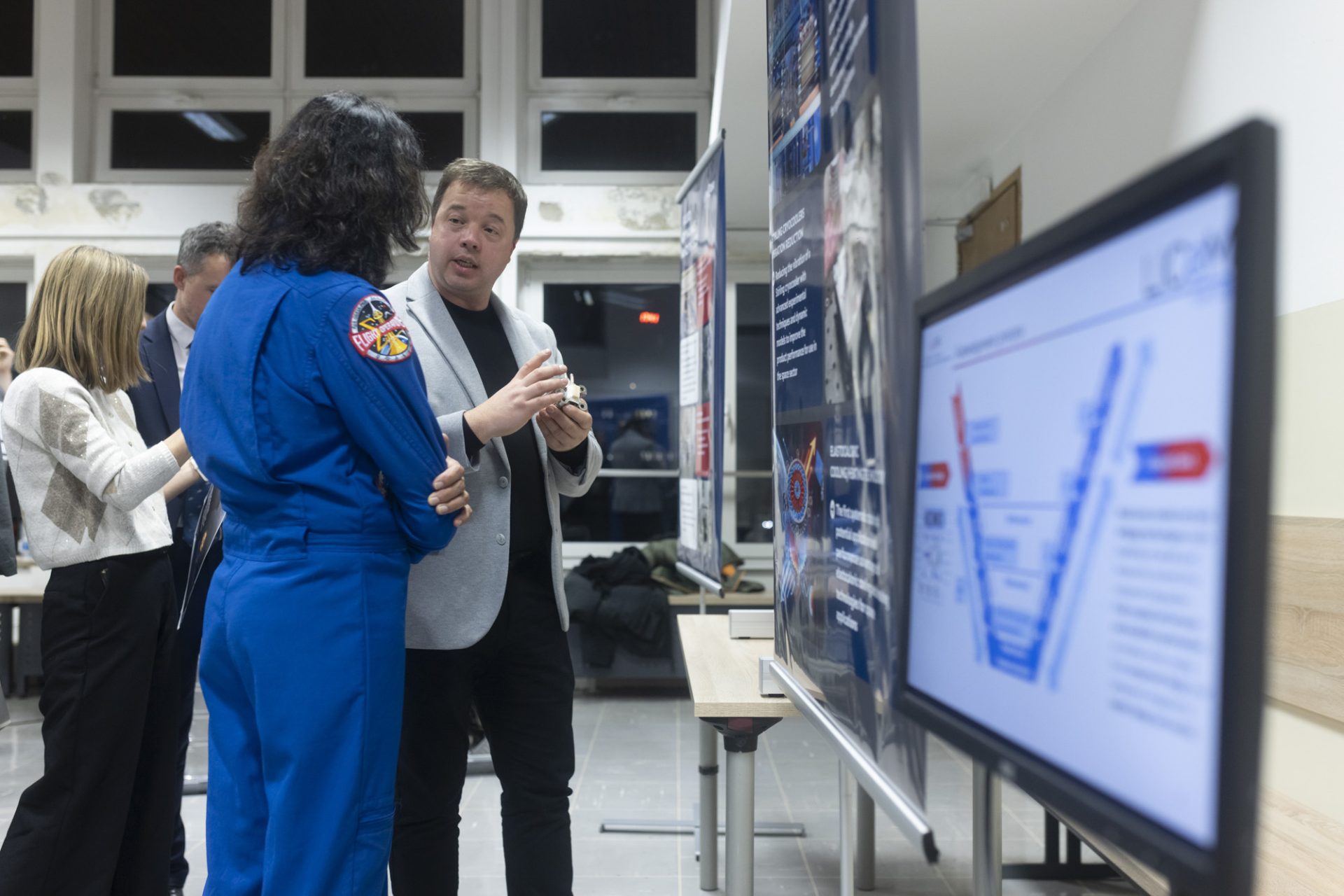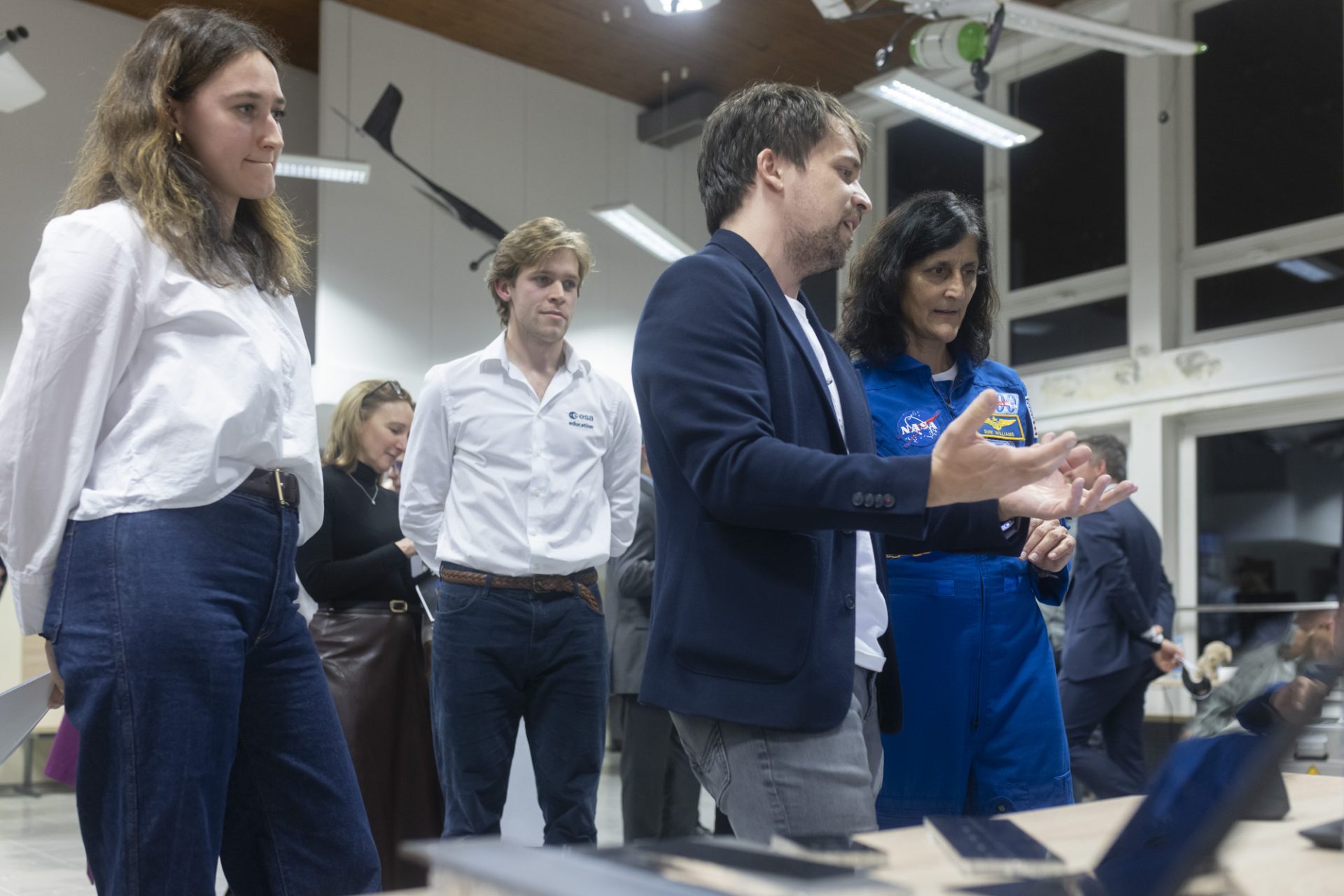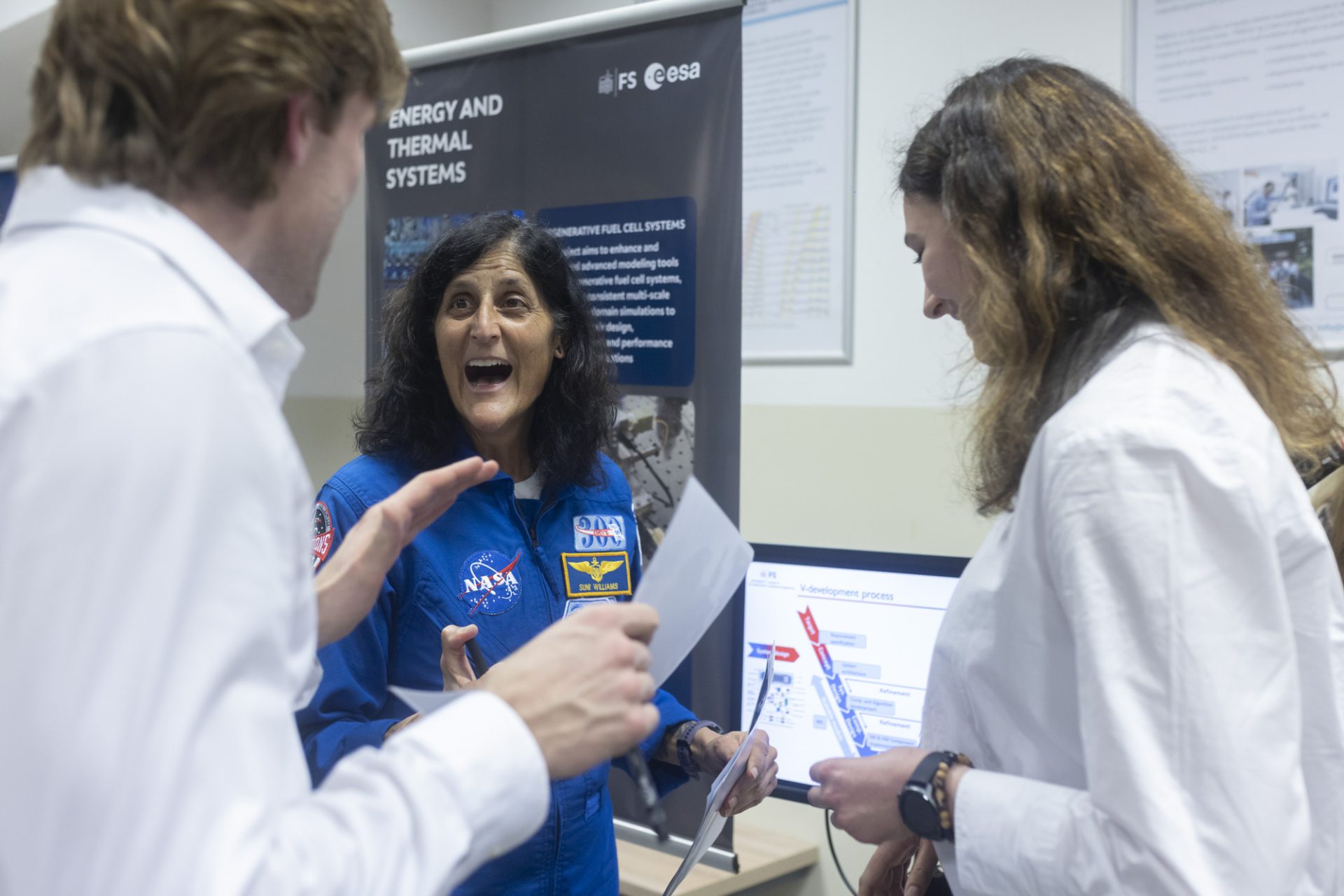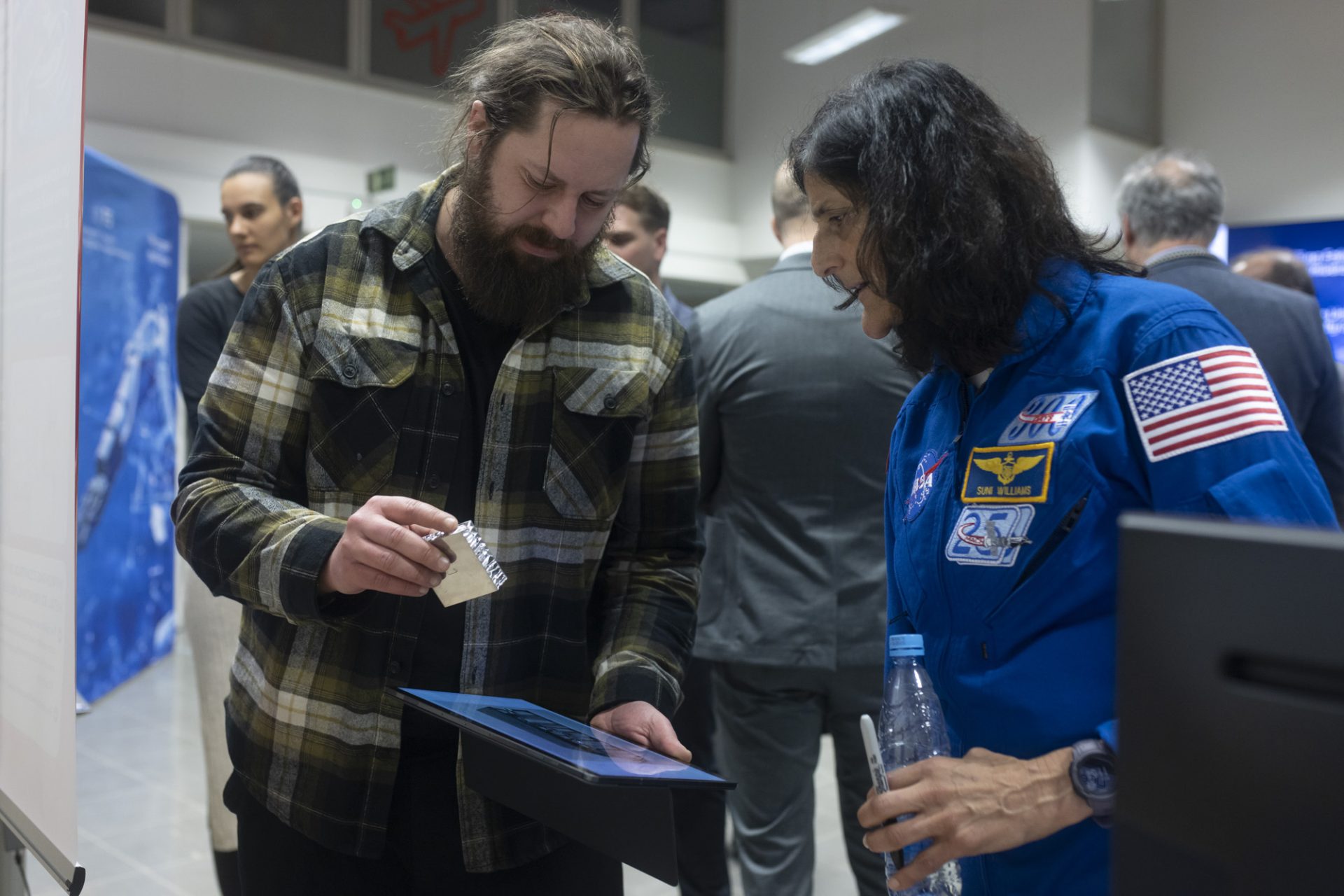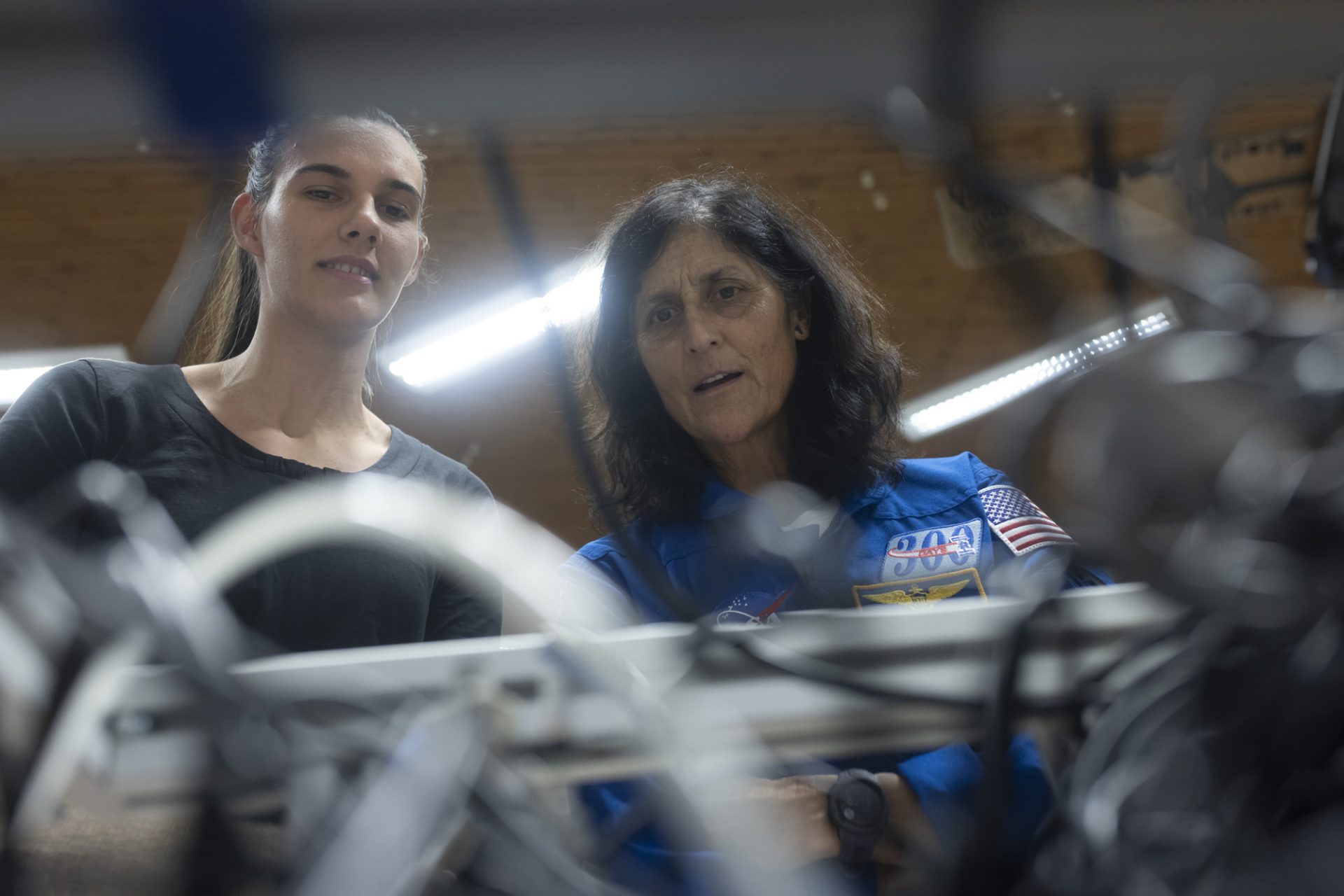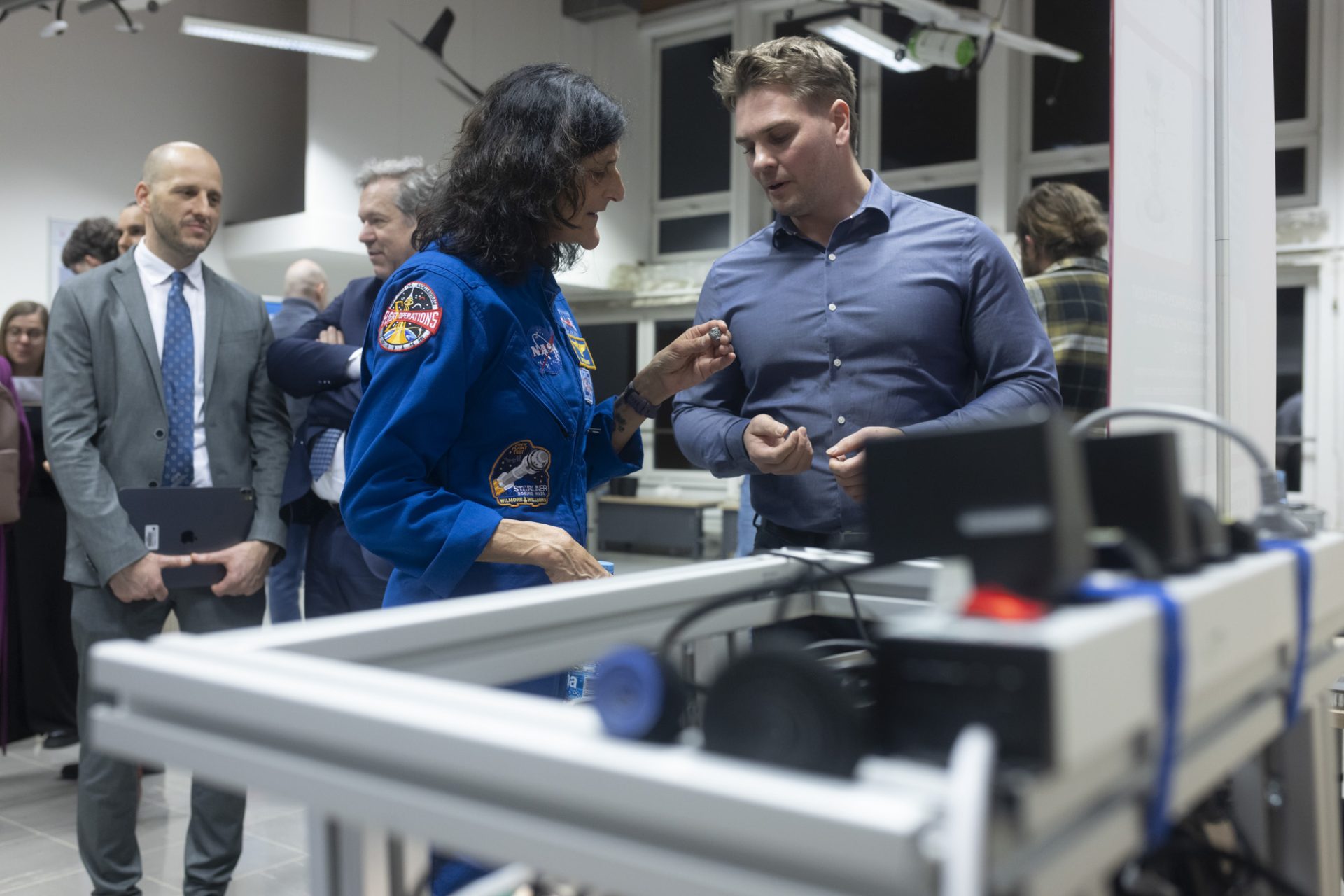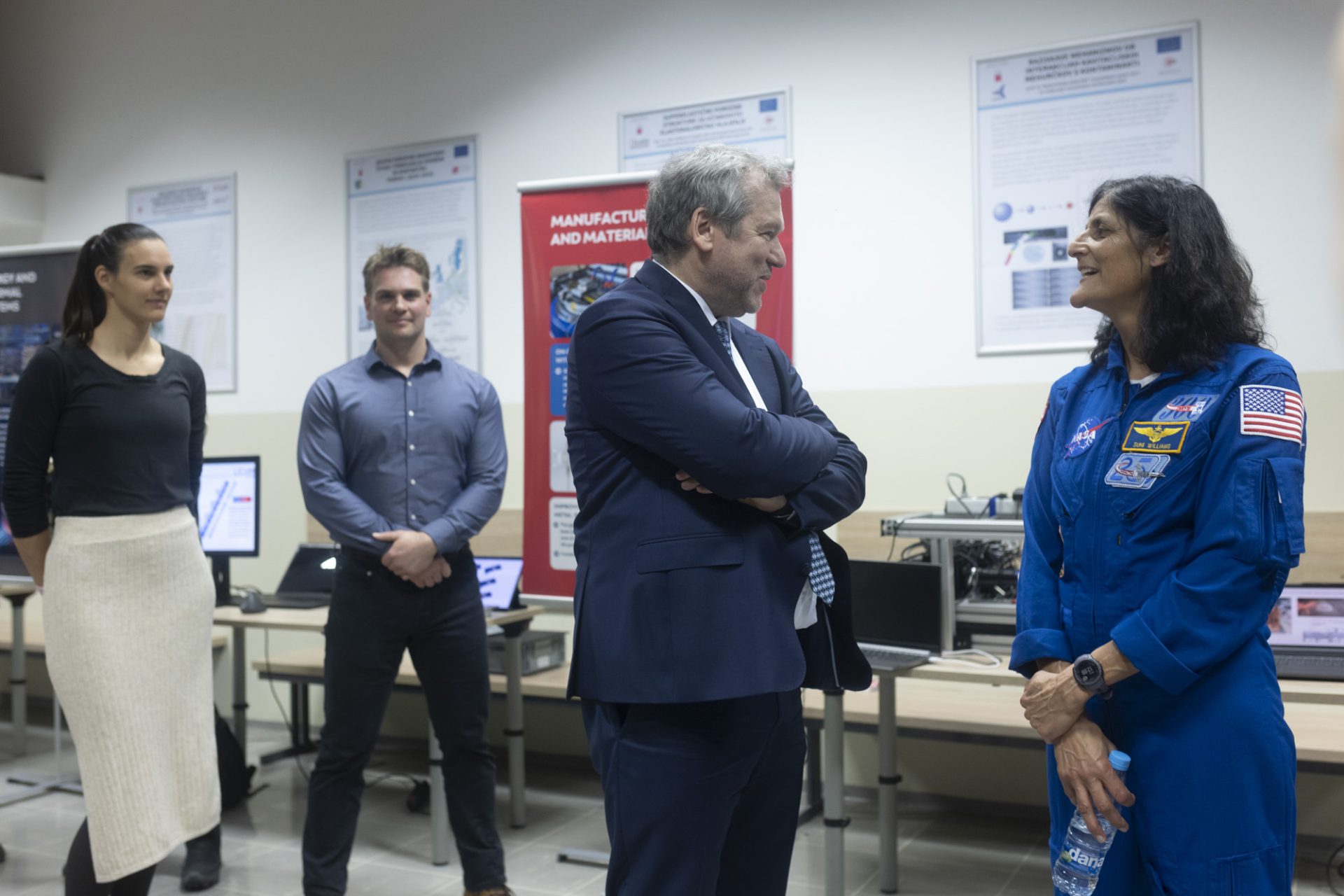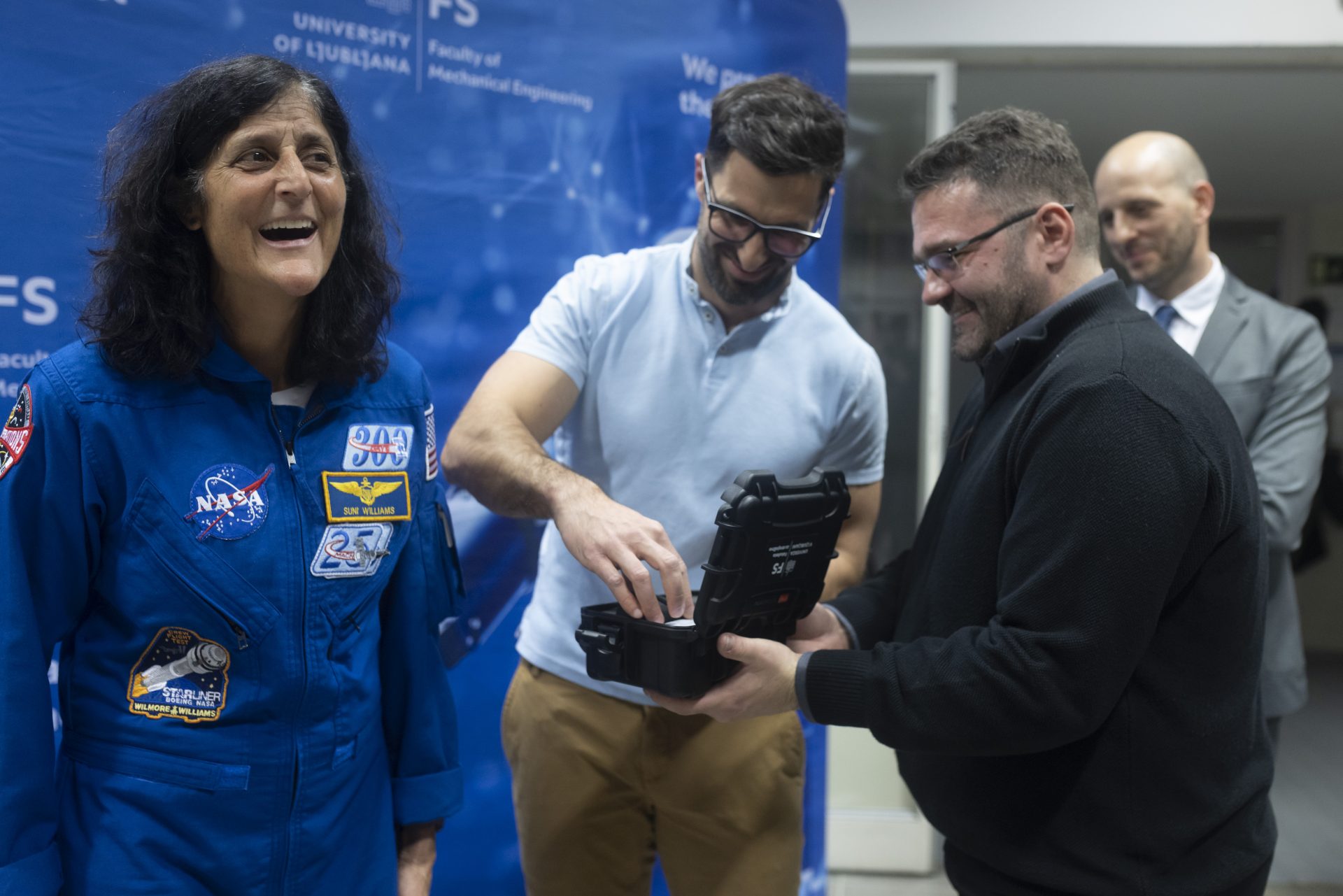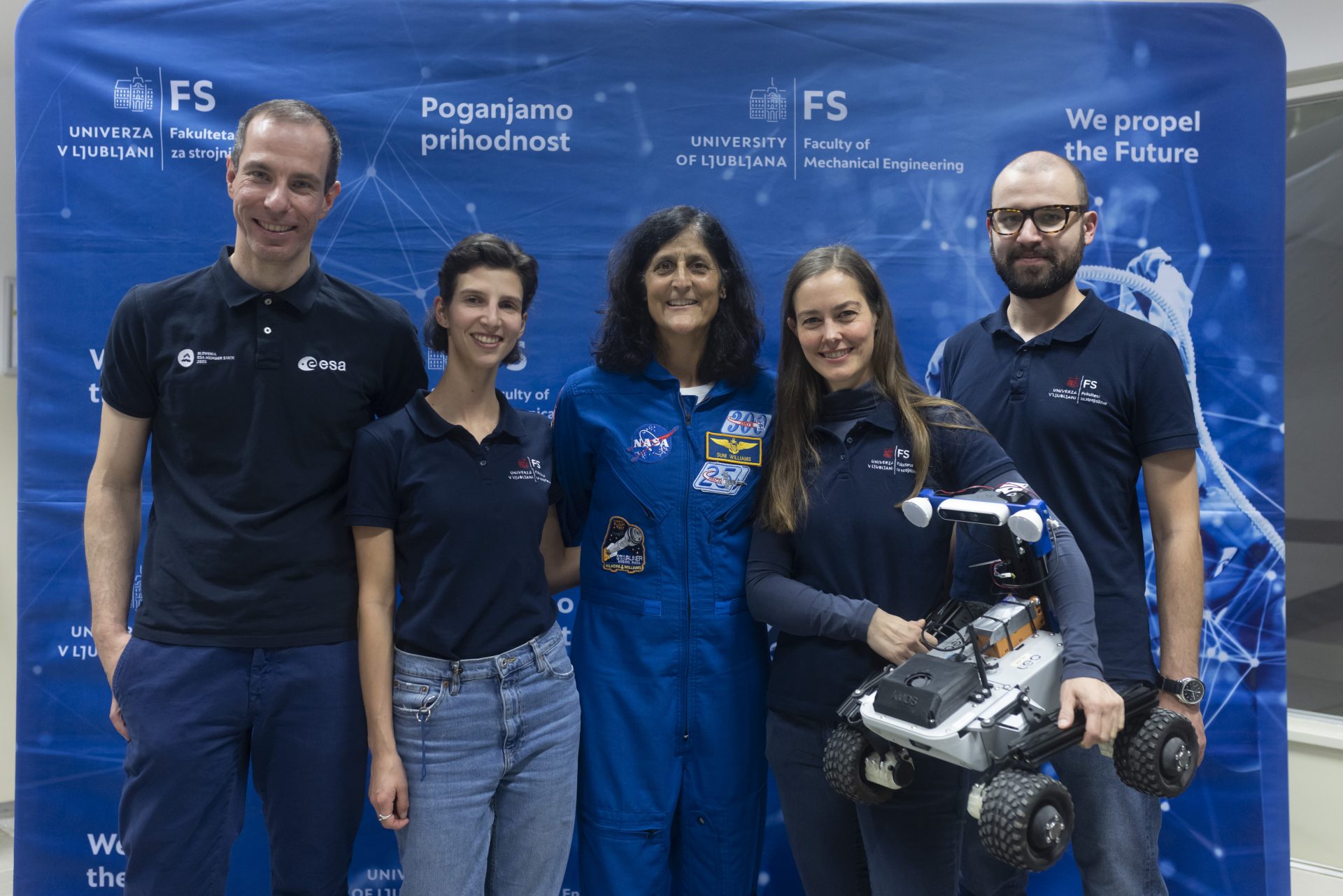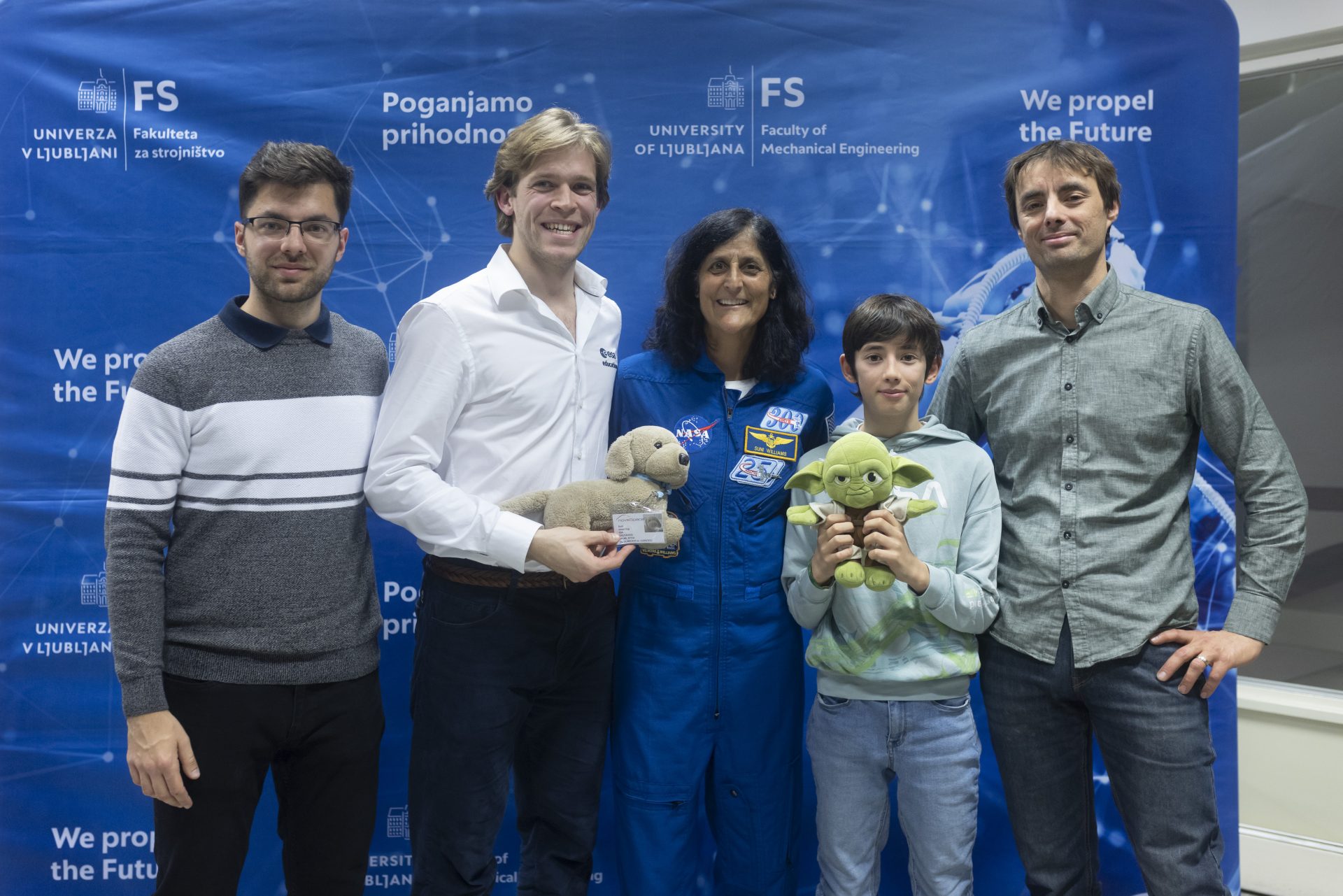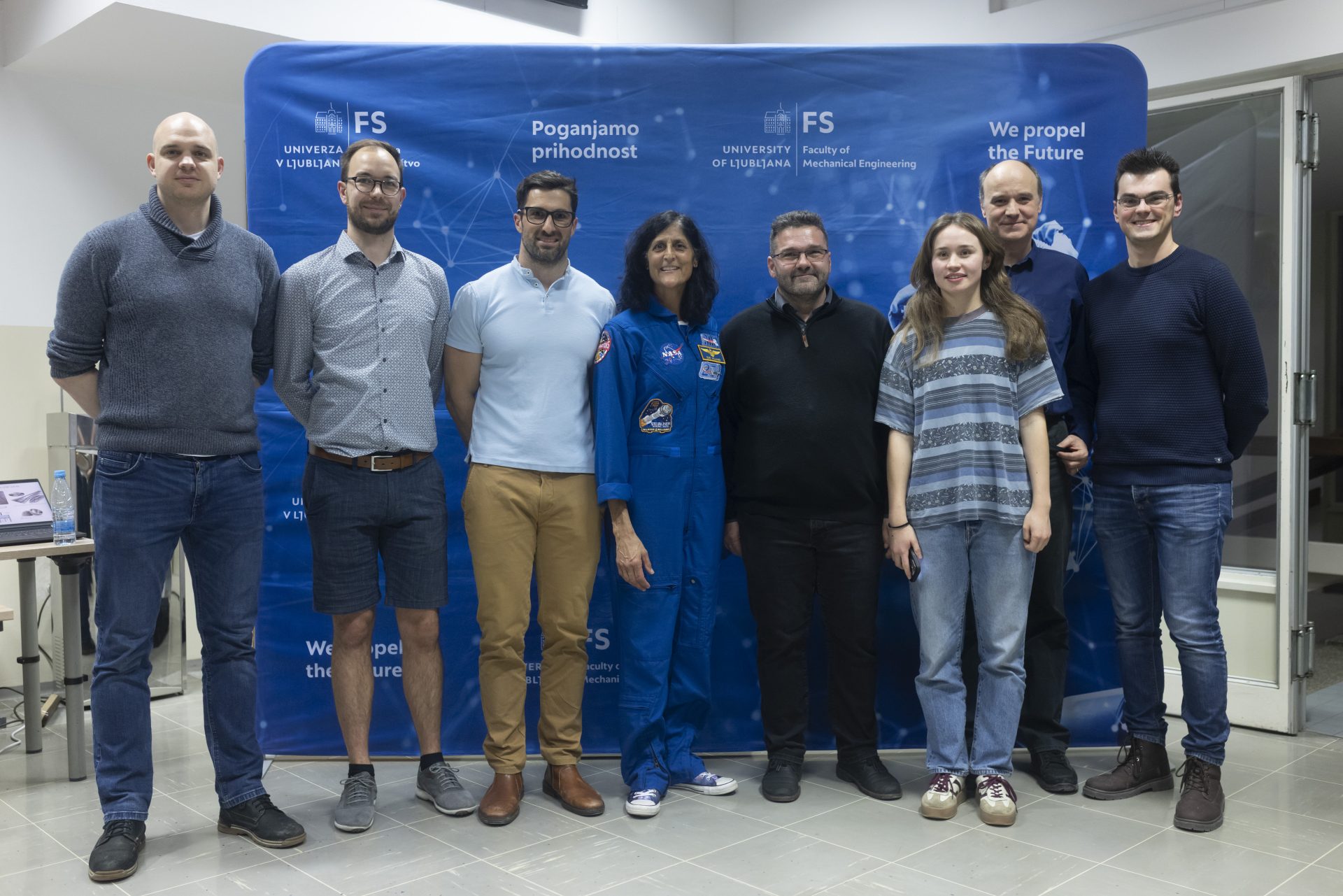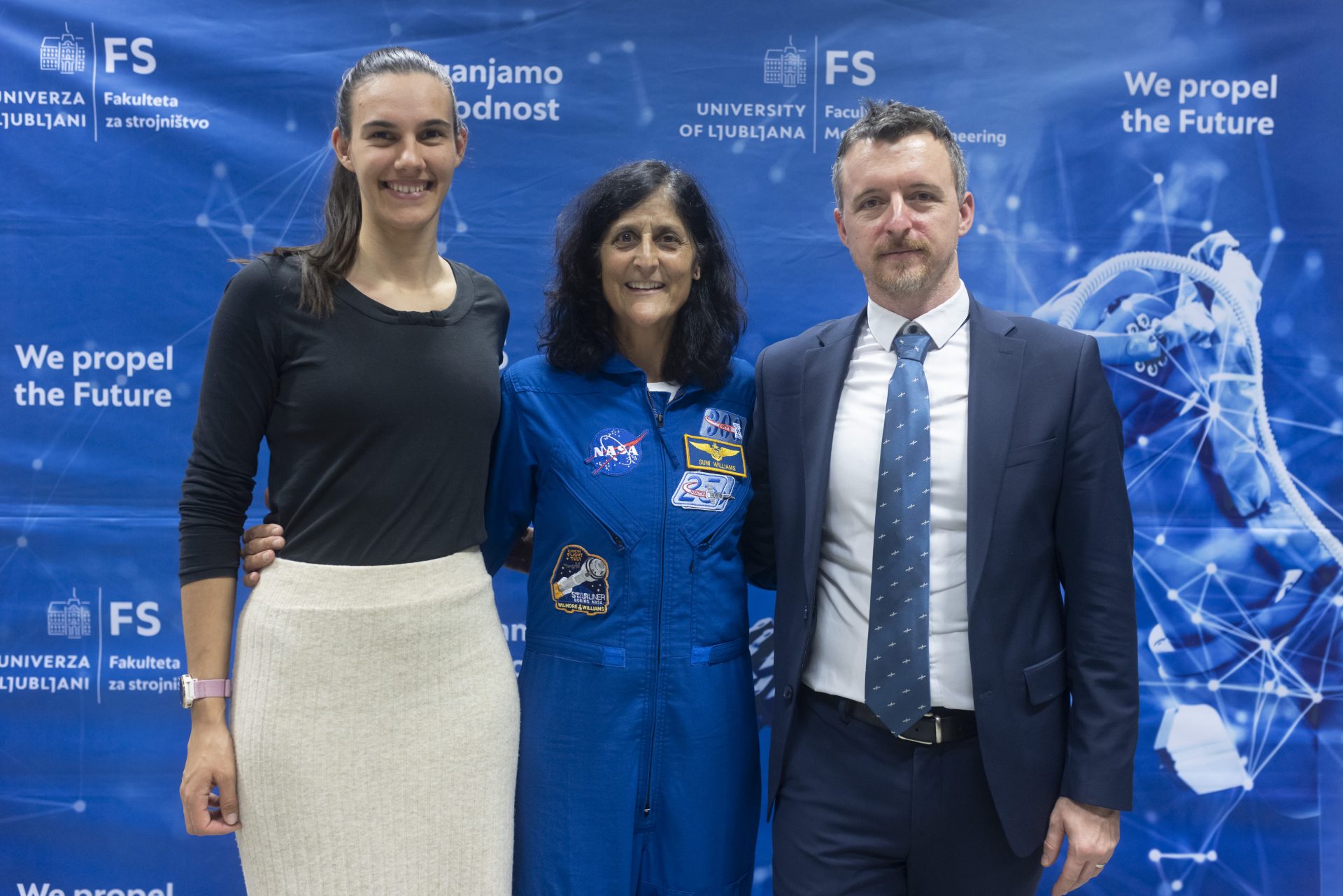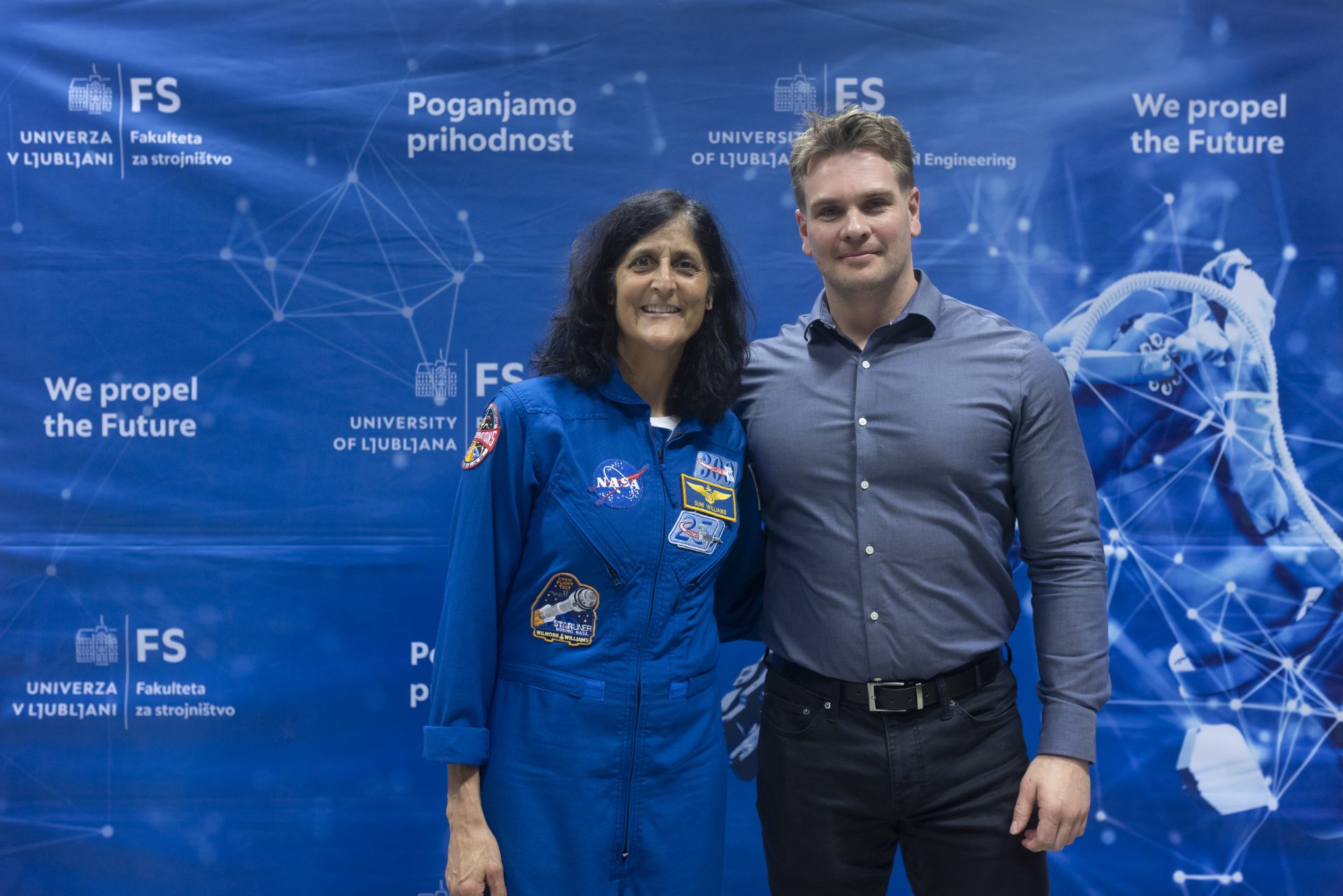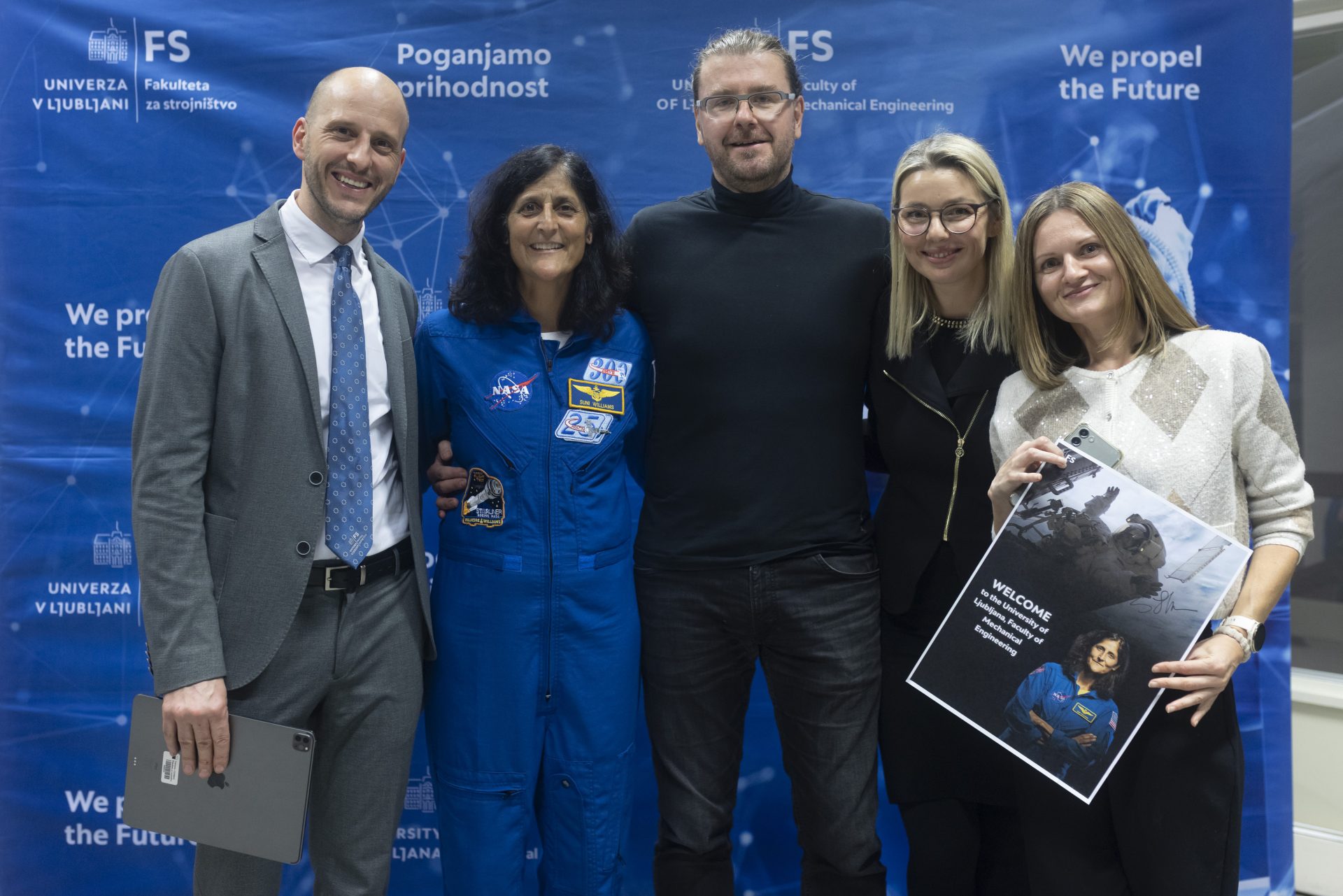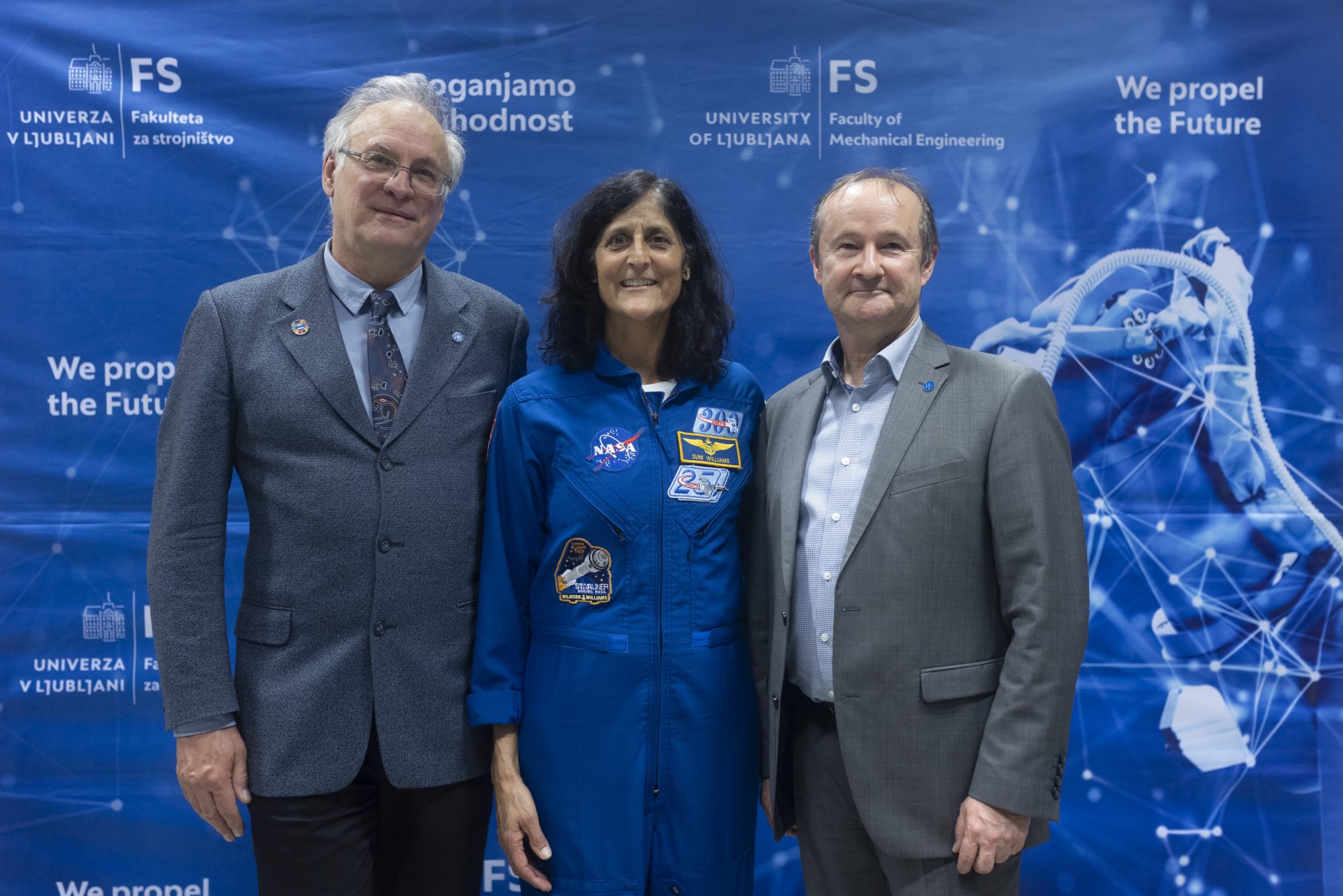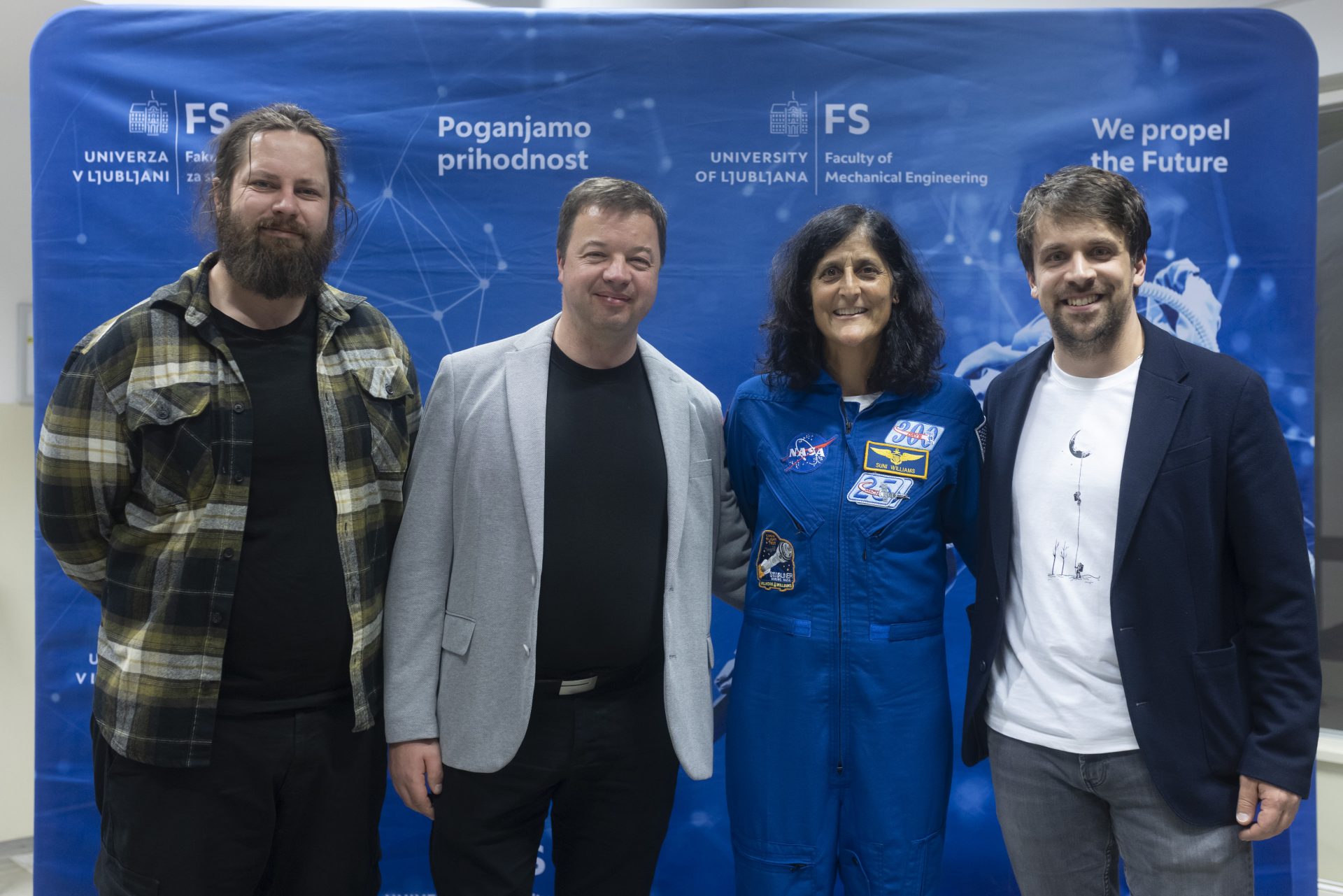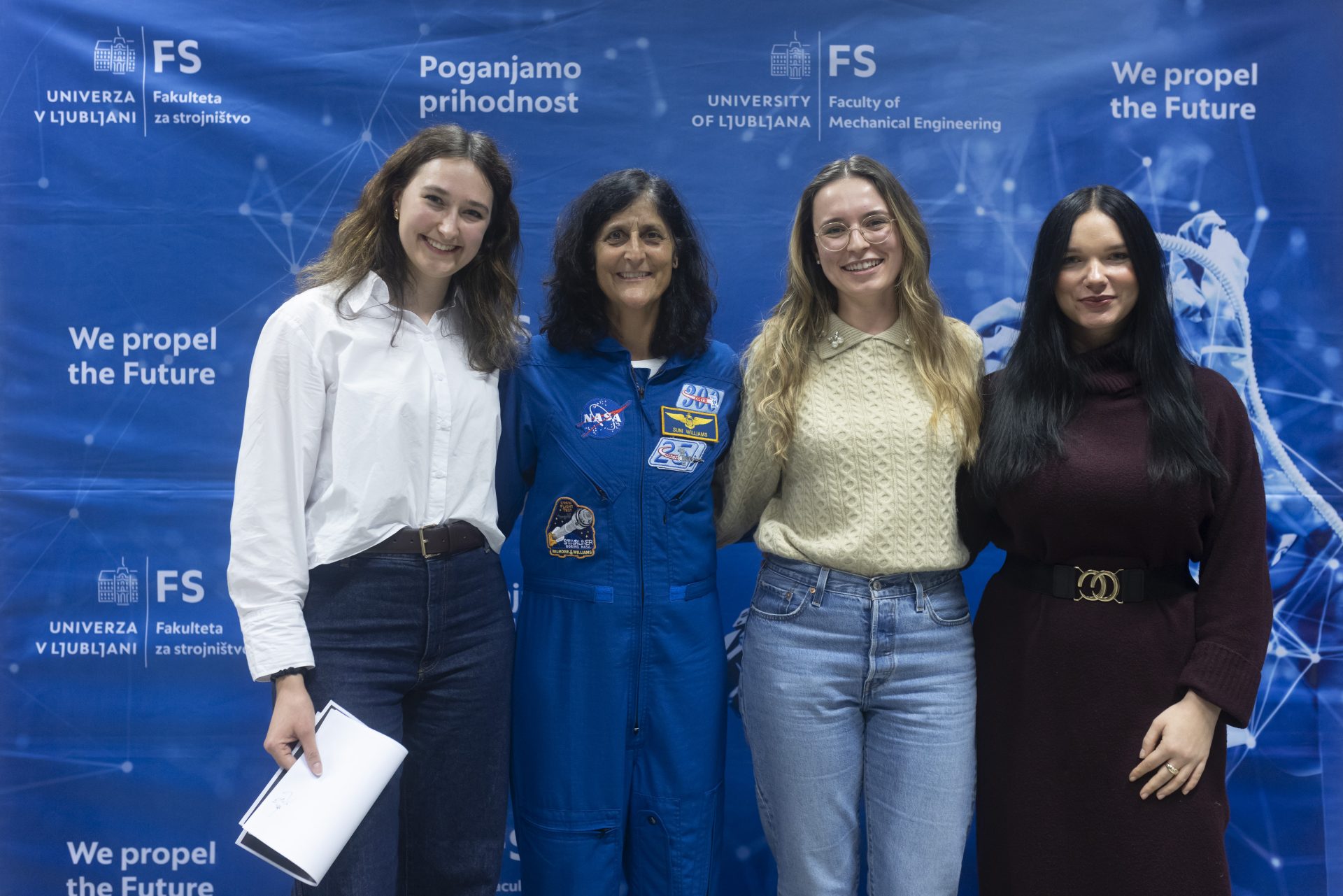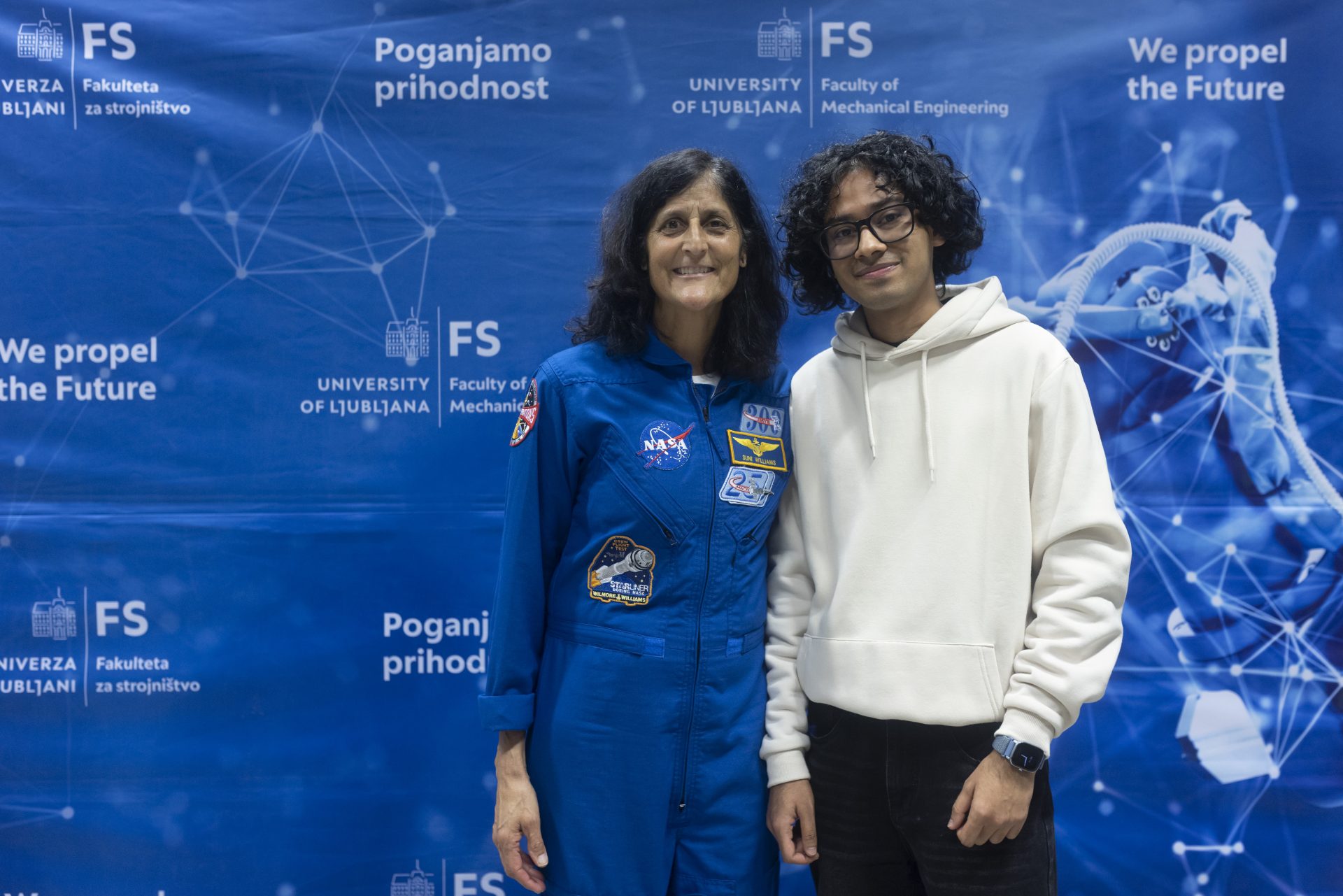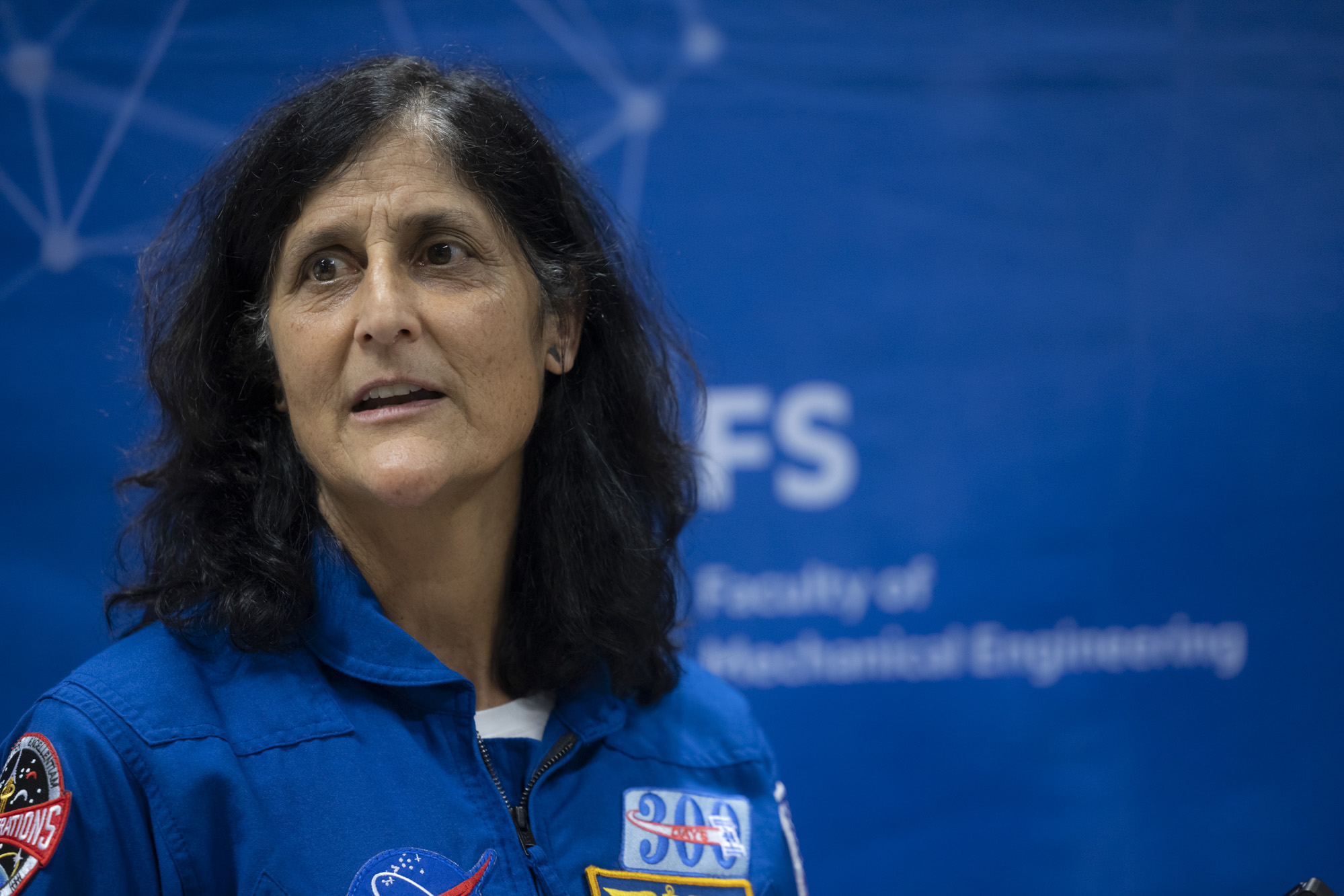
The Faculty of Mechanical Engineering of the University of Ljubljana hosted an outstanding figure from the space exploration community, former astronaut of Slovenian descent Sunita Lyn Williams—one of the most accomplished American astronauts—who has spent 608 days in space over three flights and most recently concluded a mission aboard the International Space Station (ISS) in March 2025 after more than nine months. The visit offered a unique opportunity to exchange experiences in the development of space technologies and to showcase the achievements of Slovenian researchers and students who are already helping shape the future of these fields.
Her visit offered a unique opportunity to exchange perspectives on the evolution of space technologies and to showcase the work of Slovenian researchers and students who are already contributing to the future of space exploration and related fields.
During the visit, UL FME presented its latest research across robotics and autonomous systems, sustainable materials, advanced energy solutions, human health in extreme environments, and the optimisation of fluid and thermal processes. Highlights included robust autonomy systems and a swarm of miniature robots designed to navigate challenging terrains—capable of simulating planetary surfaces—alongside advanced composites and smart materials for next-generation space structures. The Faculty also showcased metal additive manufacturing (3D printing) technologies and electrolysis solutions tailored for extreme conditions.
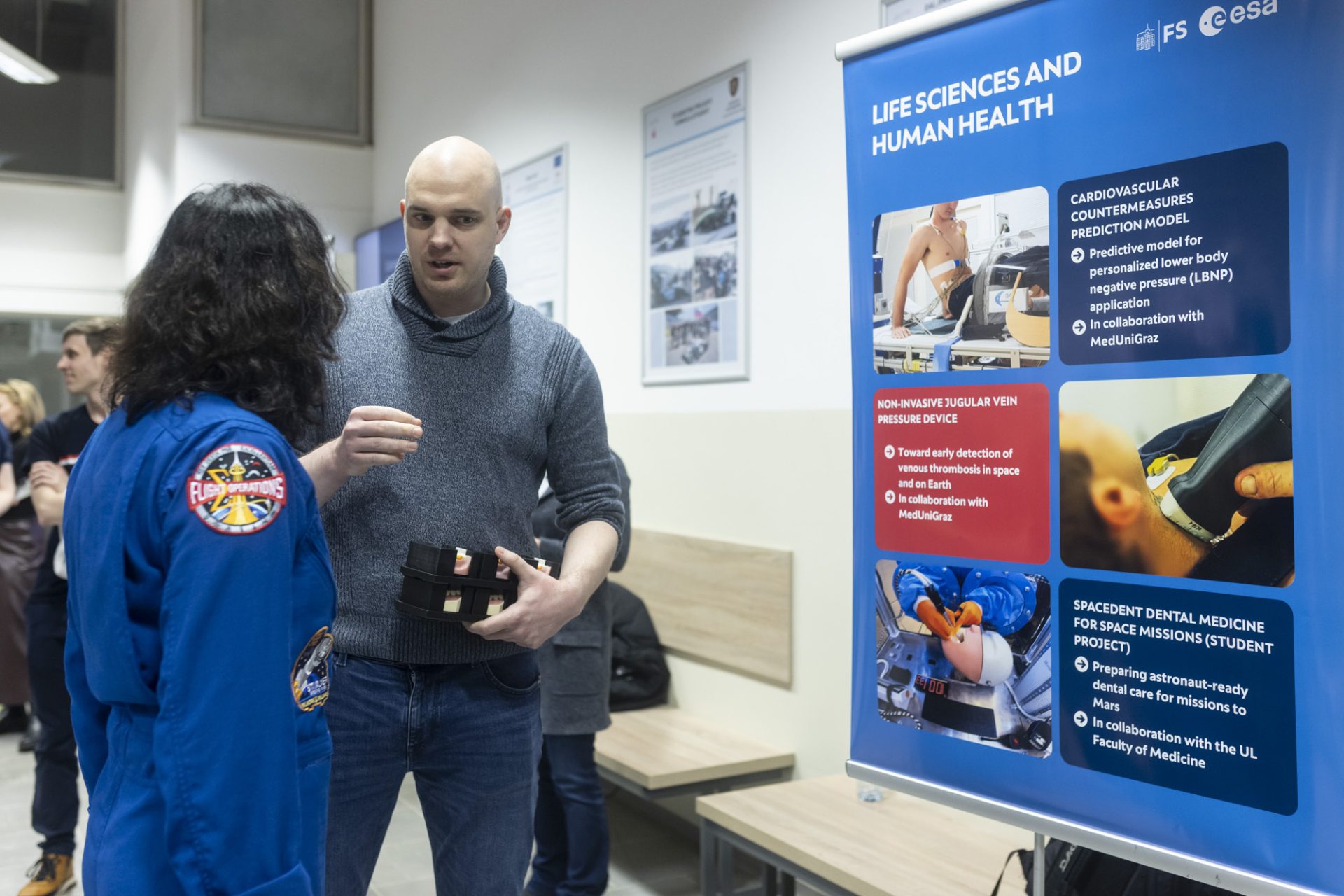
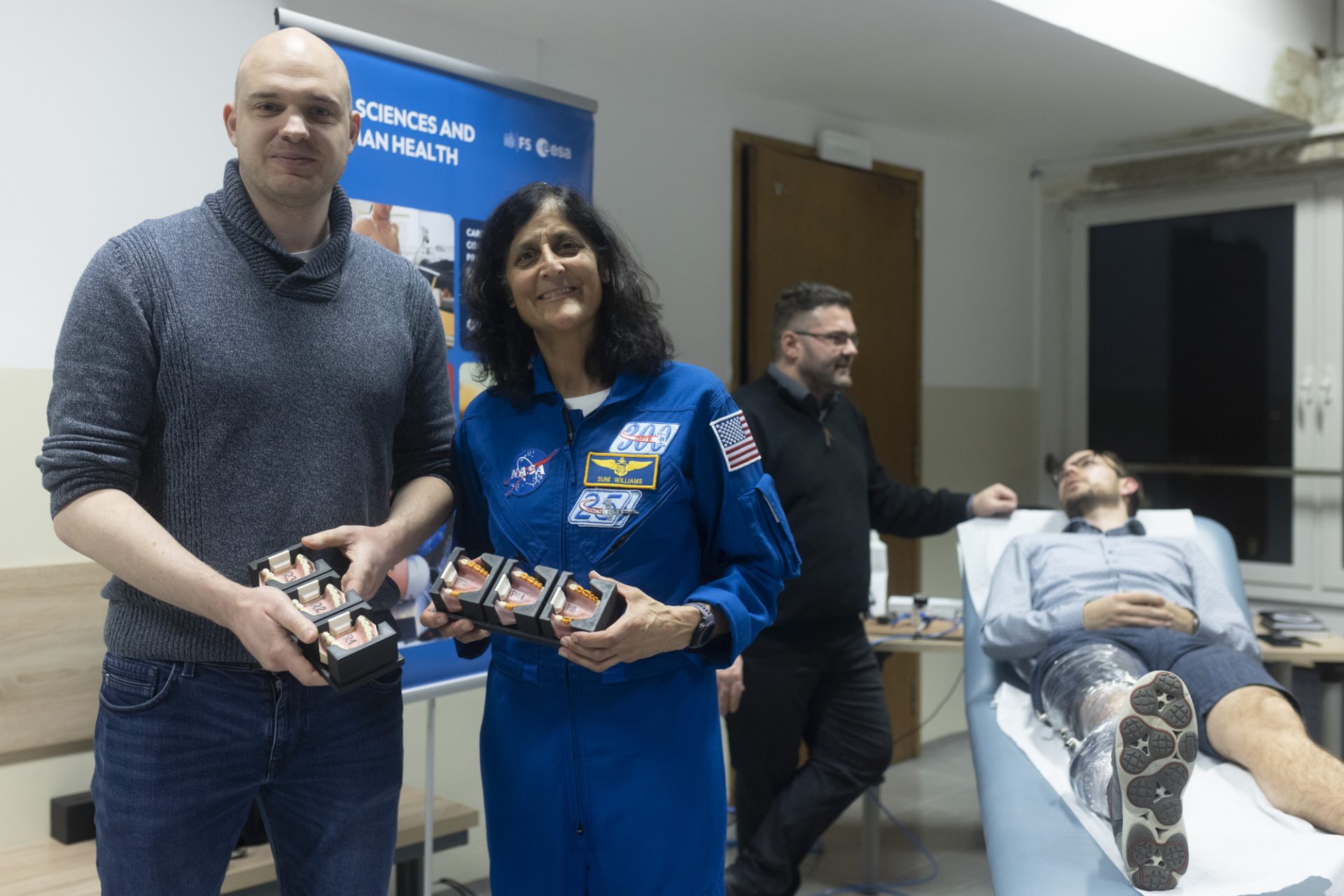
A strong focus was placed on human physiology and healthcare in space, including predictive models of physiological change in microgravity, non-invasive astronaut health monitoring devices, and a student project exploring dental care solutions for space missions. Williams also took particular interest in research on energy and thermal systems—from regenerative fuel cells to elastocaloric cooling—as well as ambitious projects in fluid mechanics and physics, including the student-led CAVE 0g initiative and reference multi-dimensional boiling studies.
Williams expressed her genuine enthusiasm for what she saw at the Faculty: “You are incredible—so many applications that are simply astonishing! I’m truly impressed by what I’ve seen at the University of Ljubljana Faculty of Mechanical Engineering. Your work in robotics, materials, energy, dental technology, and bubble research is outstanding. I’m genuinely excited—what you are creating here is impressive and inspiring.”
Prof. Dr Franci Pušavec, Vice-Dean for Research at UL FME, highlighted the importance of such exchanges: “It was an honour to host astronaut Sunita Williams. Her experience provides highly valuable feedback for our researchers and their results, and her dedication inspires both our research community and our students. Welcoming a guest of this calibre gives us additional momentum for our research and teaching in space technologies, and opens new opportunities to strengthen connections for future collaboration.”
The visit further affirmed UL FME’s position as an internationally relevant research environment—driven by vision, interdisciplinarity and creative energy. The projects emerging from its laboratories today point to bold steps into the future: a world where knowledge, curiosity and collaboration reach beyond Earth and create space for new generations of space explorers.
Photo: Željko Stevanić/IFP