



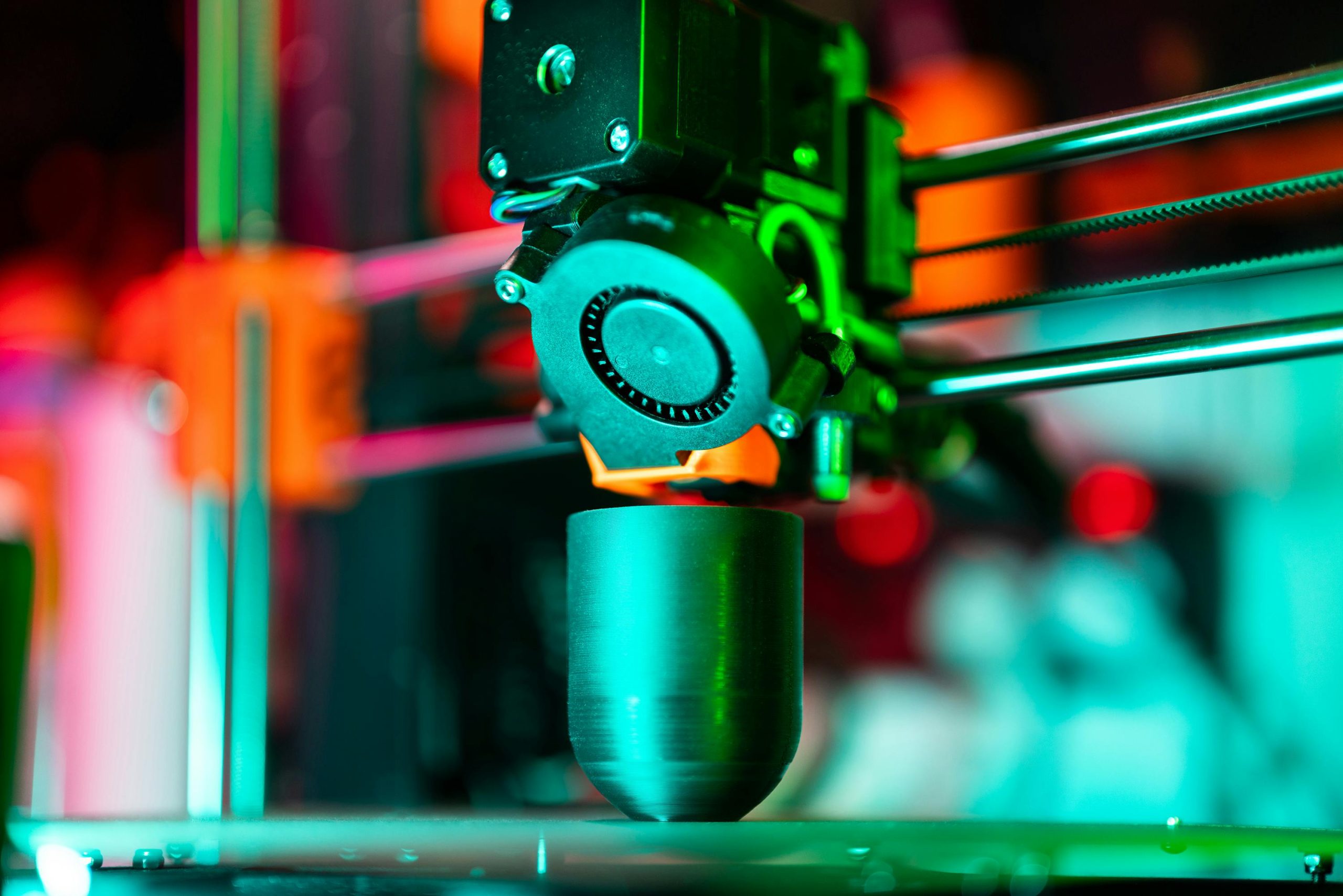
3D printing with polymer filament extrusion has developed significantly in recent years. Modern 3D printers can reliably print with several different materials in a single print. This is currently being used to produce multi-color products, but it presents an opportunity to print with filaments that have different material properties – mechanical, electrical, magnetic.
The question is: can we use commercially available printers and materials to produce smart structures that can sense their state and surroundings? Much research has already shown that deformation sensors can be printed with electrically conductive materials. The main limitation of these is that they are relatively unreliable and non-repeatable, which is reflected in the poor quality of the measured signals. This is one of the important limitations that prevents 3D-printed smart structures from being widely used.

Researchers often address the problem of the relatively poor quality of 3D-printed sensors at the material level – optimizing filament production – and at the technology level – optimizing the shape of the sensor and printing parameters. In this research, we focused on the signal processing level. Can we increase the accuracy and reliability of 3D-printed sensors with modern machine learning approaches without modifying materials or technology? The research process followed: 3D printing a plate with four integrated deformation sensors, designing a convolutional neural network to identify the touch location from the signals of the four integrated sensors, preparing a training set with ~10,000 touches with a known location, and finally, training the neural network on the training set.

The results showed that in the presented way, using machine learning, we can make previously unreliable and inaccurate sensors exceptionally accurate and thus potentially suitable for real-world applications. The developed system detects the touch location with ~3 mm accuracy on a 100×100 mm² plate.
The presented method can be used for an arbitrary structures and applications and represents one of the paths towards individualized smart structures that can be manufactured on-demand.
The article was published in the prestigious journal Virtual and Physical Prototyping (impact factor 8.8) and is available here.