



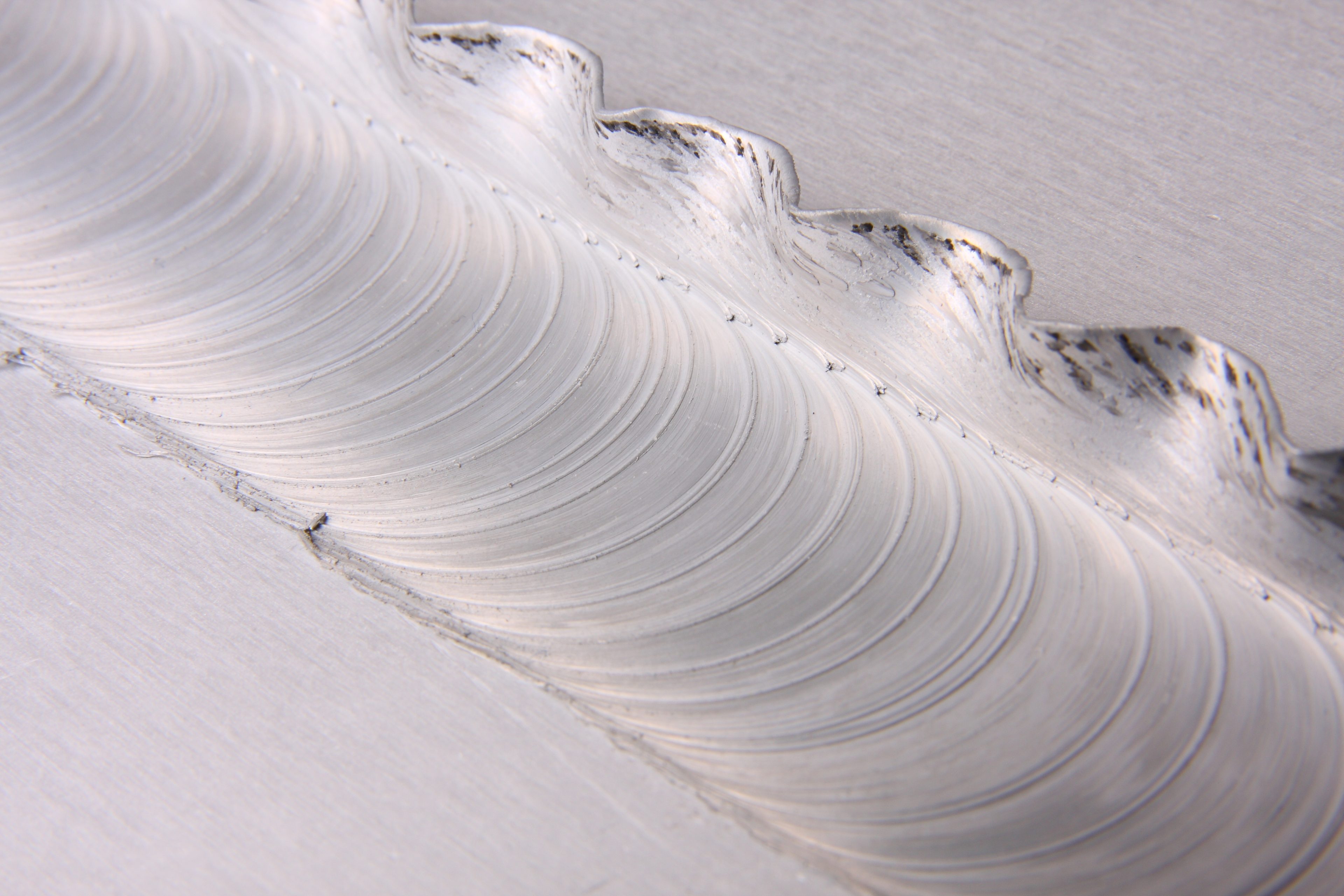
Researchers from the Laboratory for Welding (LAVAR), the Jožef Stefan Institute (IJS), and the Laboratory for Mechanics, Production Systems and Automation (LAMPA) investigated the influence of friction stir welding (FSW) on the microstructural evolution, residual stresses, and mechanical properties of joints between different high-strength aluminium alloys. These alloys are widely used in the aerospace and transportation industries, but are difficult to efficiently join using conventional fusion welding processes. Particular emphasis was placed on understanding the relationship between the welding process, heat input, and the formation of complex microstructural features within the stir zone of the joint.
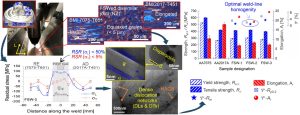
Using advanced characterization techniques, the researchers confirmed the formation of a fine-grained recrystallized microstructure with a high density of dislocation structures and high-angle grain boundaries, indicating intense dynamic recrystallization during the FSW process. At the same time, they demonstrated the preservation of thermally stable Fe–Mn–Si dispersoids and identified θ′ (Al₂Cu) and η′ (Mg(Zn,Cu,Al)₂) precipitate phases, which play an important role in the mechanical response of the joint.
The study demonstrated that optimized FSW conditions can significantly reduce tensile residual stresses and weld-line heterogeneity, while improving the mechanical uniformity of the joint. Under the optimal welding conditions, the researchers achieved the best balance between strength and ductility together with up to a four-fold reduction in weld heterogeneity compared to the other welding conditions, confirming enhanced structural reliability for demanding industrial applications. The results also highlight the potential of FSW as a cleaner joining technology with lower emissions and reduced environmental impact compared to conventional fusion welding processes.
The research findings were published in Journal of Materials Research and Technology (IF = 6.6).