



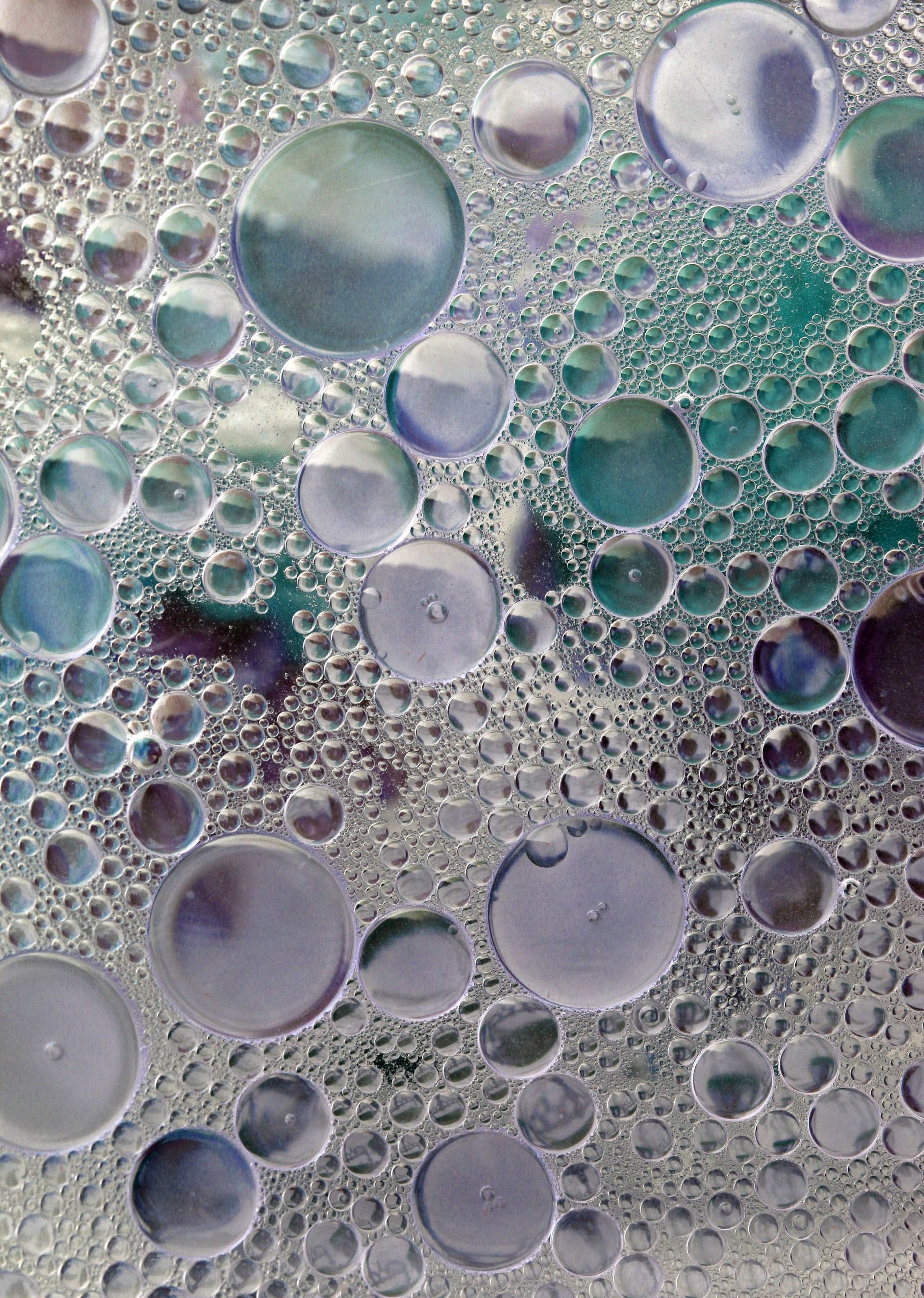
Researchers at the Faculty of Mechanical Engineering, University of Ljubljana, have demonstrated that the properties of surfactants can be used to influence the behaviour of cavitation bubbles and, consequently, emulsion formation. The results reveal a previously unobserved reversal in the direction of the cavitation bubble jet and open new possibilities for more precise control of emulsification processes.
Emulsions, such as oil-in-water or water-in-oil emulsions, are important in the food, cosmetics, pharmaceutical, and other industries. Their formation requires two normally immiscible liquids to be broken up into small droplets, which requires a considerable amount of energy. Researchers are therefore seeking more efficient methods for preparing emulsions.
One possible approach is the use of cavitation—a phenomenon in which bubbles form in a liquid due to a rapid drop in pressure and subsequently collapse violently. This releases a large amount of energy that can disrupt the oil–water interface and enable the formation of small droplets. When a bubble collapses near the interface between two liquids, a very high-speed microjet is also formed, and its direction influences emulsion formation.
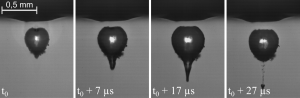
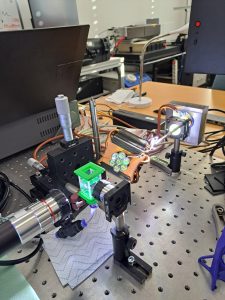
Researchers at the Faculty of Mechanical Engineering, University of Ljubljana, investigated the influence of the hydrophilic–lipophilic balance (HLB) on the behaviour of cavitation bubbles. The HLB value was varied using the surfactants Tween 80 and Span 80, while high-speed visualization was used to observe bubble collapse at the oil–water interface.
At higher HLB values (12.9 and above), the bubbles collapsed away from the interface. At intermediate values (6.4–10.7), they could collapse towards the interface, away from it, or nearly in place. At the lowest HLB value of 4.3, however, the jet direction reversed and was directed towards the oil–water interface.
This behaviour also affects emulsion formation. When a bubble collapses away from the interface, the oil is disrupted and oil droplets form in the water. When the jet is directed towards the interface, water can penetrate into the oil, leading to a different mode of emulsion formation. The results indicate that interfacial properties can influence cavitation dynamics and, consequently, the mechanism of emulsion formation.
“The results show that the direction of the cavitation jet is determined not only by classical hydrodynamic parameters, but that the properties of the liquid–liquid interface also play an important role,” said Žan Boček, lead author of the study.
Future research will need to investigate in greater detail the role of the dynamic properties of the liquid–liquid interface, as well as bubble behaviour when bubbles are generated in the oil phase.
Članek je dostopen na povezavi: Effect of hydrophilic-lipophilic balance on cavitation-driven emulsification near a liquid-liquid interface.