



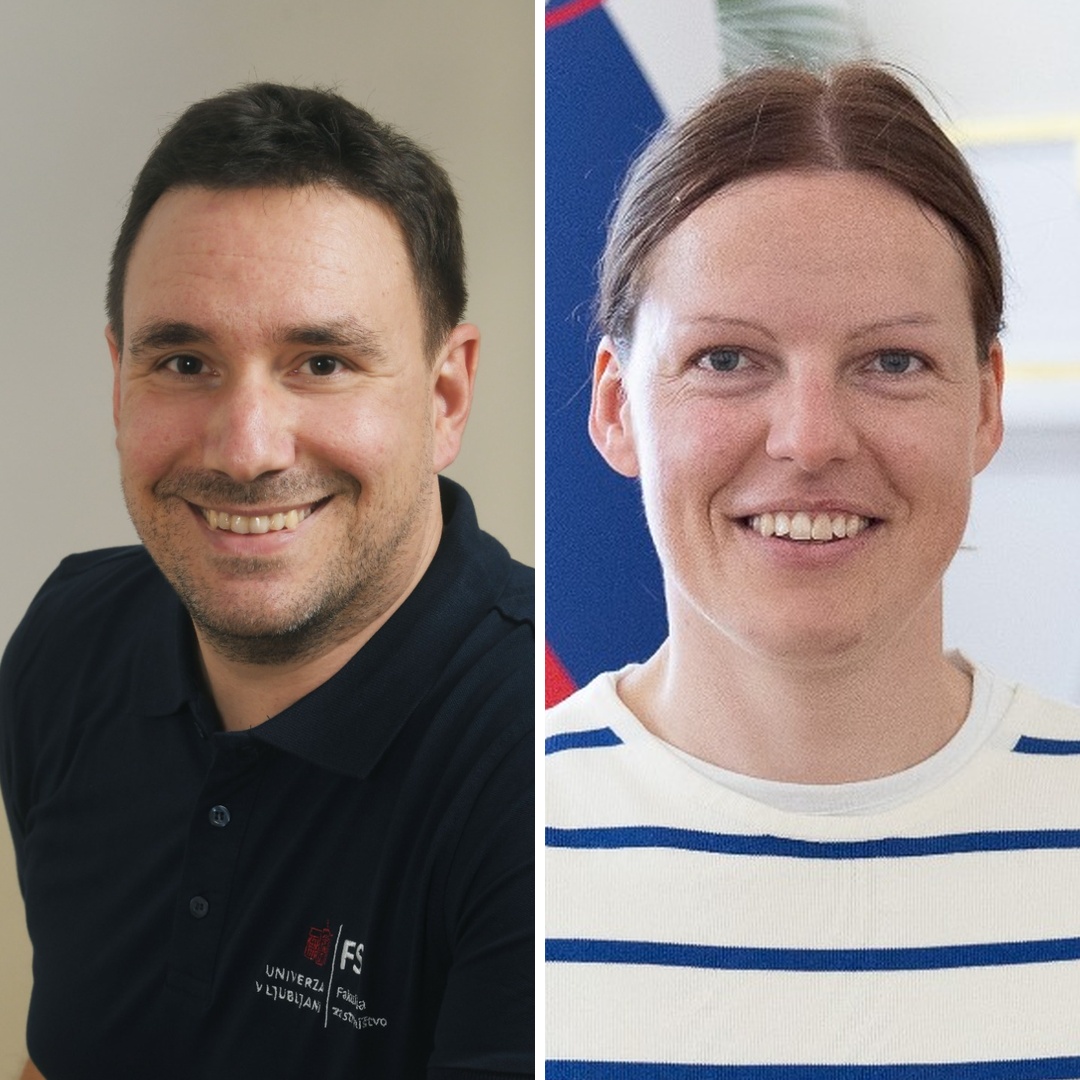
Ljubljana, 12 January 2026 – The Faculty of Mechanical Engineering, University of Ljubljana (UL FME), has achieved an excellent result in this year’s University of Ljubljana Innovation Fund call: both projects submitted by the faculty have been awarded funding. The successful proposals are led by Assoc. Prof. Katja Klinar, PhD (Laboratory for Cooling and District Energy – LAHDE) and Assoc. Prof. Primož Poredoš, PhD (Laboratory for Environmental Technologies in Buildings – LOTZ). Together, they are developing advanced solutions with clear potential for real-world deployment—from more effective cooling of electronic components to healthier indoor living environments.
A silent, sustainable solution to indoor humidity and mould (LOTZ)
Assoc. Prof. Primož Poredoš, PhD, is leading a project to develop an innovative device for regulating indoor humidity based on advanced materials. The solution enables efficient moisture control without noise and without environmentally problematic refrigerants.
The project addresses the widespread and health-risk-related issue of excess moisture and mold in residential spaces—estimated to affect 20–30% of households in the EU. The consequences include asthma, allergies, and respiratory diseases, particularly in infants and children. The device is designed for users seeking a quiet, aesthetically integrated, and energy-efficient solution that does not require regular emptying or cause disruptive operation.
The project includes prototype development, laboratory and field testing, intellectual property protection (patent, design, trademark), pilot installations in households and public buildings, and the preparation of a commercialization strategy. The research team consists of Assoc. Prof. Primož Poredoš, PhD, and Assistant Dejan Trajkovski.

“Excess humidity and the resulting mould gradually undermine living comfort and users’ health. With SORBIOM, we are developing an advanced concept based on next-generation sorption materials to regulate indoor humidity comprehensively and improve indoor comfort throughout the year,” emphasized Assoc. Prof. Primož Poredoš, PhD.
Micro vapour-compression cooling for processors and power electronics (LAHDE)
Assoc. Prof. Katja Klinar, PhD, and the LAHDE team are advancing the development of a micro vapour-compression cooling system for compact devices in microelectronics and power electronics, where components generate very high heat fluxes during operation. The proposed system represents a next step in thermal management: it can outperform conventional air and liquid cooling approaches, while being designed for refrigerants with low global warming potential—aligned with environmental requirements and regulatory trends.
The system has already been experimentally validated in the laboratory, reaching Technology Readiness Level (TRL) 5. With Innovation Fund support, the team aims to advance the technology to TRL 6, meaning demonstration in relevant, real-world applications. To this end, the prototype will be adapted for cooling a processor (target market: computing components) and an IGBT module (target market: power electronics). The project team includes Assoc. Prof. Katja Klinar, PhD, Assoc. Prof. Urban Tomc, PhD, Dr. Daniel Calleja Anta, and Prof. Andrej Kitanovski, PhD.
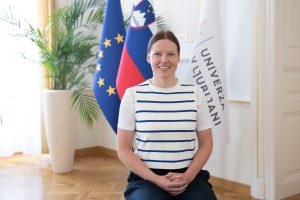
“We are pleased that our concept was recognized during the innovation selection process as both compelling and highly promising. The next development step is testing on an actual processor and benchmarking against conventional solutions,” noted Assoc. Prof. Katja Klinar, PhD.
Impact and next steps
Both projects underscore UL FME’s research excellence and deliver solutions with tangible impact: healthier indoor environments, improved energy efficiency, decarbonization potential, and more reliable operation of advanced electronics. In the next phase, both teams will develop prototypes, conduct testing and pilot deployments, secure intellectual property protection, and prepare a clear pathway to market.
PHOTO:
Cover image: created with the help of artificial intelligence
Doc. Primož Poredoš: photo by Mateja Jordovič Potočnik
Doc. Katja Klinar: photo courtesy of the University of Ljubljana