



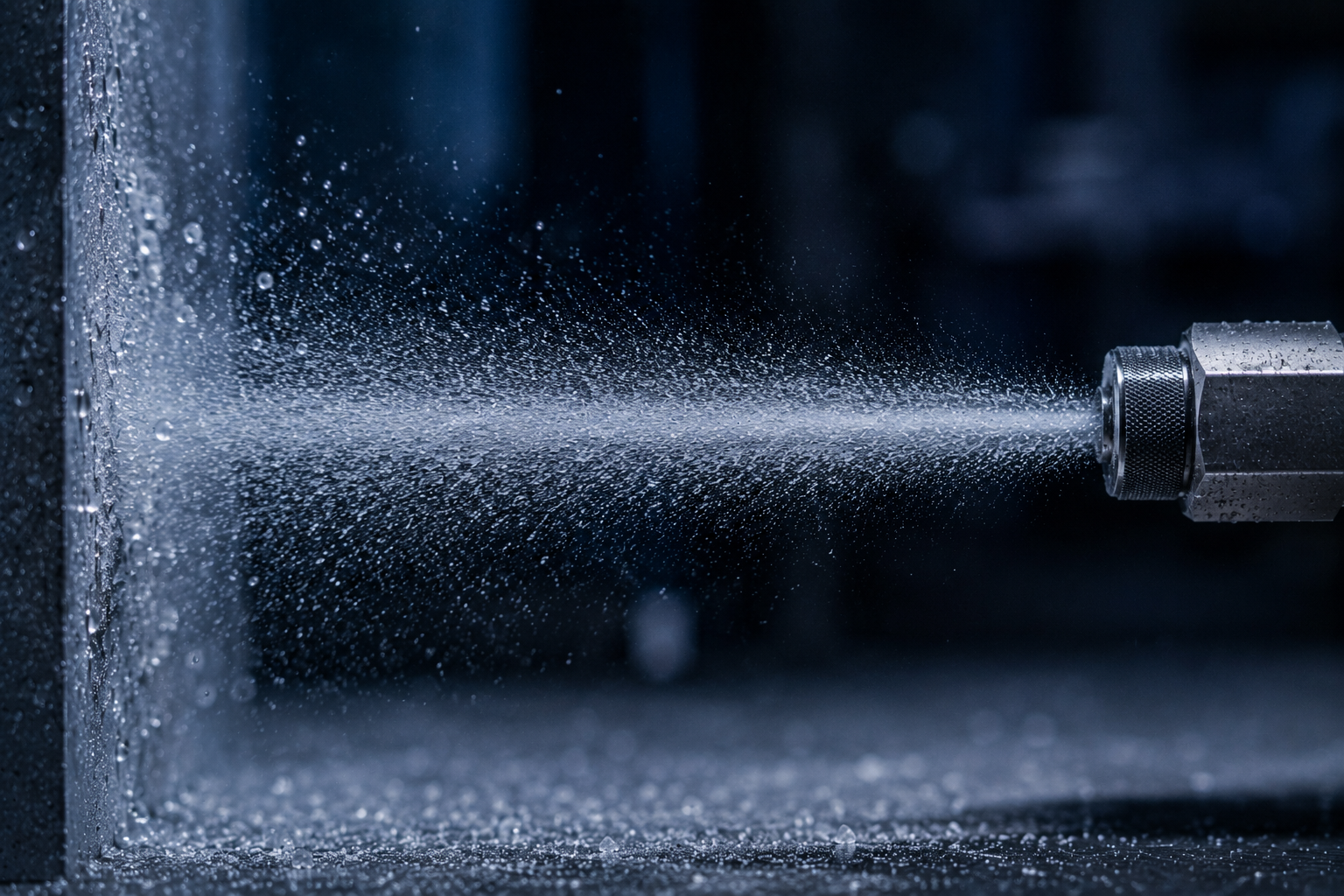
Could ice replace sand and other abrasives in industrial cleaning and surface treatment processes? Researchers from the Faculty of Mechanical Engineering at the University of Ljubljana have shown that carefully engineered ice particles can effectively remove material while leaving no abrasive residues on the treated surface—a common limitation of conventional abrasive technologies. Their findings pave the way for cleaner, more sustainable, and environmentally responsible surface engineering technologies.
Industrial cutting, cleaning, and surface treatment processes commonly rely on abrasives such as garnet, corundum, and silicon carbide. While these materials provide high processing efficiency, they can leave abrasive residues on treated surfaces and constitute the primary source of waste generated during the process. In response to these challenges, alternative technologies have gained increasing attention in recent years, including the use of ice particles as an abrasive medium. Unlike conventional abrasives, ice melts into water after use and leaves no residual contamination on the processed surface, making it particularly attractive for applications with stringent cleanliness requirements.
In a study published in the journal Wear, researchers from the Faculty of Mechanical Engineering at the University of Ljubljana presented a systematic investigation into how the properties of ice particles influence their erosive performance. The team examined the effects of particle temperature, size, shape, and ice quality on the erosion of ductile aluminium and brittle glass surfaces. Various types of ice particles were tested. Their velocities were measured using high-speed imaging and motion-analysis techniques, while the resulting surface damage was characterized using optical microscopy.
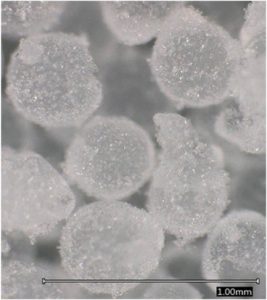
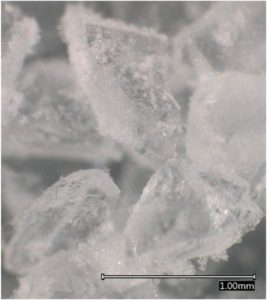
The results revealed that the effectiveness of ice abrasives strongly depends on the interplay between particle characteristics and the type of target material. For aluminium, the highest erosion rates were achieved using medium-sized angular particles produced from distilled, degassed water and cooled to liquid-nitrogen temperature. In contrast, the most effective particles for glass were the smallest spherical ones, indicating that impact frequency plays a more important role than the energy of individual particle impacts.
The study shows that ice is more than just an environmentally friendly replacement for conventional abrasives. Rather, it is a highly tunable material whose properties can be deliberately tailored to achieve different surface treatment outcomes.
These findings represent an important step toward the development of ice blasting and ice-abrasive waterjet technologies, which could enable more efficient and sustainable material-processing solutions across a wide range of industrial sectors.