



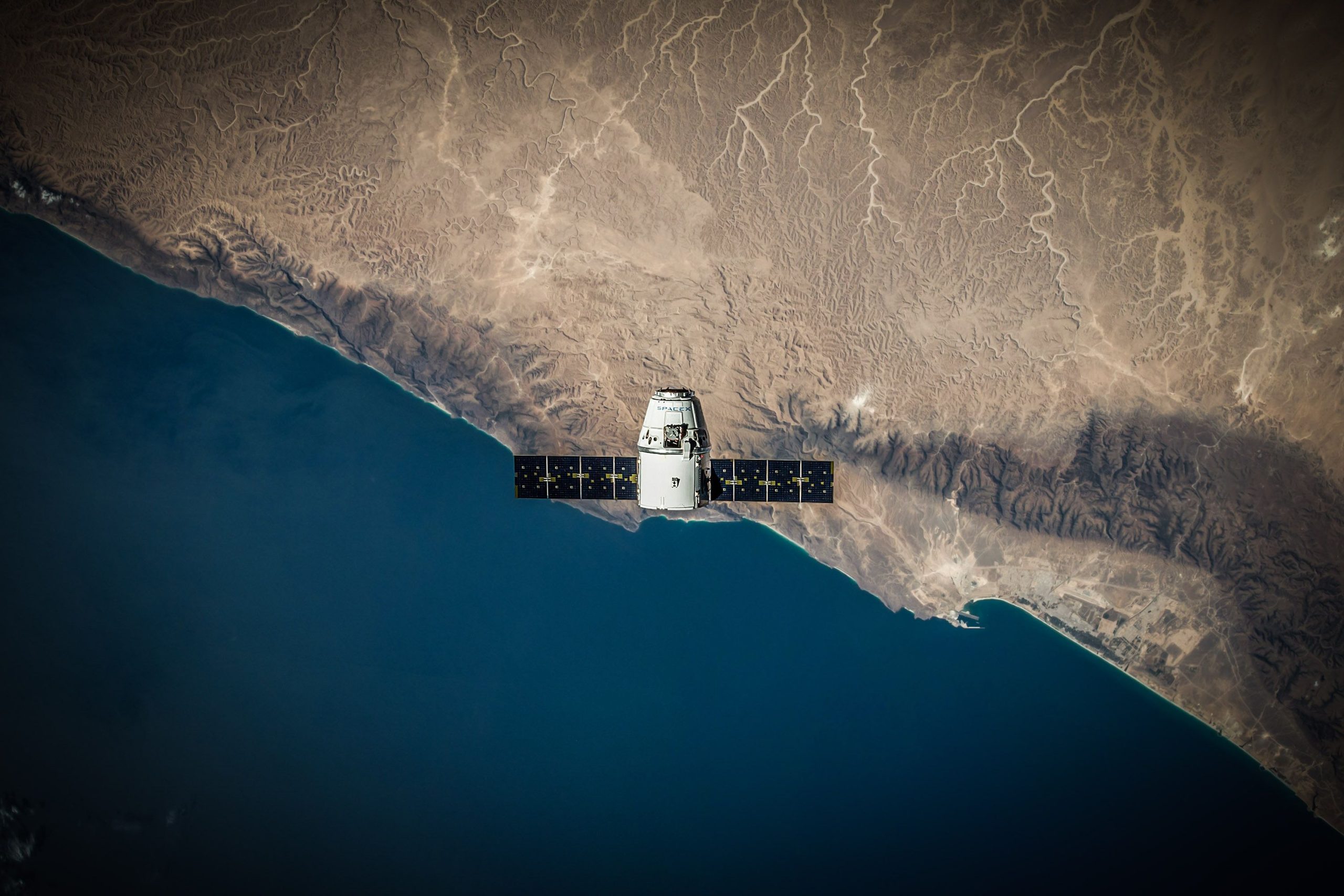
Miniature Stirling cryocoolers cool infrared (IR) detectors on Earth-observation satellites, but their rotating mechanism generates micro-vibrations that degrade measurement accuracy. At the Faculty of Mechanical Engineering (University of Ljubljana), together with the company LE-Tehnika and within a European Space Agency (ESA) project, we will develop a process that measures the unbalance of each manufactured cooler and reduces it by laser ablation of material.
Cryogenic cooling is essential for the operation of modern IR cameras with which satellites observe the Earth. On long-duration space missions, miniature Stirling cryocoolers are often used to cool them thanks to their efficiency and reliability. Their crank mechanism with a rotating shaft, however, inevitably generates micro-vibrations that degrade measurement accuracy, disturb sensitive equipment on the satellite and shorten the cooler’s service life.
Today, manufacturers mitigate vibrations with counterweights defined at the design stage, while individual production units are not dynamically balanced. Due to manufacturing tolerances and assembly variation, coolers therefore differ from unit to unit.
In this project, laser-ablation balancing will be applied to miniature Stirling cryocoolers for the first time — on each manufactured unit individually.
In the 15-month ESA-funded feasibility study, we will develop a measurement system for sensing the forces of the rotating mechanism, an analytical model that computes the location and mass of material to remove from the measured forces, and a laser system for precise material removal with extraction of the resulting debris. Feasibility will be demonstrated on a cooler made by LE-Tehnika from Kranj, one of the few European manufacturers of specialised cryogenic technology. The Laboratory for Dynamics of Machines and Structures (LADISK) and the Laboratory for Laser Techniques (LASTEH) combine their competences in the project.
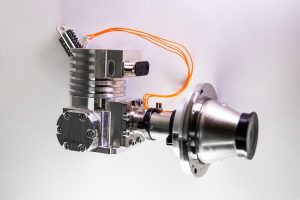
A successful project will raise the competences of the faculty and Slovenian industry, reduce Europe’s dependence on non-European suppliers of cryogenic coolers, and thereby contribute to European sovereignty in space.