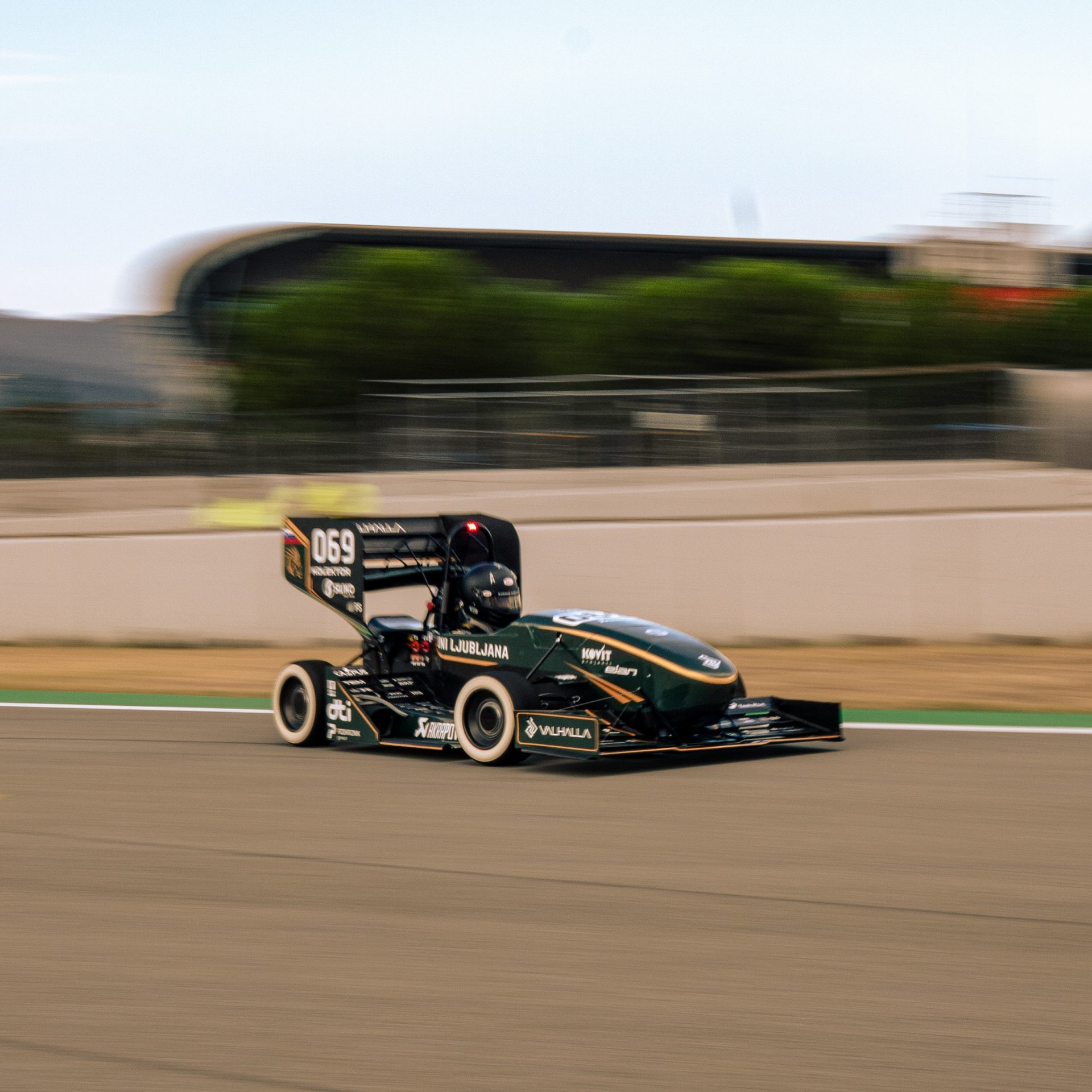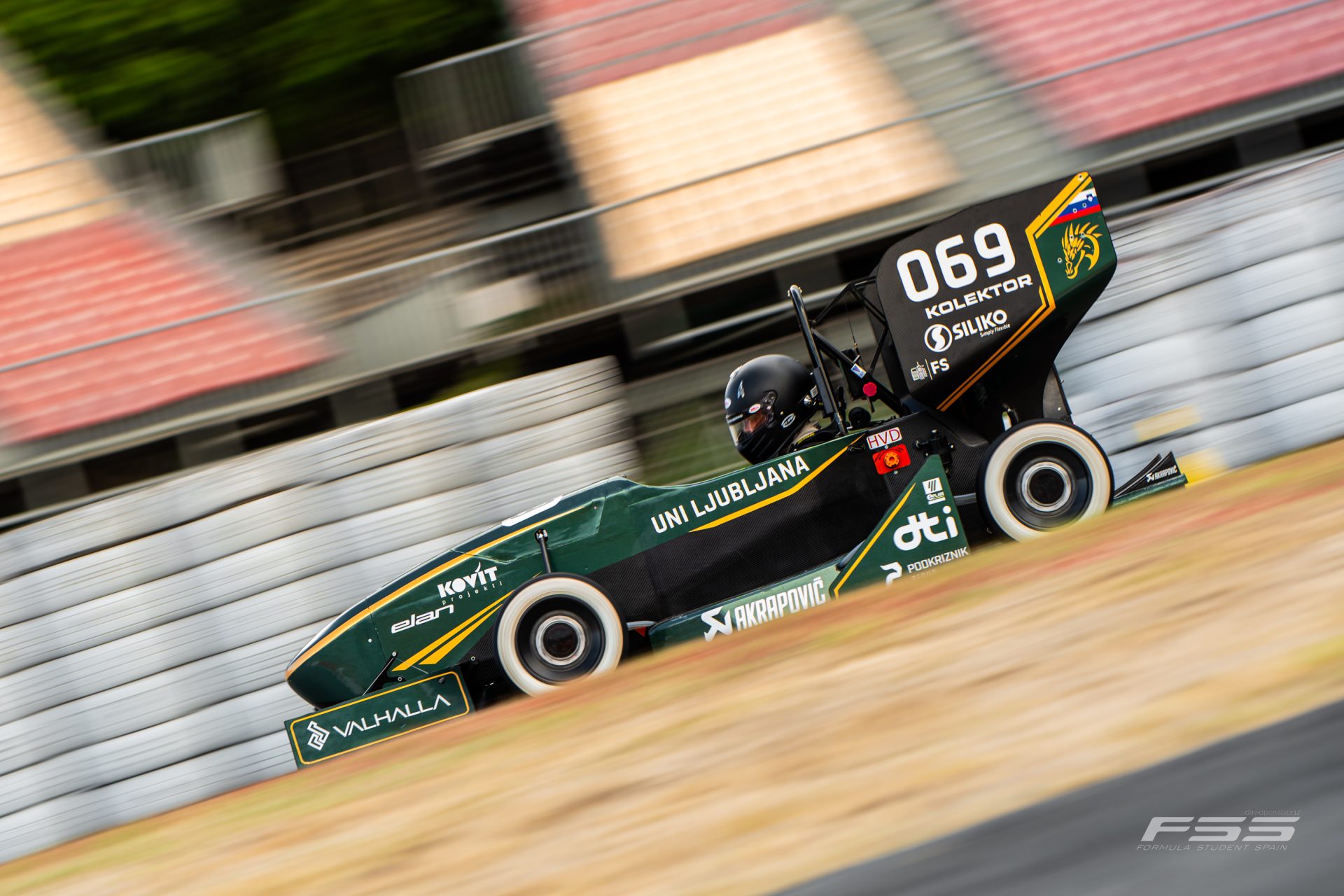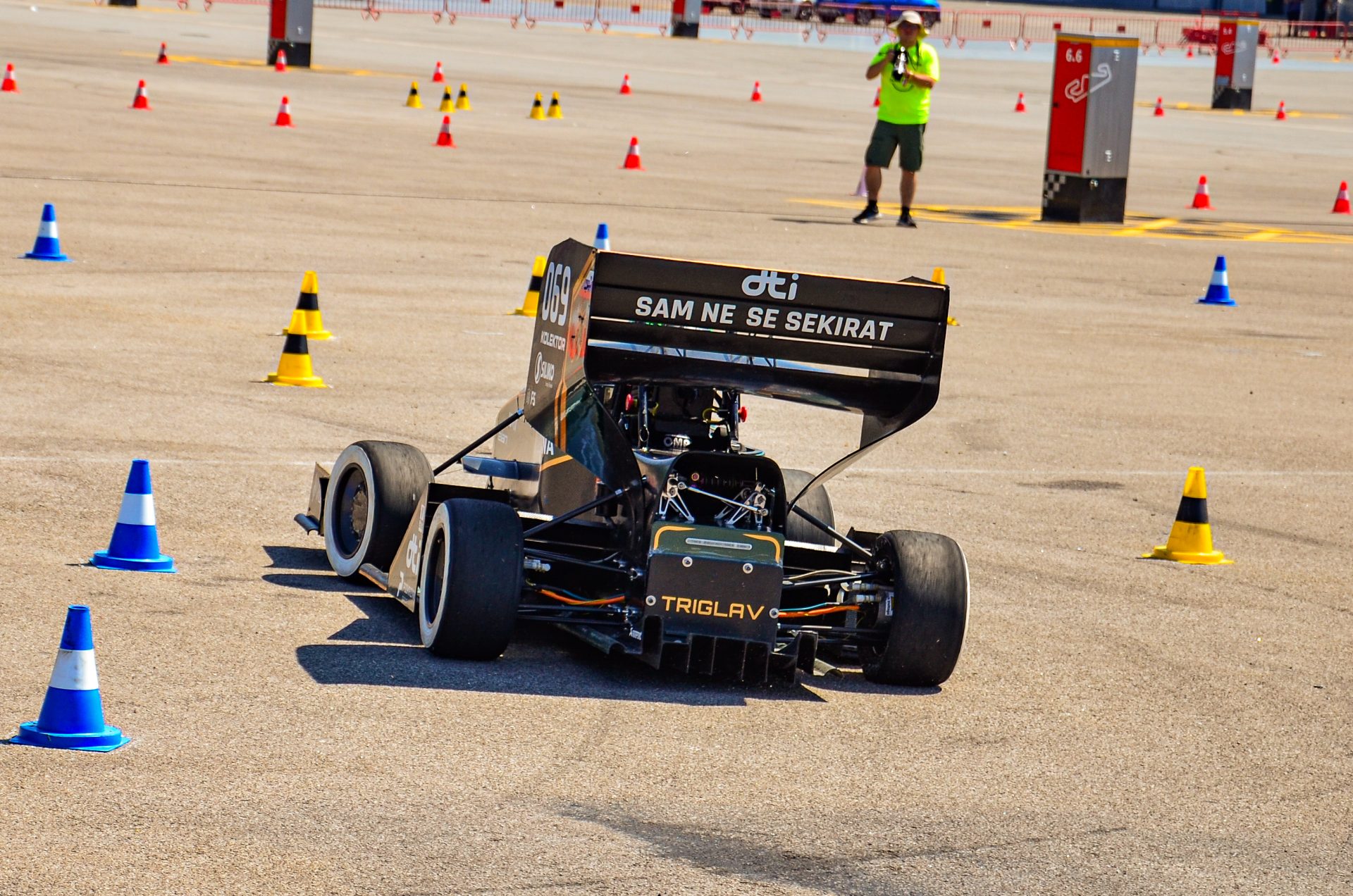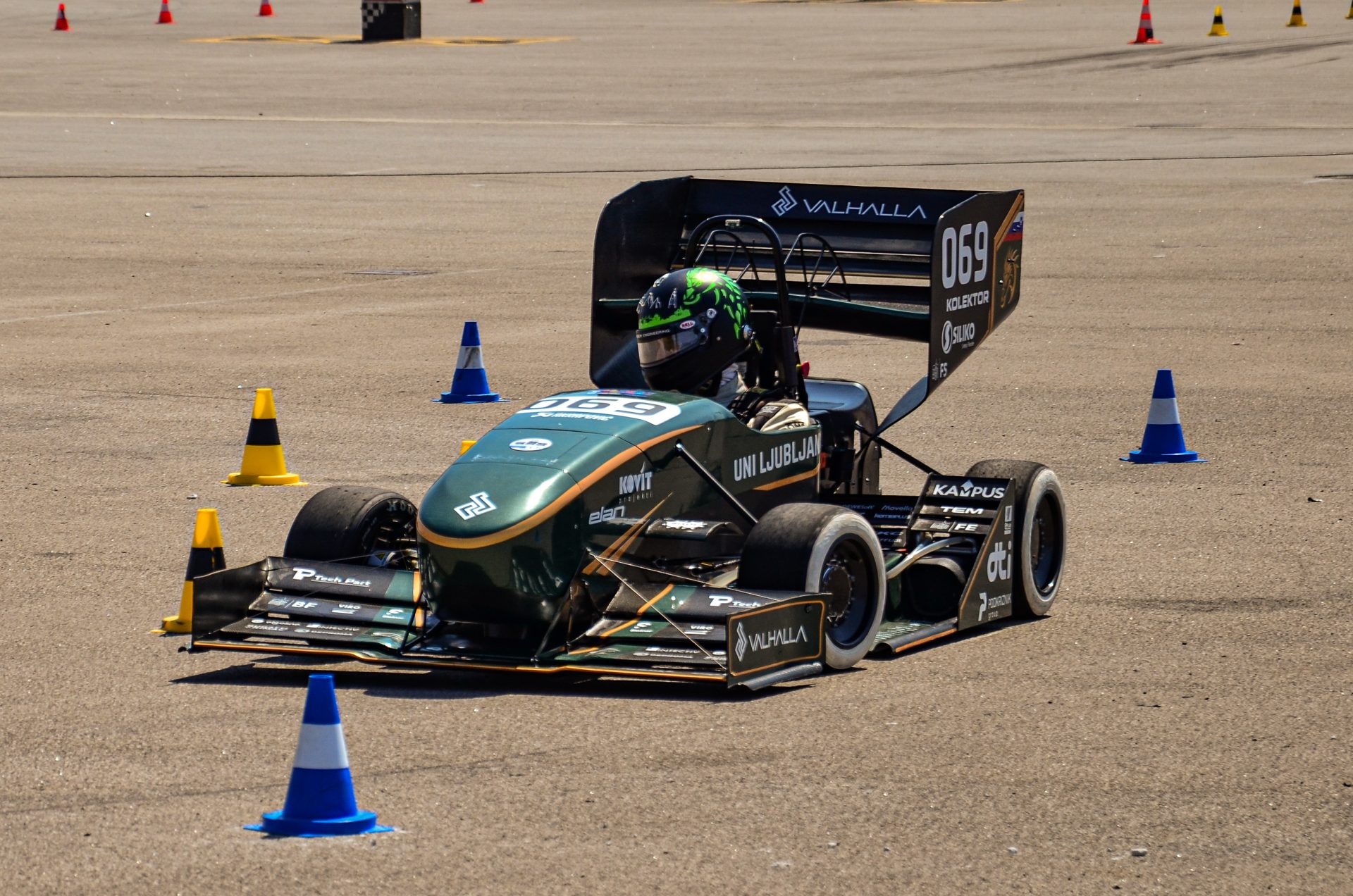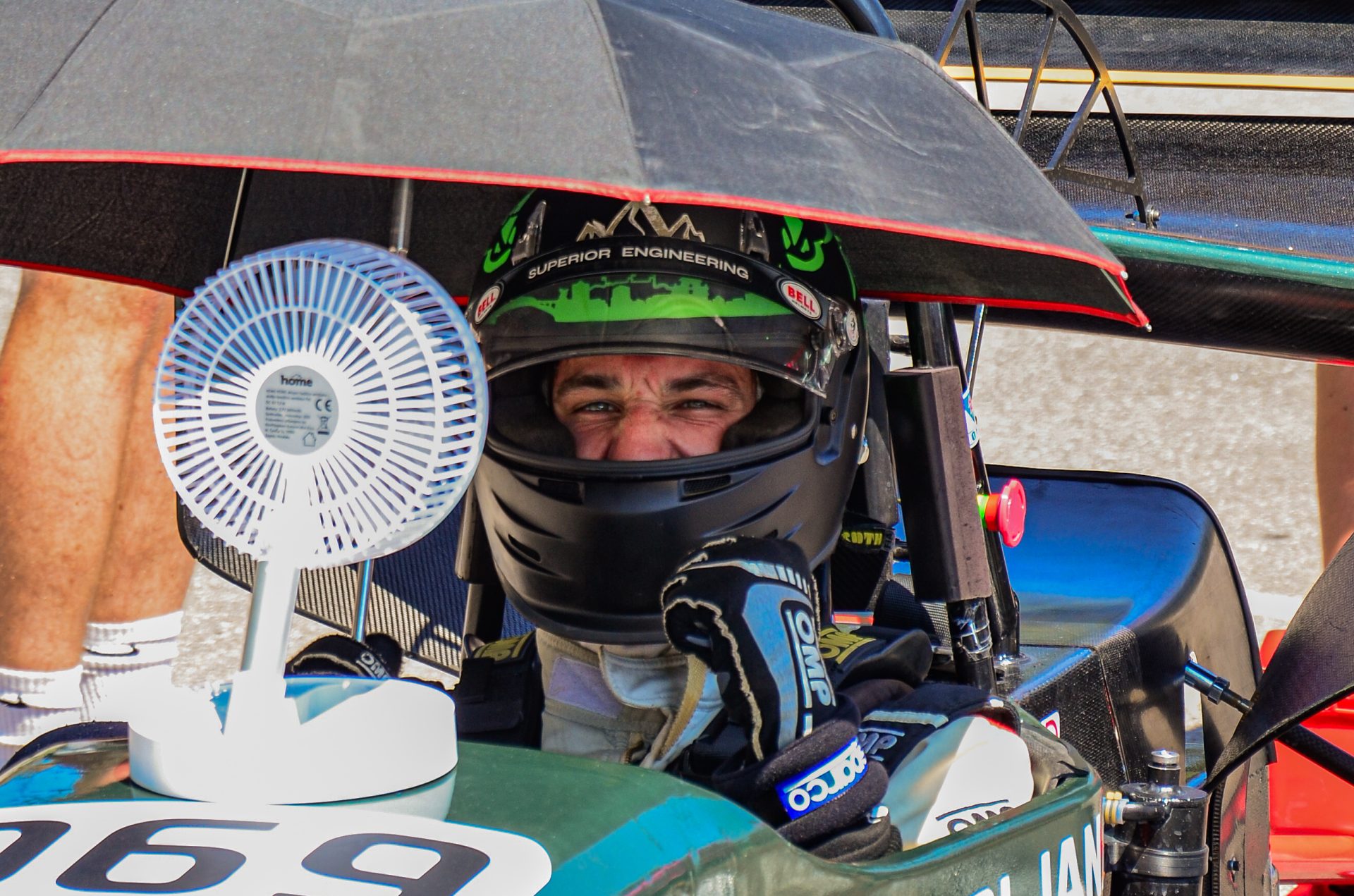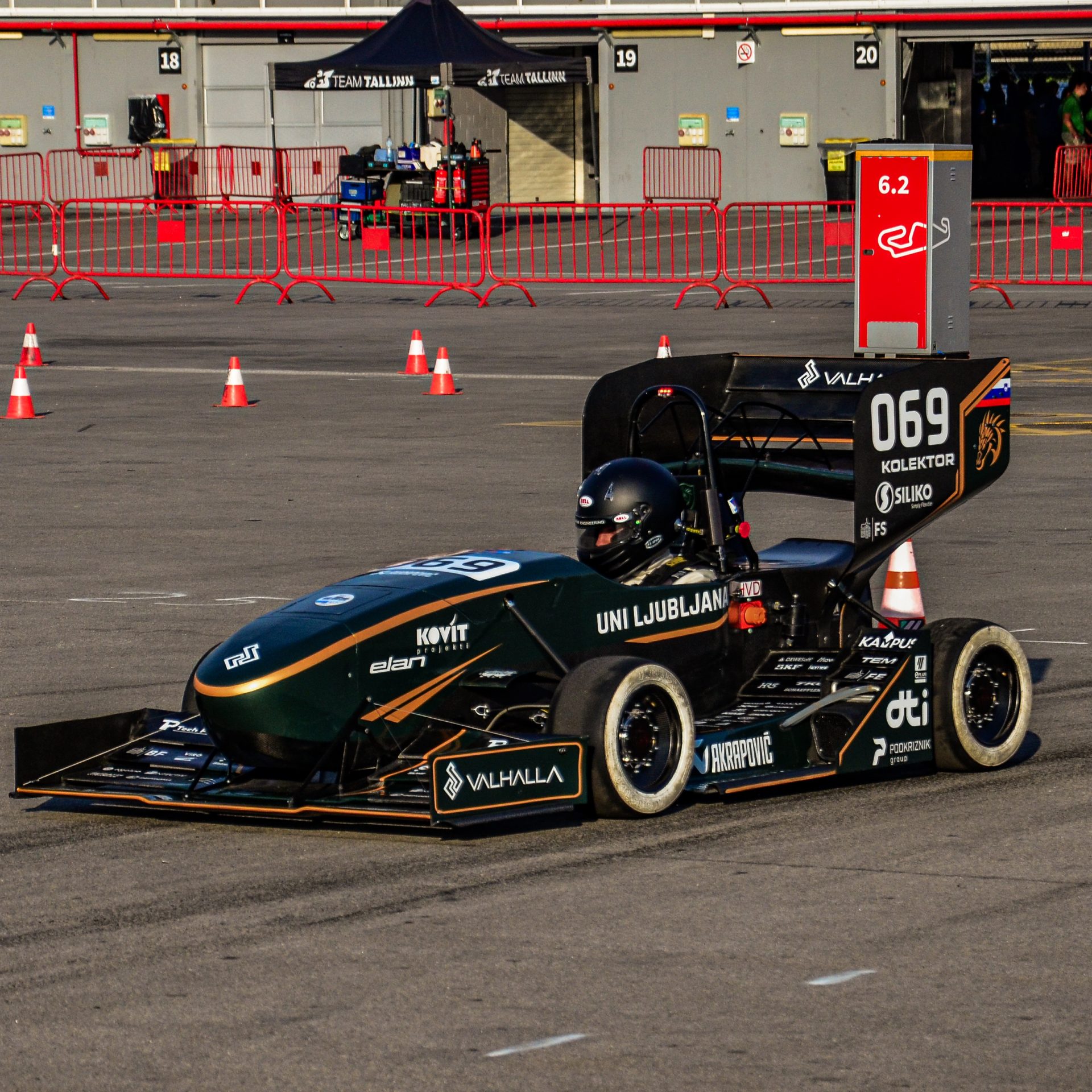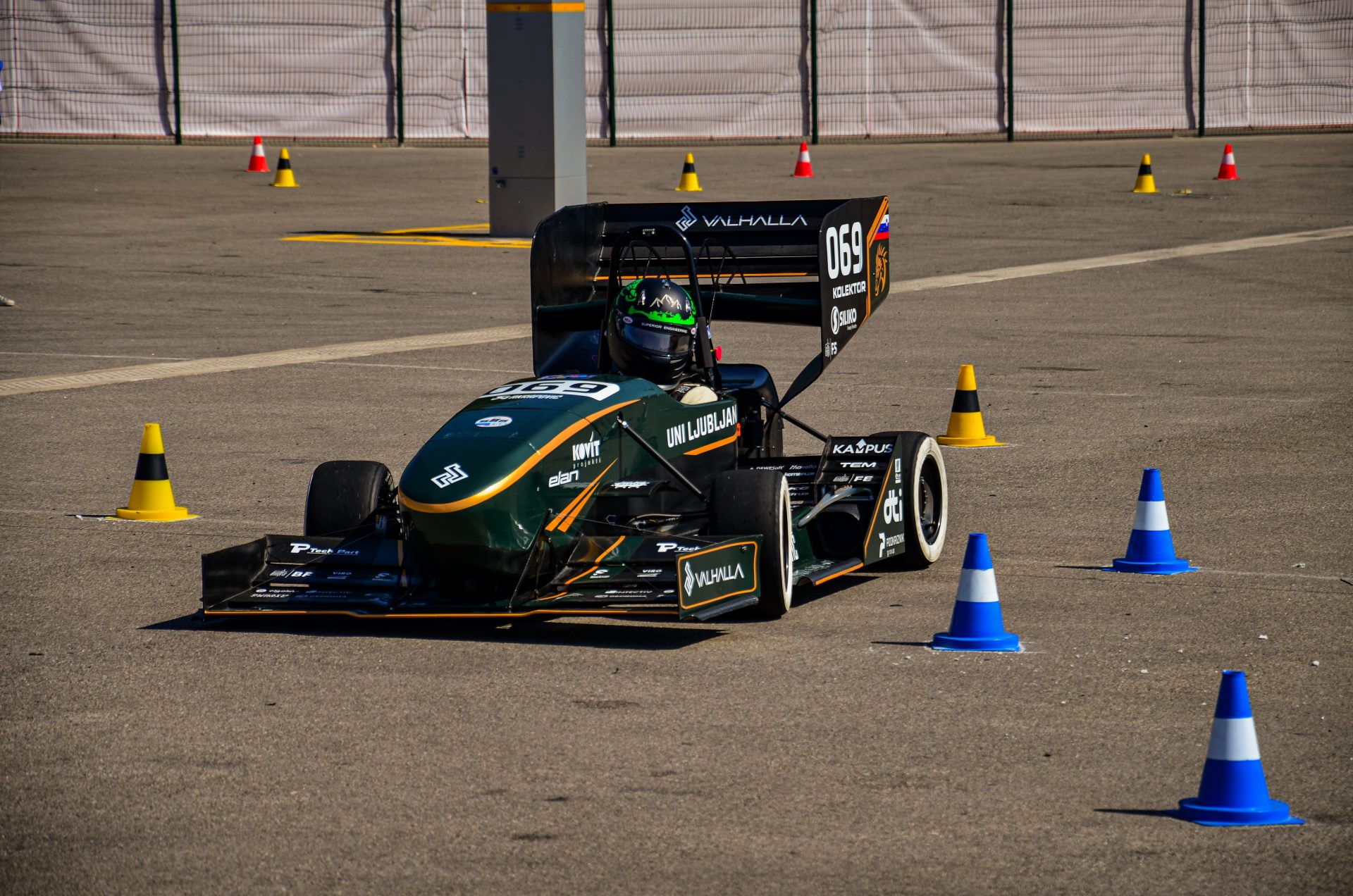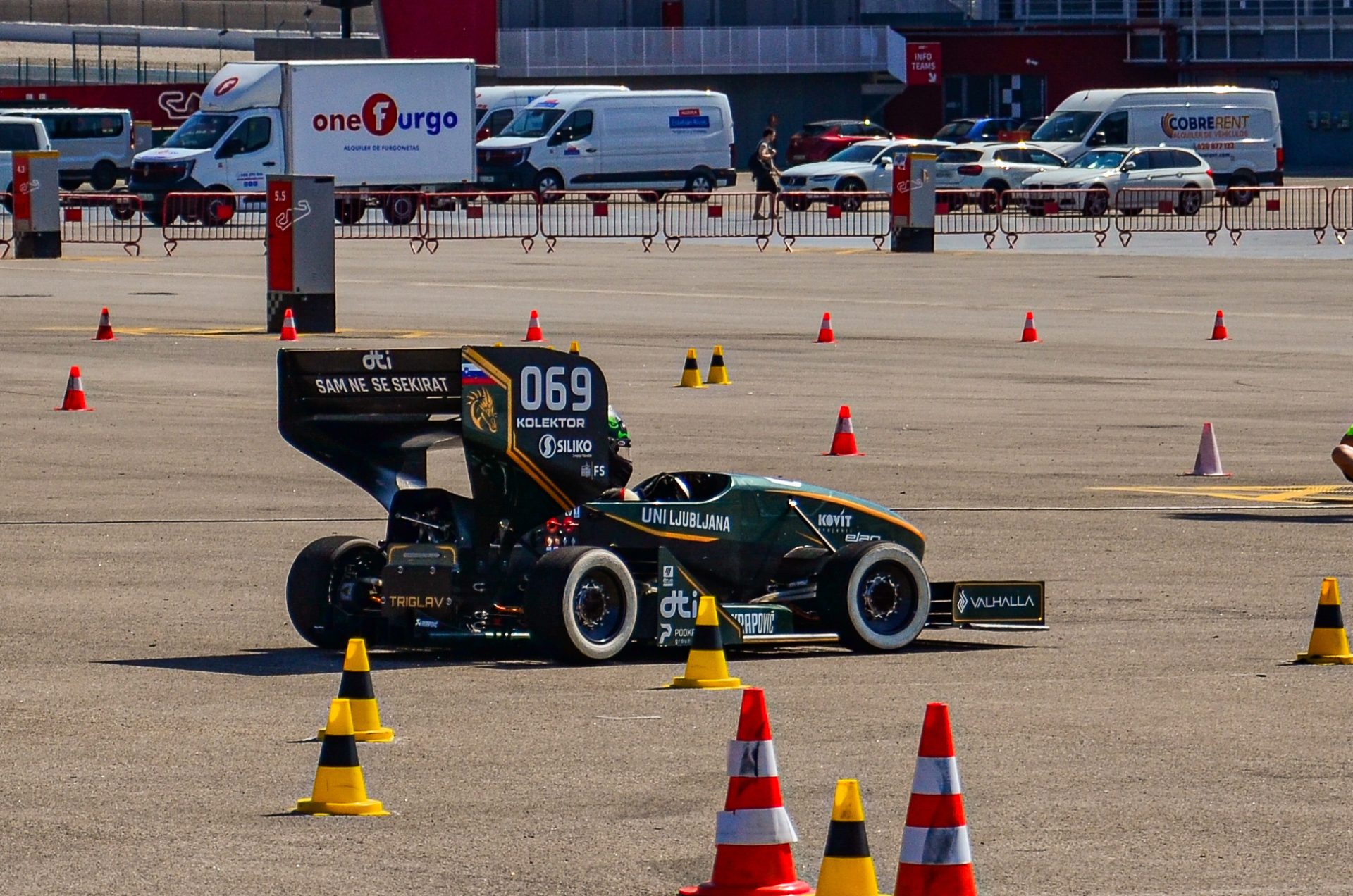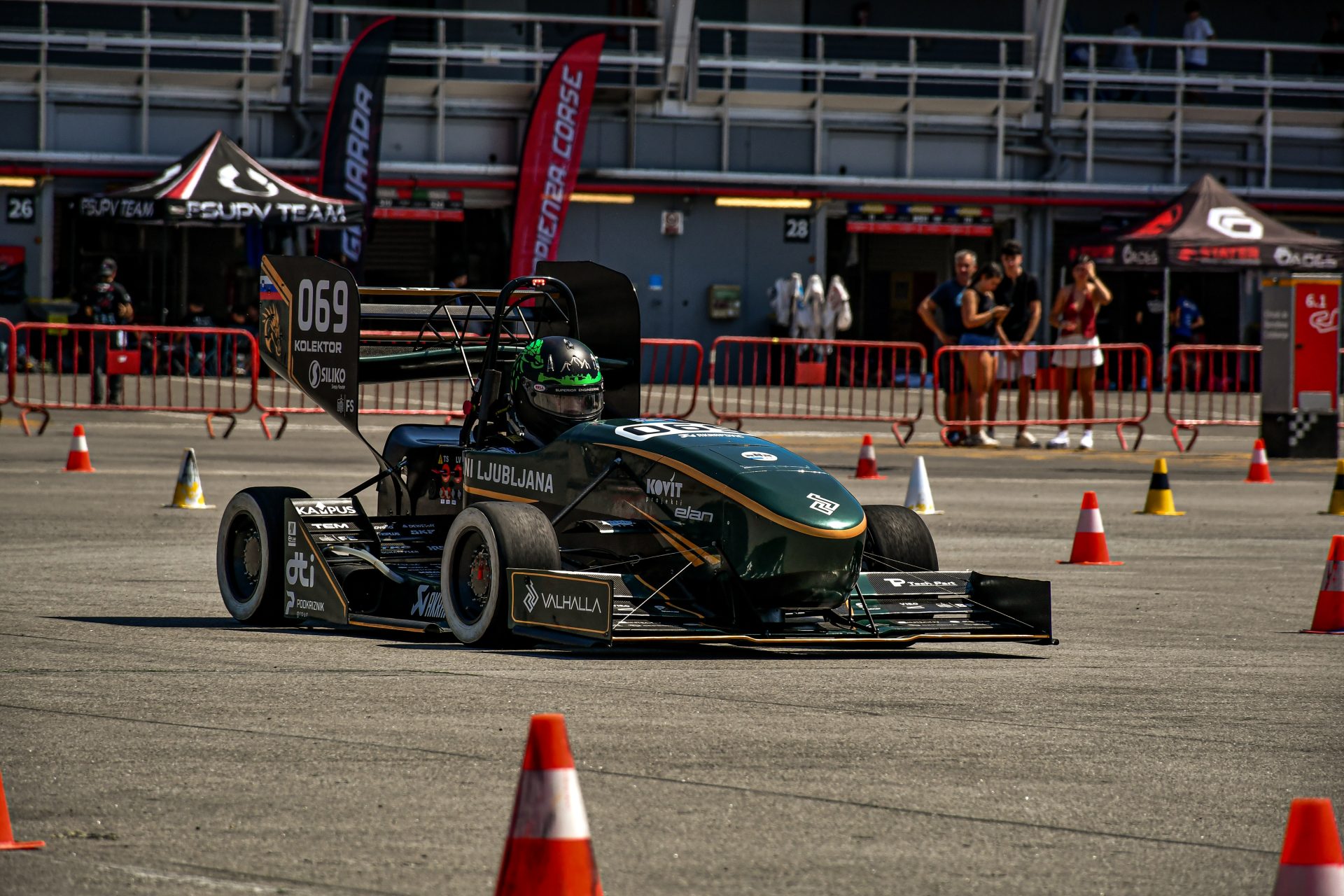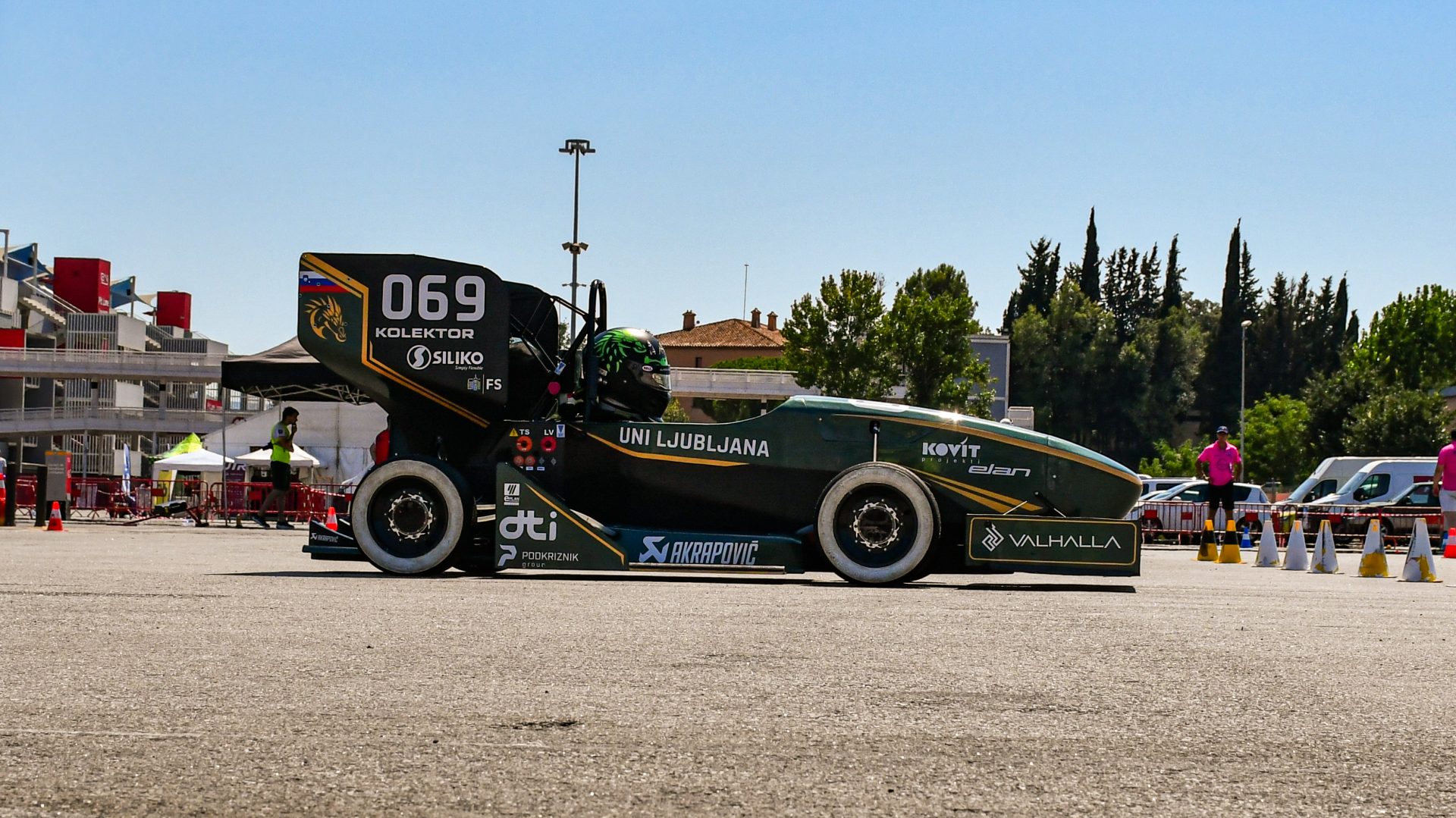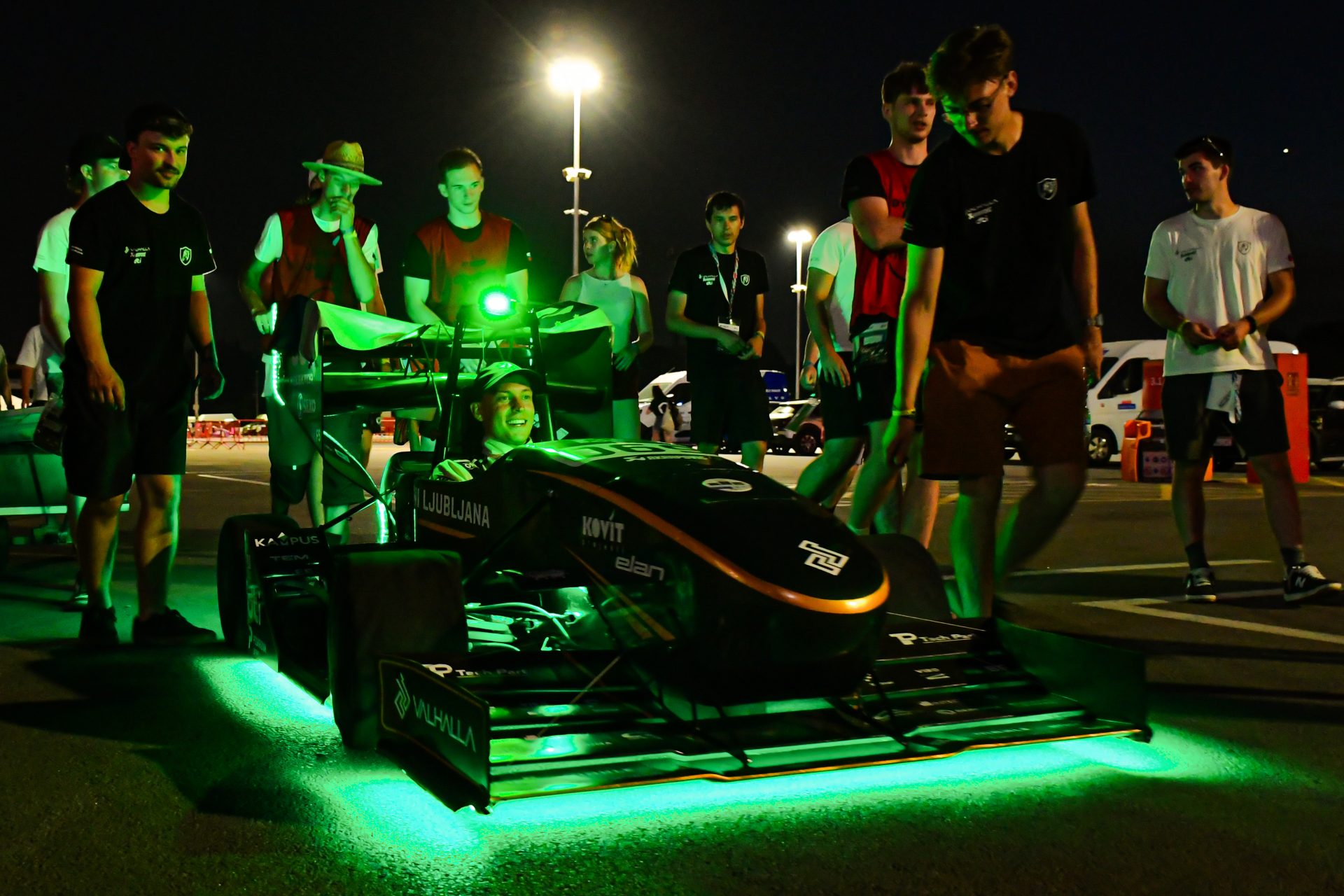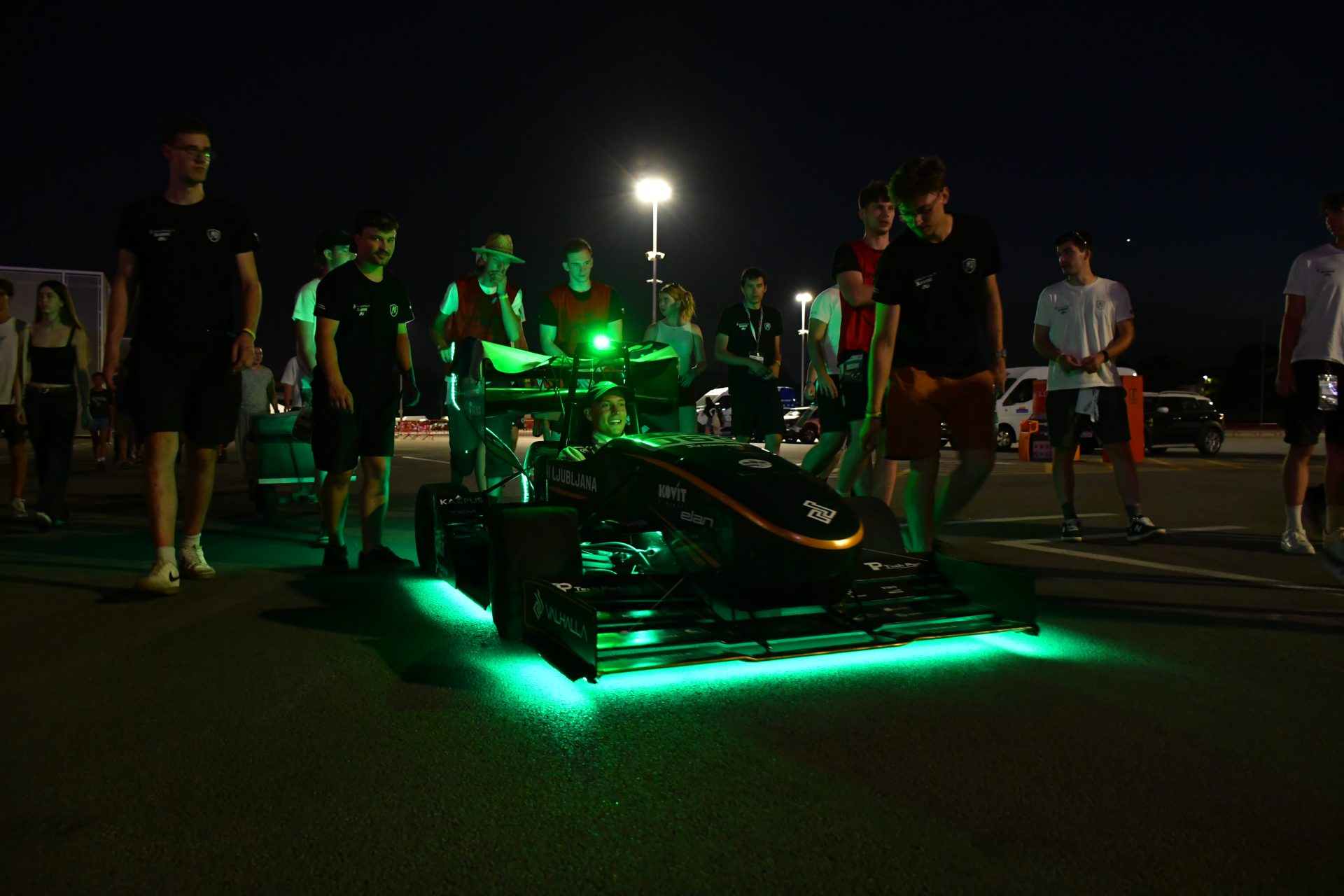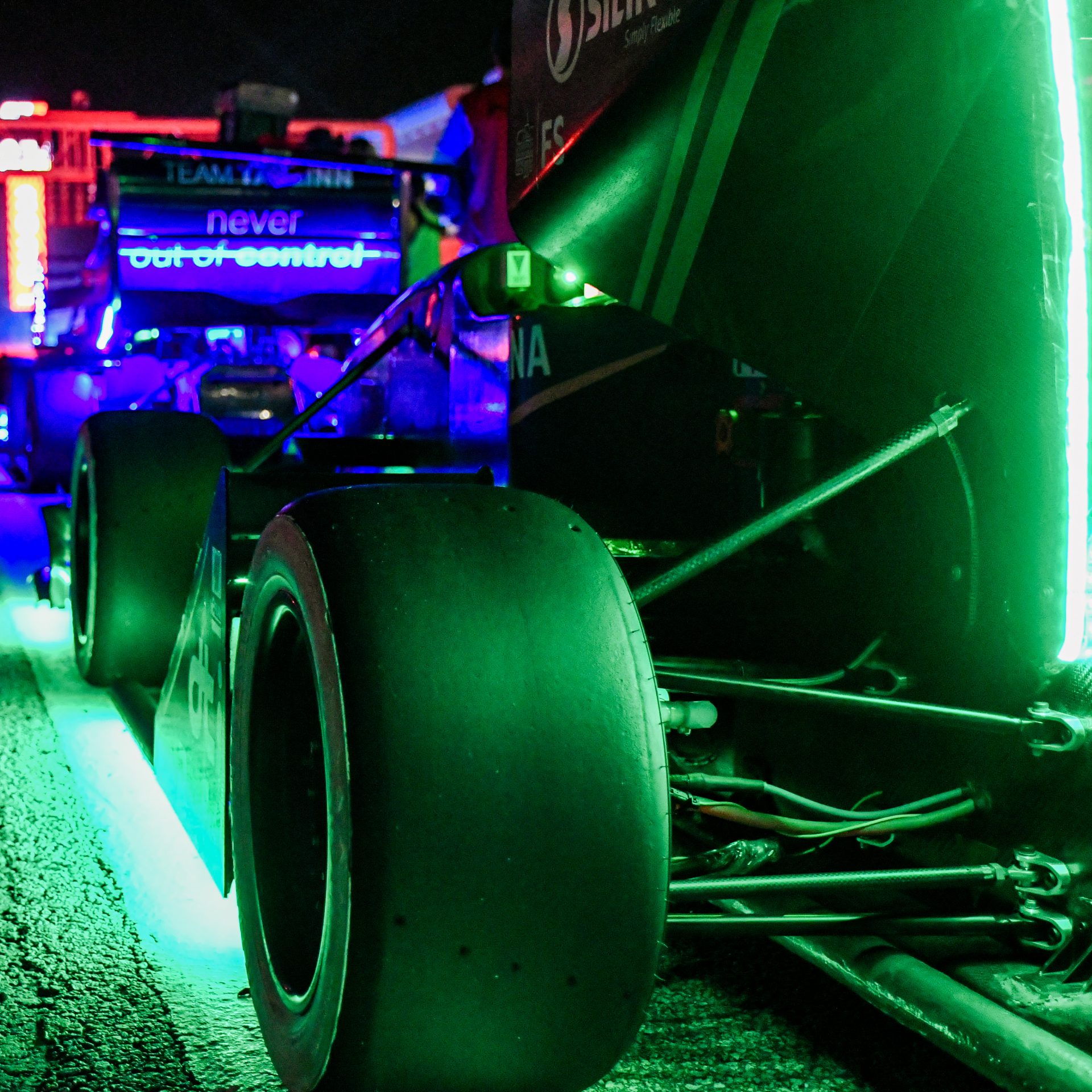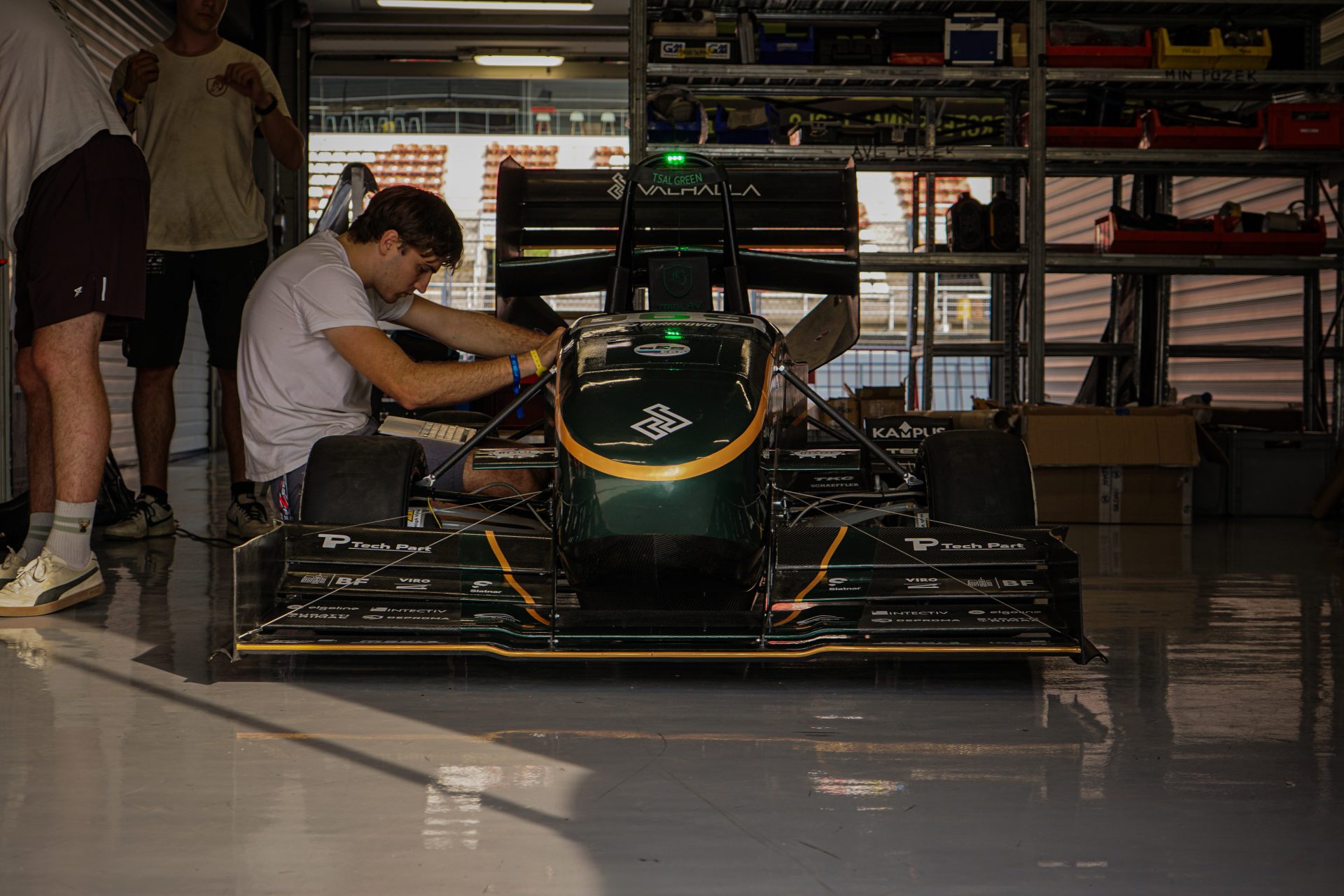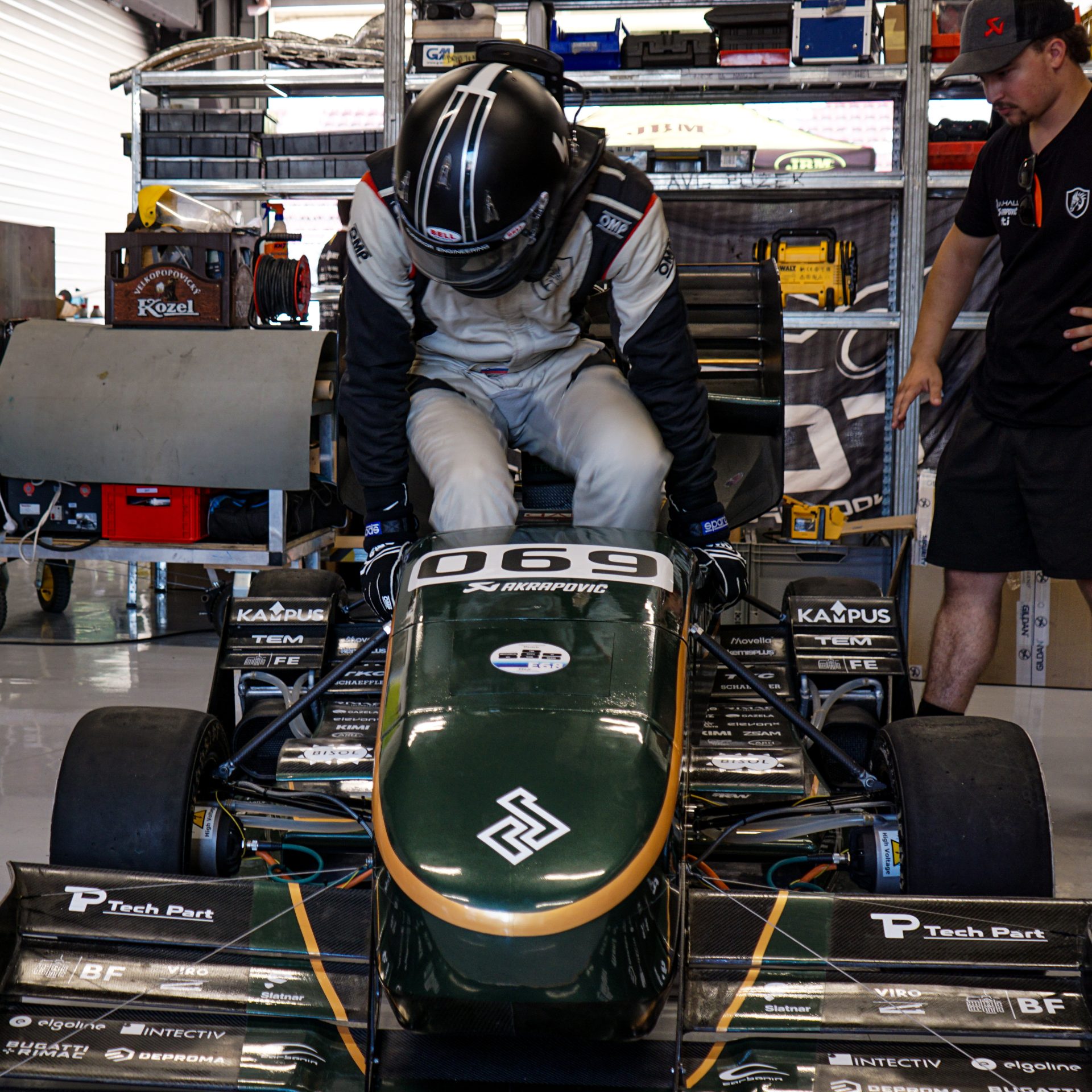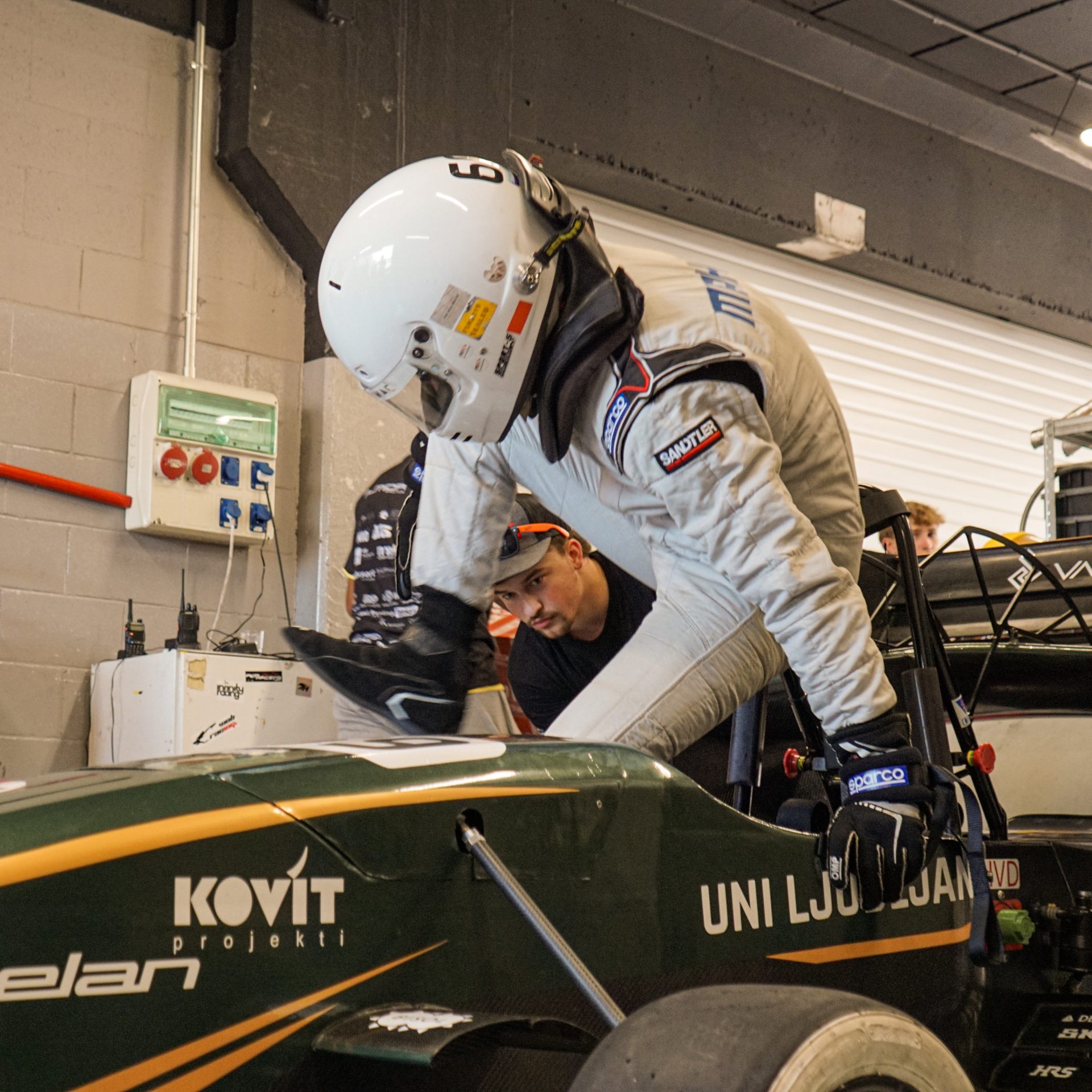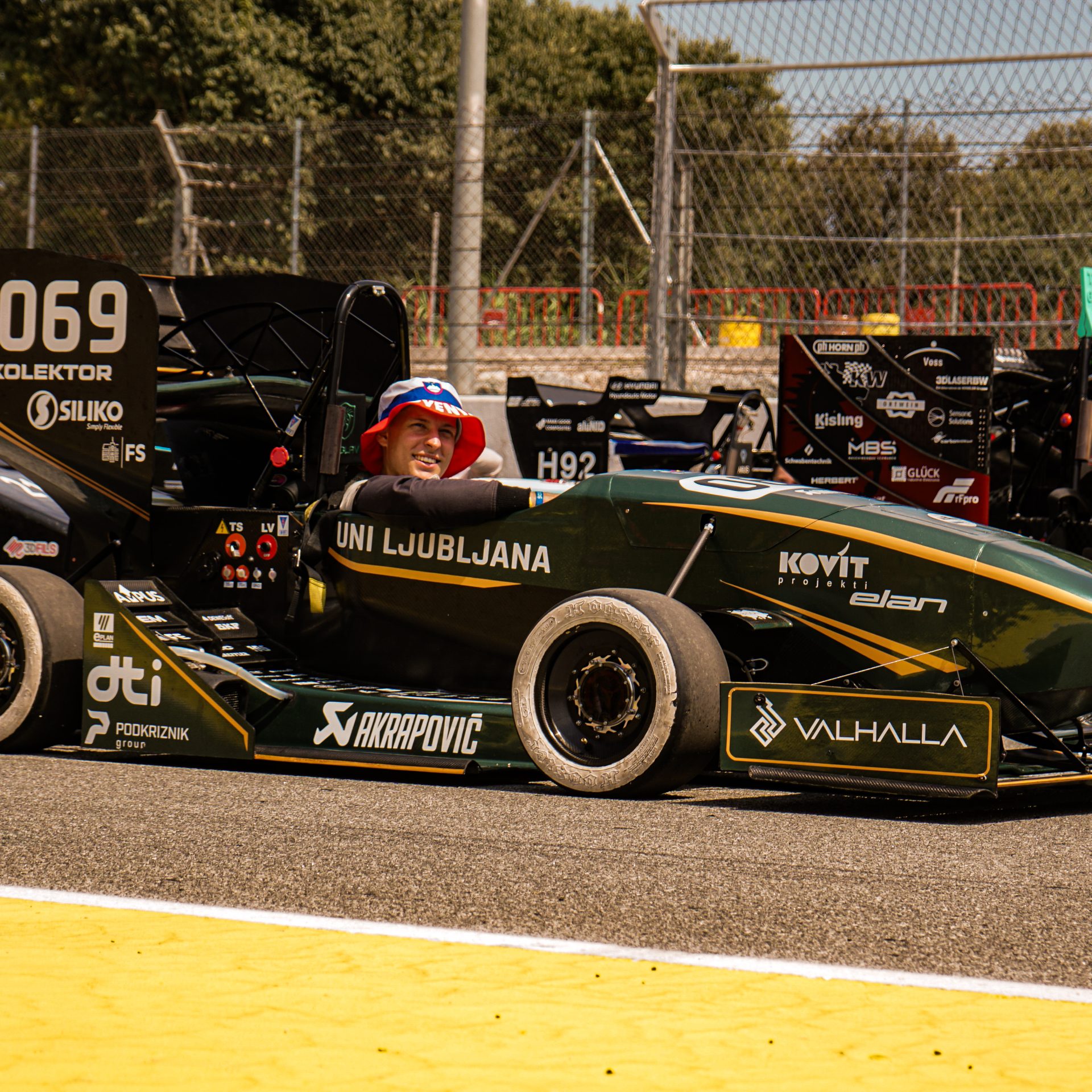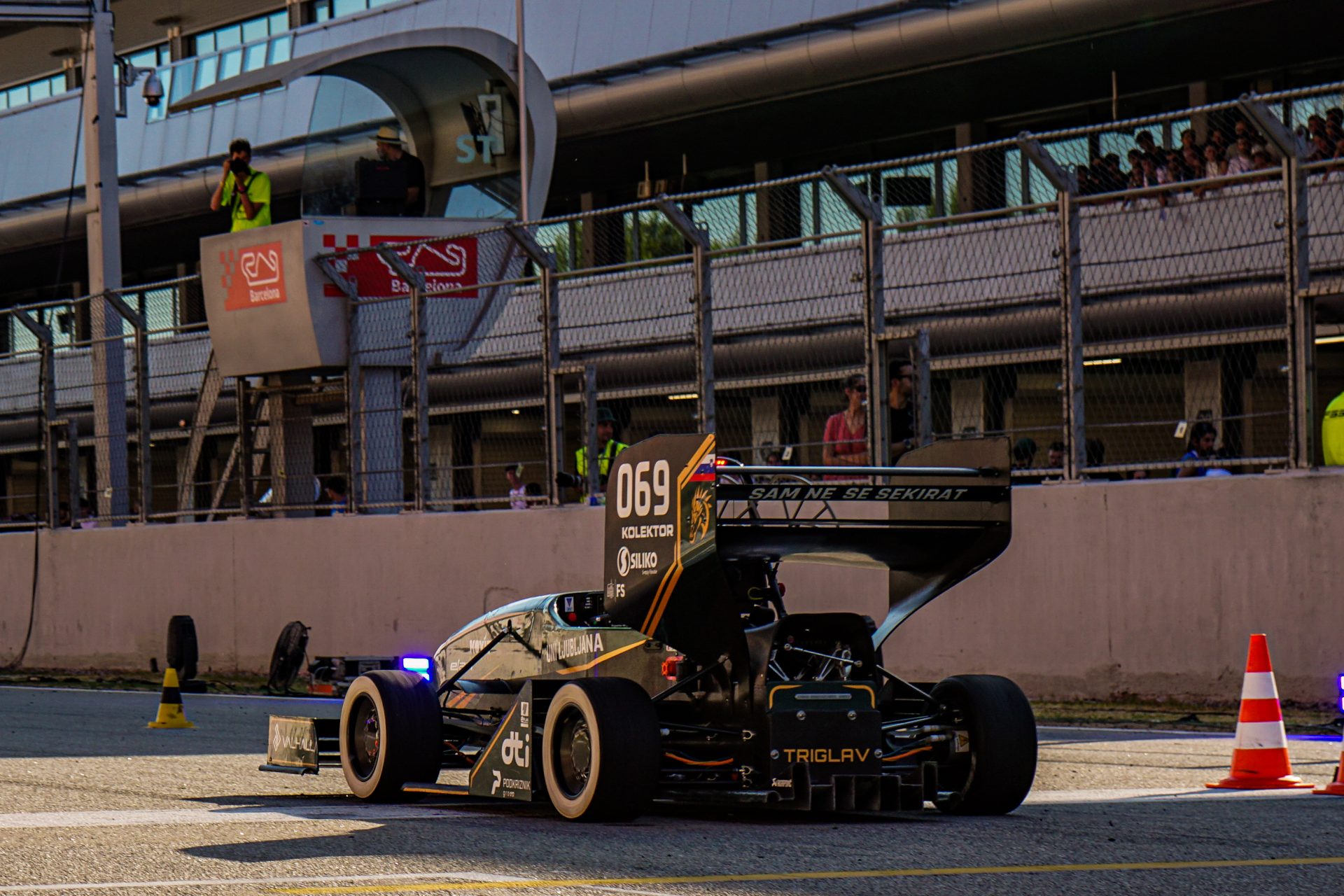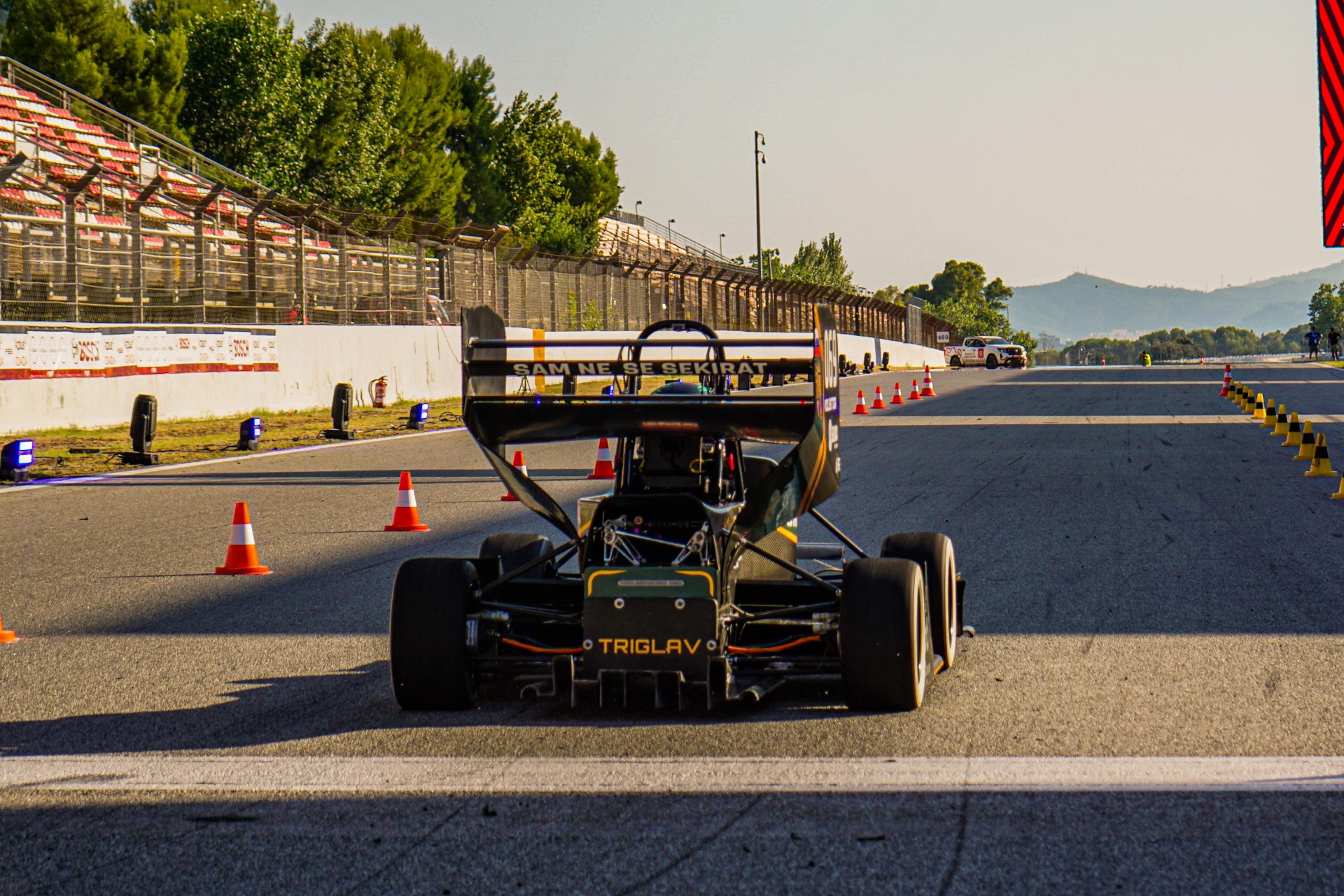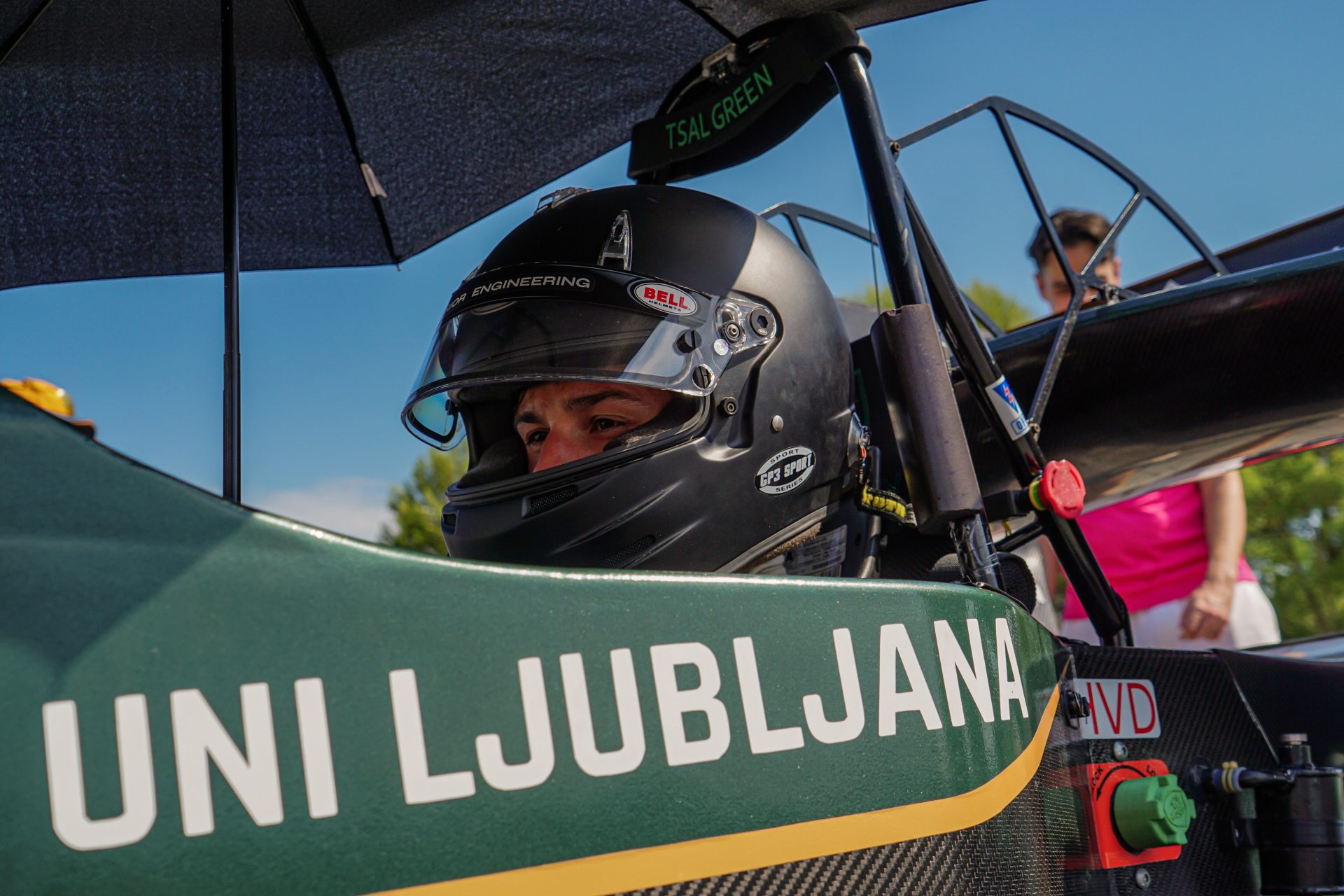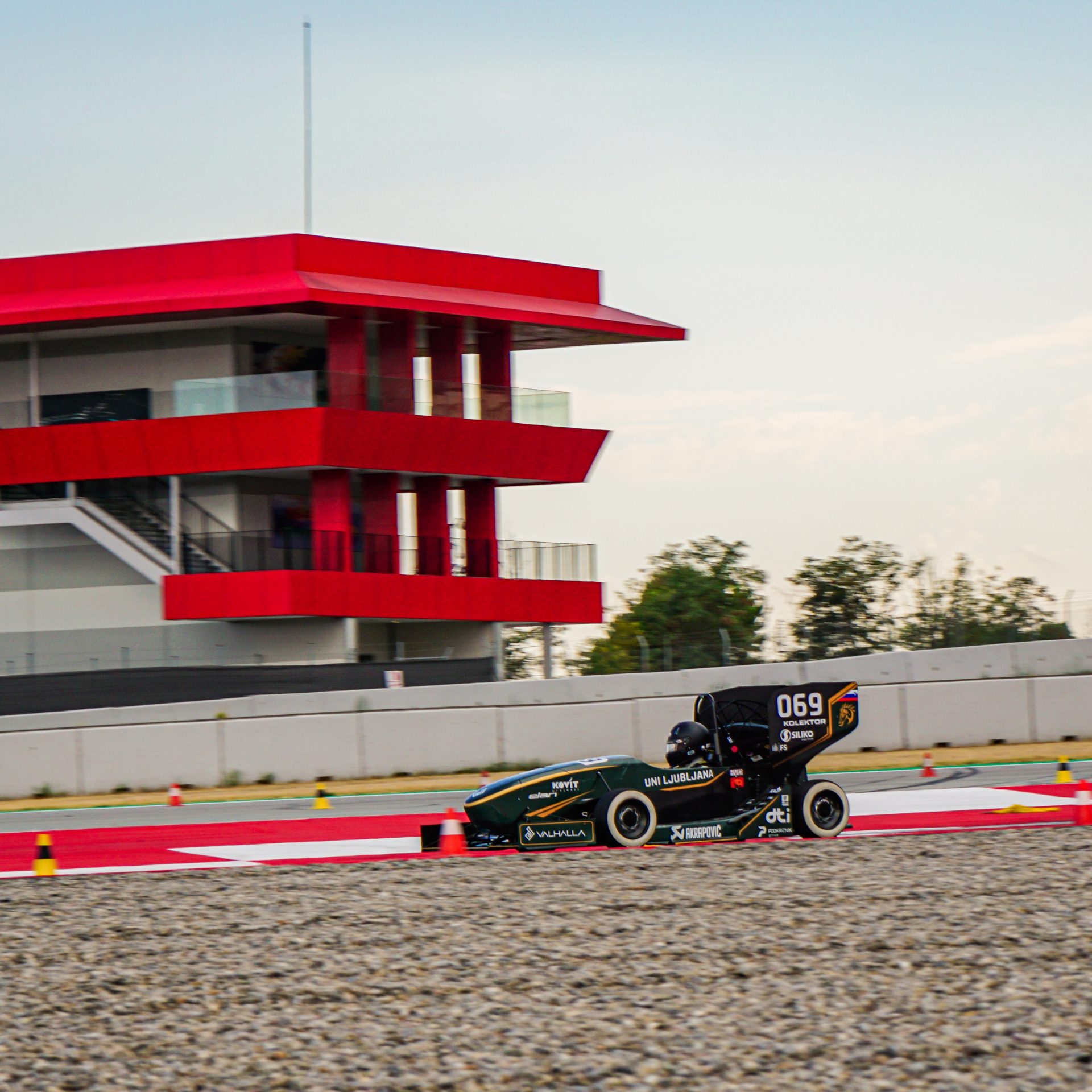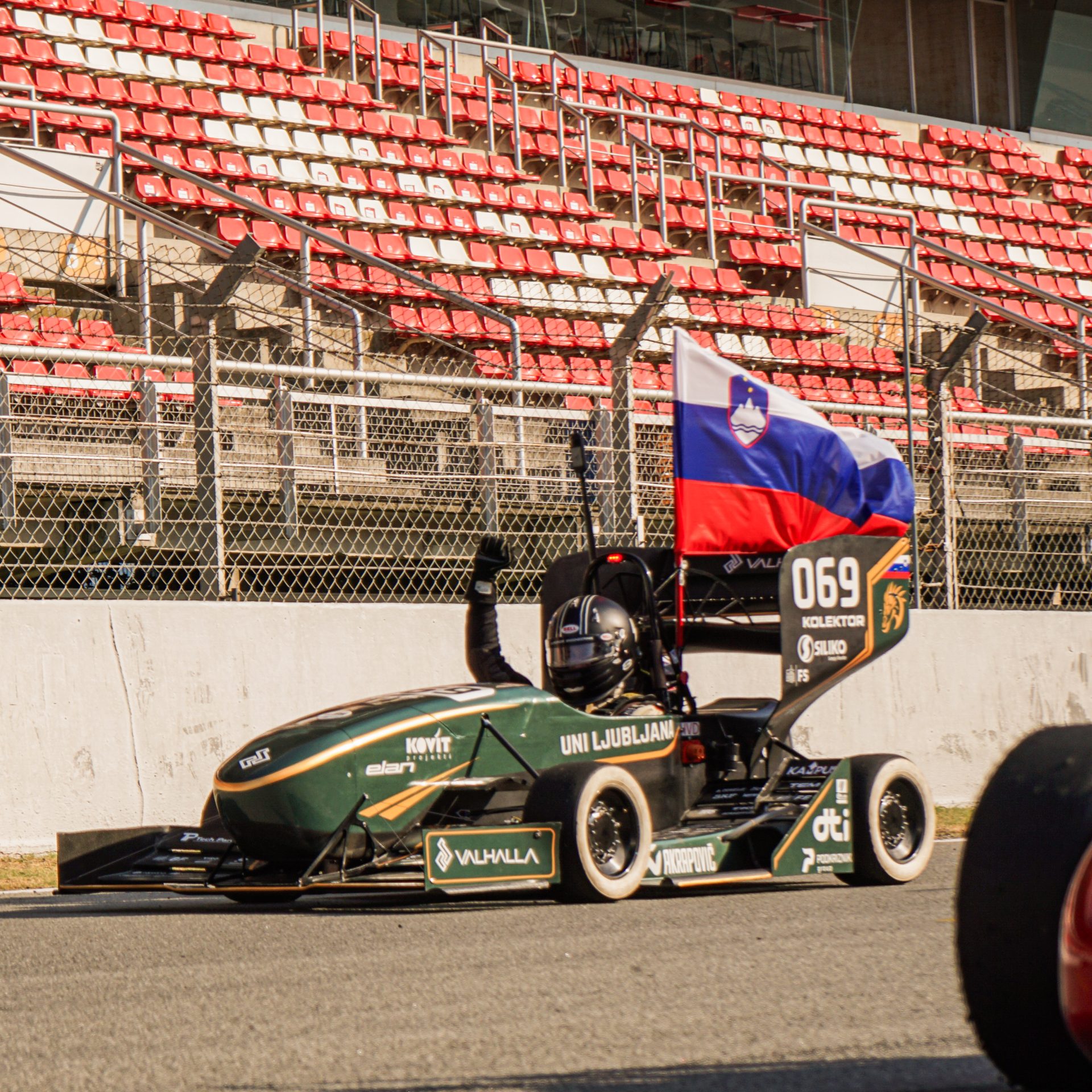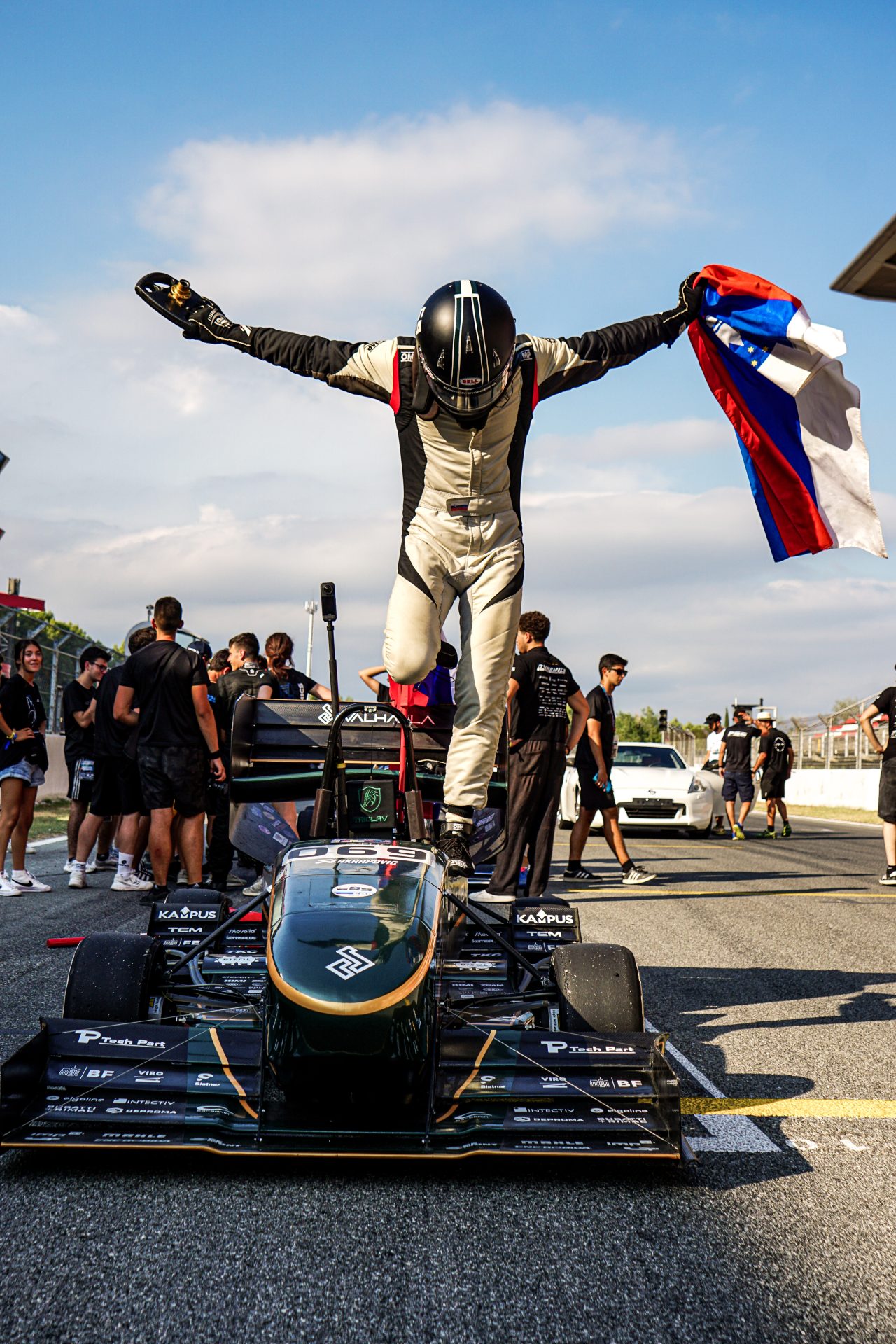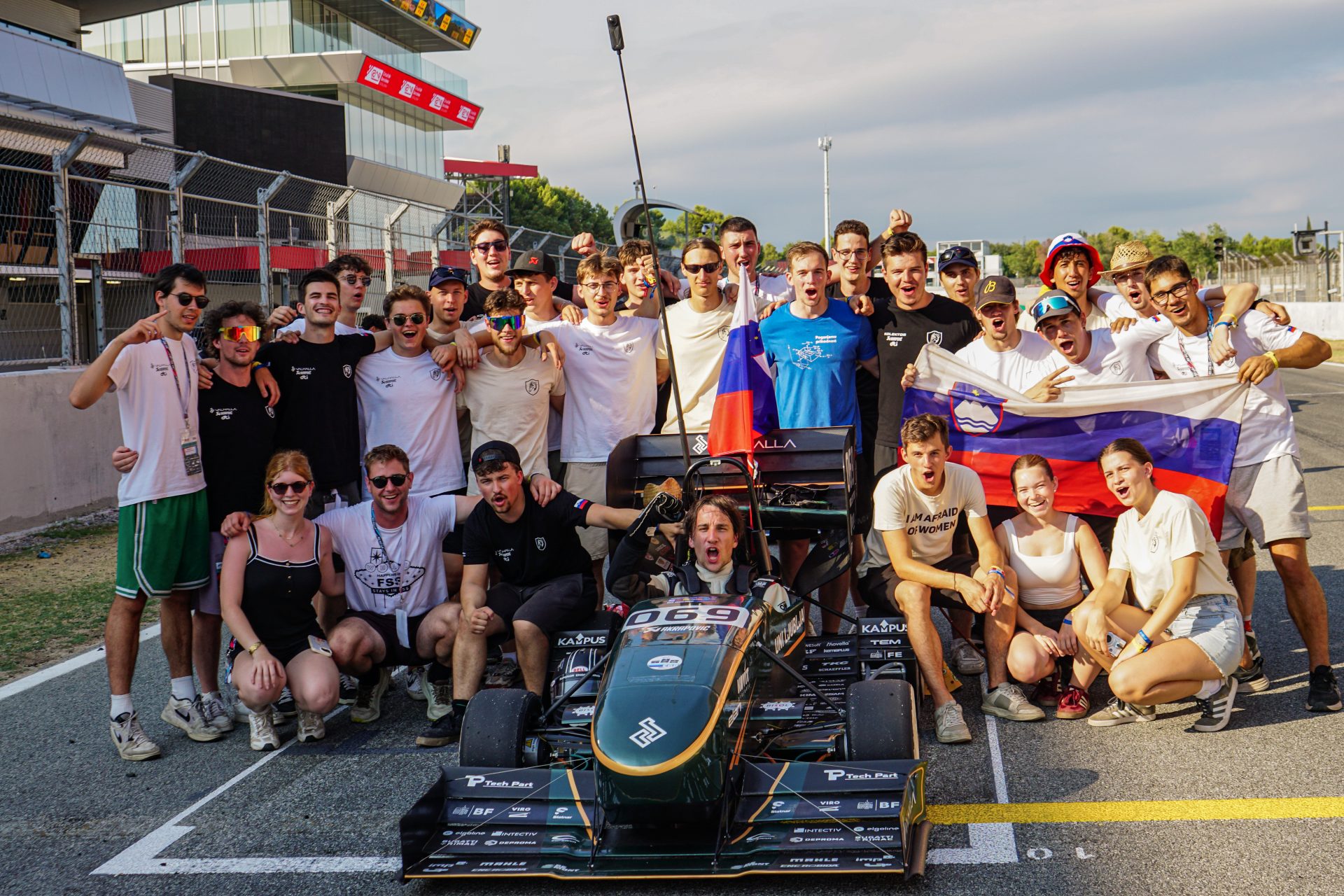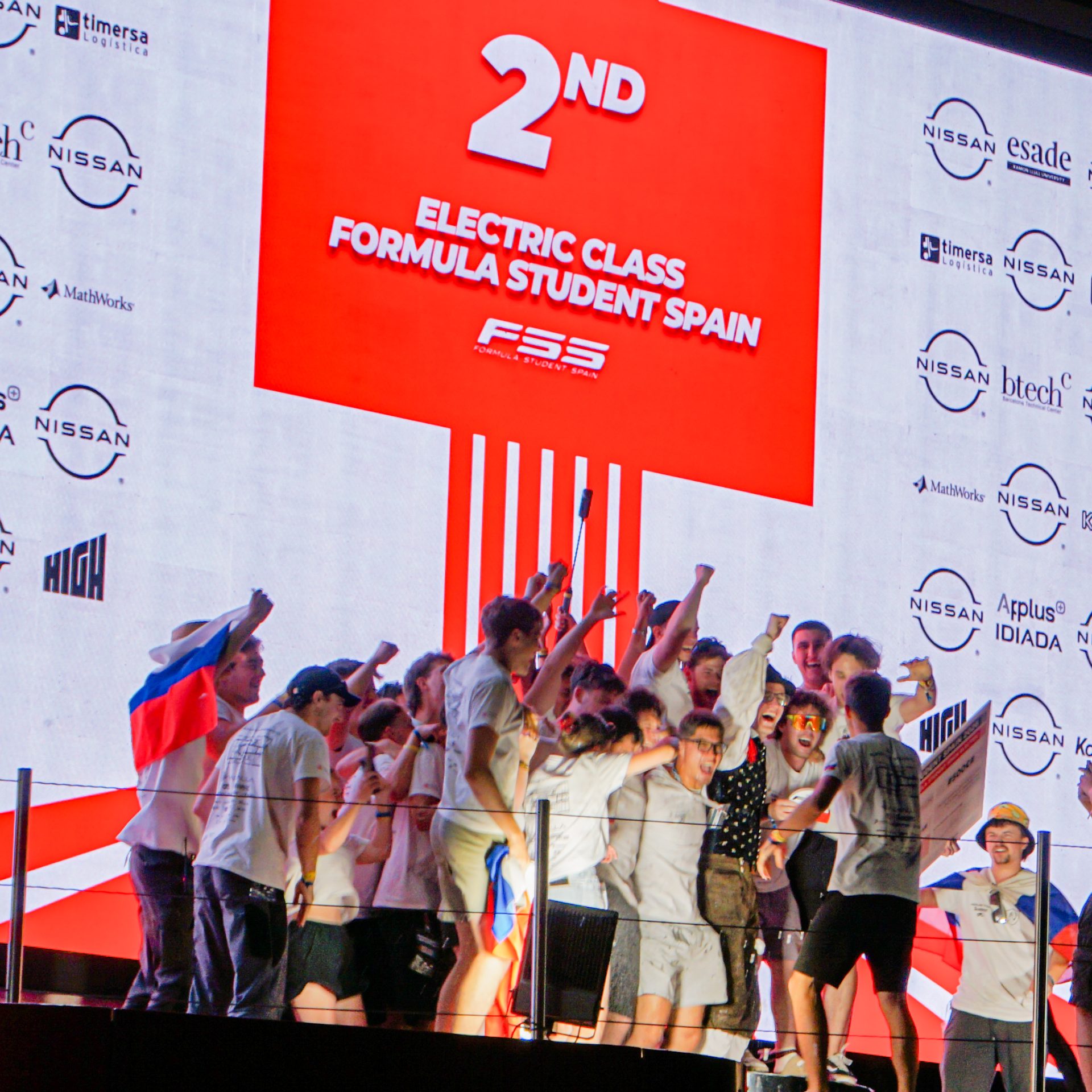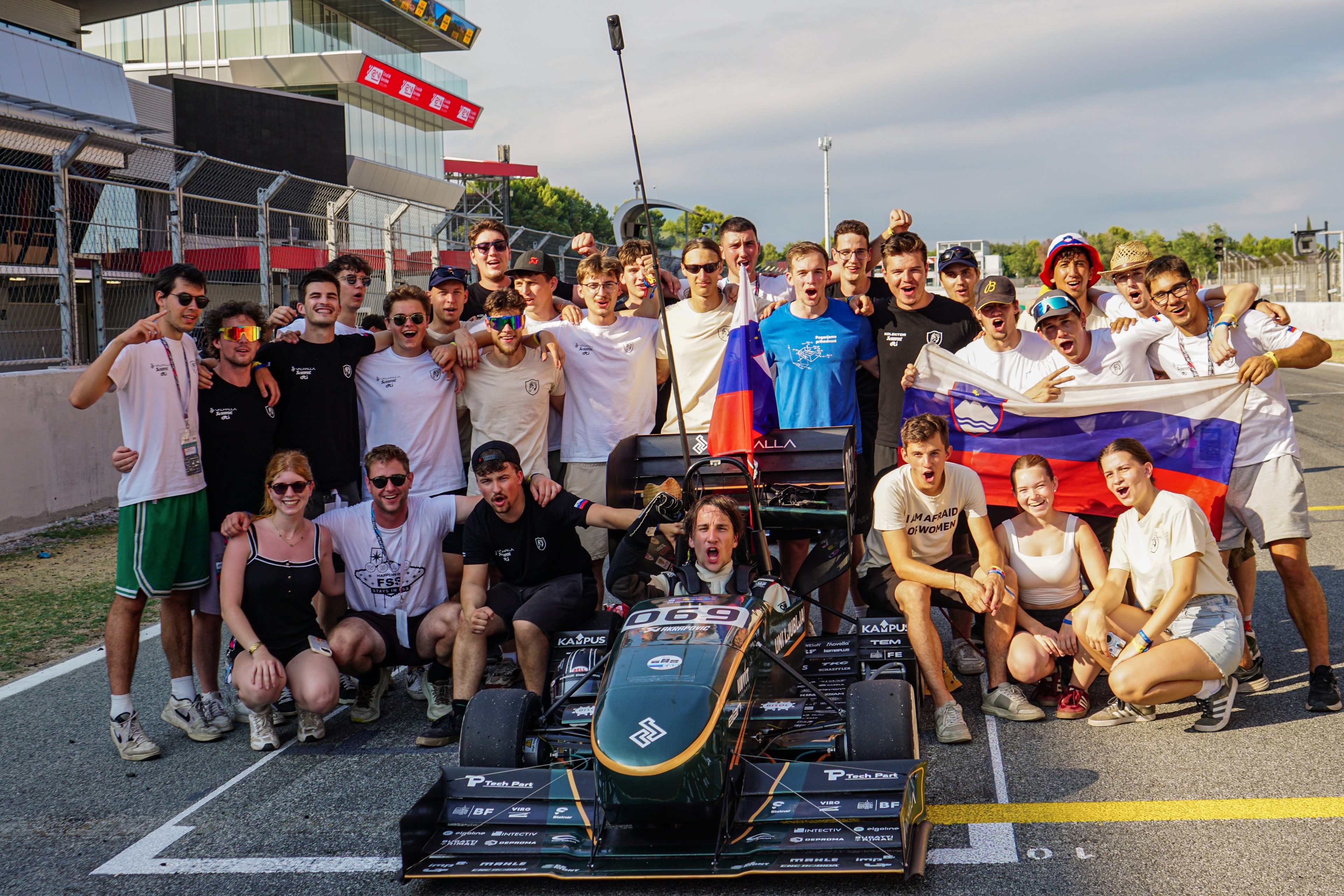
At the 2026 international Formula Student Spain competition, the Superior Engineering student team from the University of Ljubljana won second place in the overall electric formula ranking with their electric race car Triglav. Students from Ljubljana reached the top positions in as many as four dynamic disciplines. Among other achievements, they came second in the acceleration category and third in the endurance testing category, successfully completing the latter for the first time this year. This is the team’s most notable competitive achievement in recent years.
The Formula Student Spain competition took place from 1 to 7 August at the Circuit de Barcelona-Catalunya in Spain. This is one of the most prominent Formula Student competitions in Europe, in which university teams from around the world test their skills in developing, constructing and operating racing cars.
More than 60 university teams participated in this year’s competition. In the electric formula category, 42 teams from 17 countries took part, including three teams ranked amongst the top 12 in the world rankings for electric Formula Student teams. Superior Engineering came second out of 42 electric formula cars. The Estonian team FS Team Tallinn won, and the Hungarian team Arrabona Racing Team was third.
The scale of this success is further illustrated by the world rankings of electric Formula Student teams. Superior Engineering currently sits in 72nd place, but this result will propel them closer to the top of the rankings. Three teams from the world’s top twelve were also among the competitors in Barcelona.
Much more than a race
Formula Student is not just a speed competition. The teams compete in a series of static and dynamic disciplines that test the technical excellence of the racing car, engineering expertise, team organisation and business acumen.
The team came second in the Acceleration event, third in the Skidpad manoeuvrability test, sixth in the Autocross time trial, and also took third place in the Efficiency category. This year’s result holds special significance for the team, as it successfully completed the entire Endurance race for the first time with the Triglav racing car, finishing in third place.
Endurance is considered one of the most demanding disciplines of Formula Student competitions. The racing cars are prototypes developed and built by the students themselves, which is why reliability during prolonged and intensive driving is one of the key engineering challenges. Many teams are unable to complete the race due to technical problems, so successfully finishing the race is a significant testament to the reliability of the entire racing car.
“This result is a reward for all the effort, sacrifice and hard work throughout the season. This year, as a team, we have taken a big step forward and raised our game in every respect. All of us team members knew what our goals were throughout the year, and everyone did their very best to help us achieve them,” said team leader Lan Jenčič. “I am incredibly proud to be part of a team where we are all united by the same passion and driven by the same desire – to compete, to improve and to prove ourselves at the very highest level,” he added.
According to the team, Triglav’s technical improvements, and above all the progress made by the whole team, played a significant part in securing second place. The knowledge and experience that the team members have gained during development, testing and previous competitions came together in Spain to produce the most successful performance to date for this generation of Superior Engineering.
70 members, 50,000 hours of work
Behind this success lies several months’ work by the 70 members of the team, who together have put in around 50,000 hours of work on the development of this year’s racing car. 30 members of the team travelled to Spain.
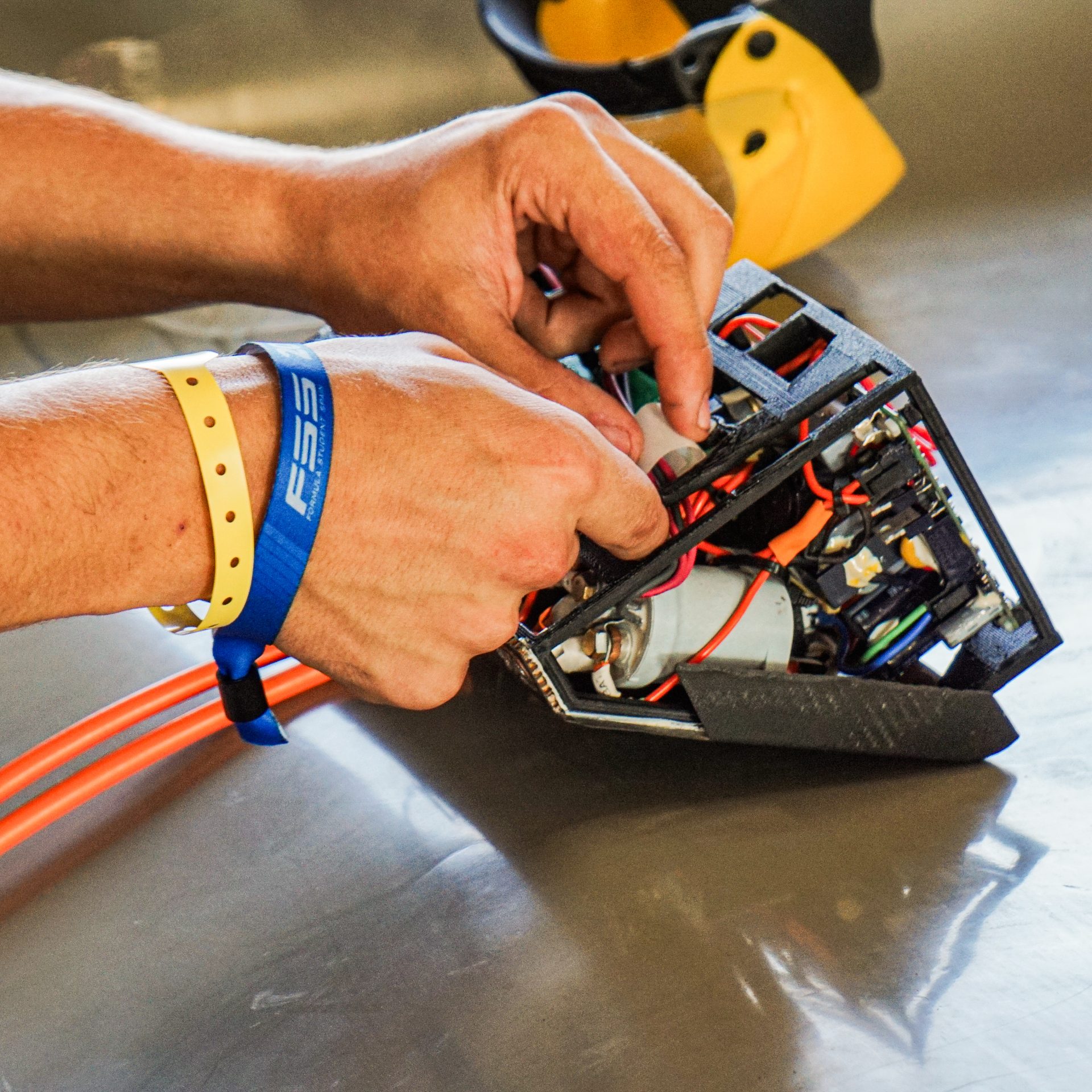
Superior Engineering is an interdisciplinary student project involving students from the Faculty of Mechanical Engineering, the Faculty of Electrical Engineering, the Faculty of Computer and Information Science, and the Faculty of Economics at the University of Ljubljana.
“This result is an exceptional proof of the knowledge, perseverance and ability of our students to cooperate. Superior Engineering is an excellent example of what we aim to offer our students at the Faculty of Mechanical Engineering – the opportunity to apply the knowledge gained in lecture theatres and laboratories to solving real-world engineering challenges, whilst developing solutions that can compete with the very best on an international level. We are extremely proud of their achievement,” said prof. dr. Jernej Klemenc, Dean of the Faculty of Mechanical Engineering, University of Ljubljana.
From 0 to 100 km/h in 2.4 sec
Triglav, which the team unveiled at Ljubljana Castle in June, has thus, right at the start of its first competitive season, demonstrated the effectiveness of the development solutions through which the students have reduced the car’s weight and improved its reliability and driving dynamics. Compared with its predecessor, Triglav is around 30 kilograms – or more than 15 per cent – lighter; key improvements include a new battery, a lighter carbon fibre chassis, and enhanced aerodynamics and suspension.
Triglav is an exceptionally fast racing car, accelerating from 0 to 100 km/h in around 2.4 seconds and achieving lateral accelerations of up to 2.5 g in corners. You can watch a video of one of the test drives here.
In addition to speed, reliability and efficient energy management are also important. Triglav uses regenerative braking, whereby the electric motors convert some of the kinetic energy back into electrical energy during braking and feed it back into the battery.
Straight from Barcelona to a new challenge
For Superior Engineering, the season with the second place in Spain is not over yet. In just a few days’ time, the team will be taking part in another international competition, Formula Student Alpe Adria, in Croatia.
Between competitions, the team members will devote a short period of time primarily to intensive testing of Triglav and to further technical improvements. The goal is to make the most of the experience from Barcelona and to perform as well as possible in the next competition.