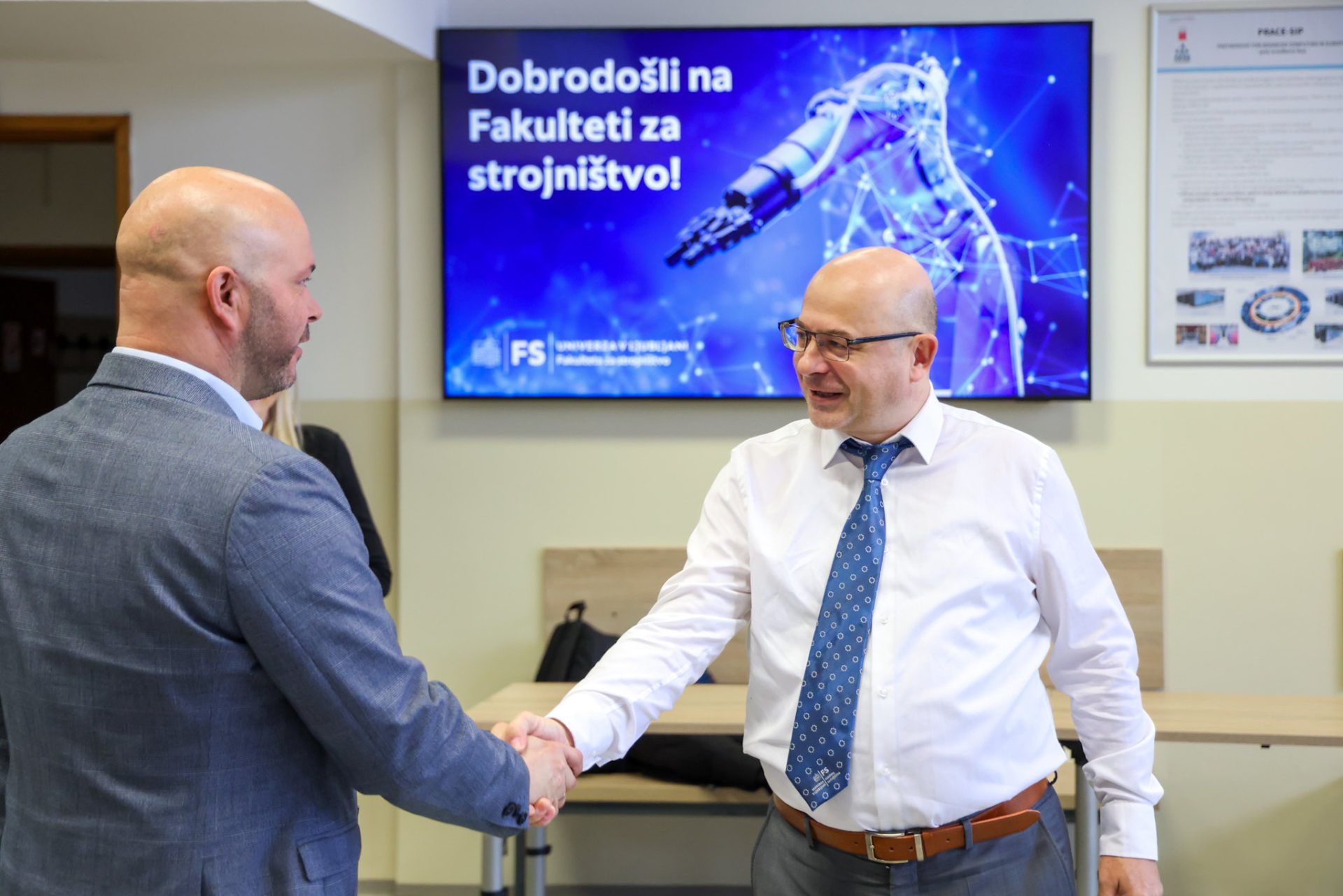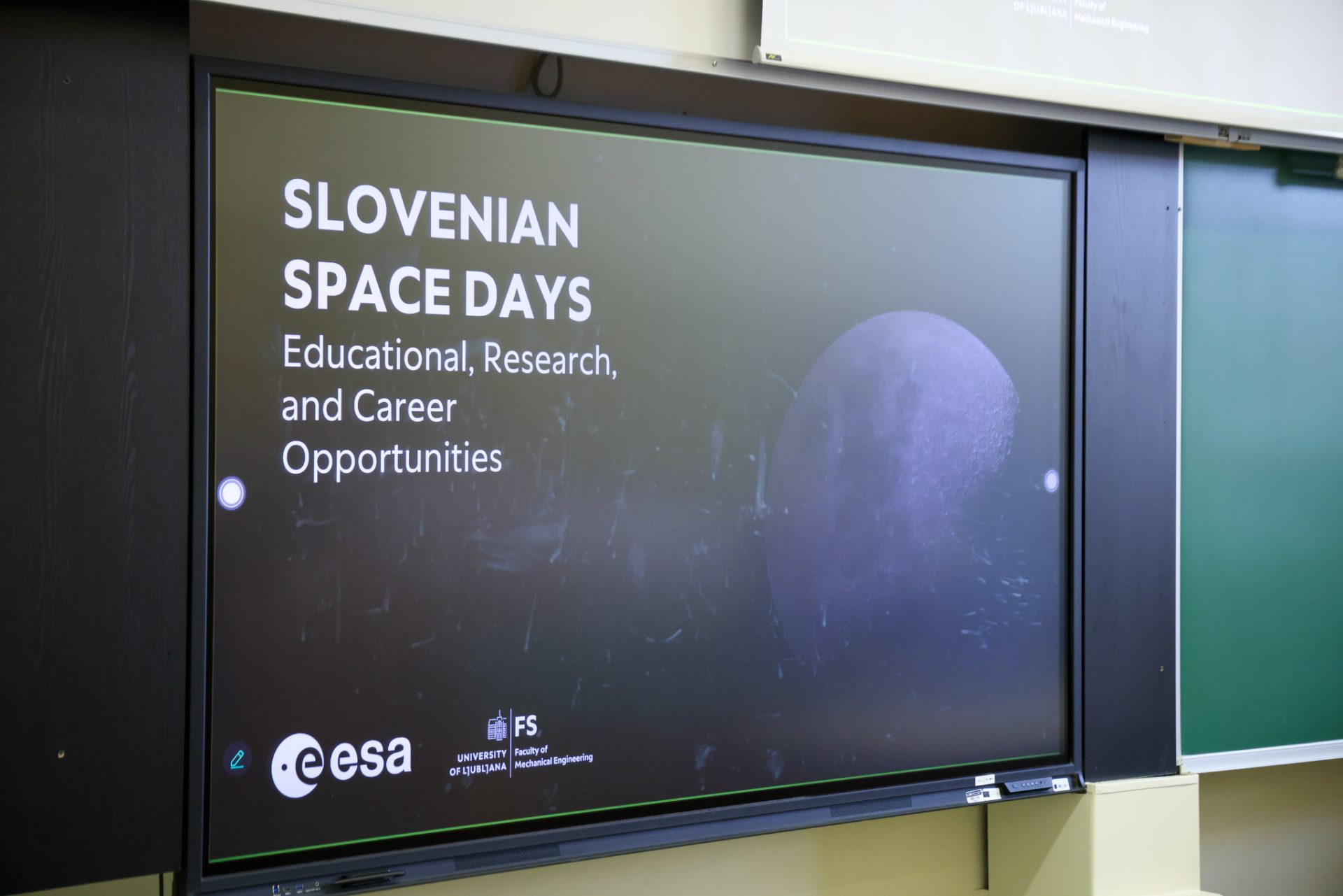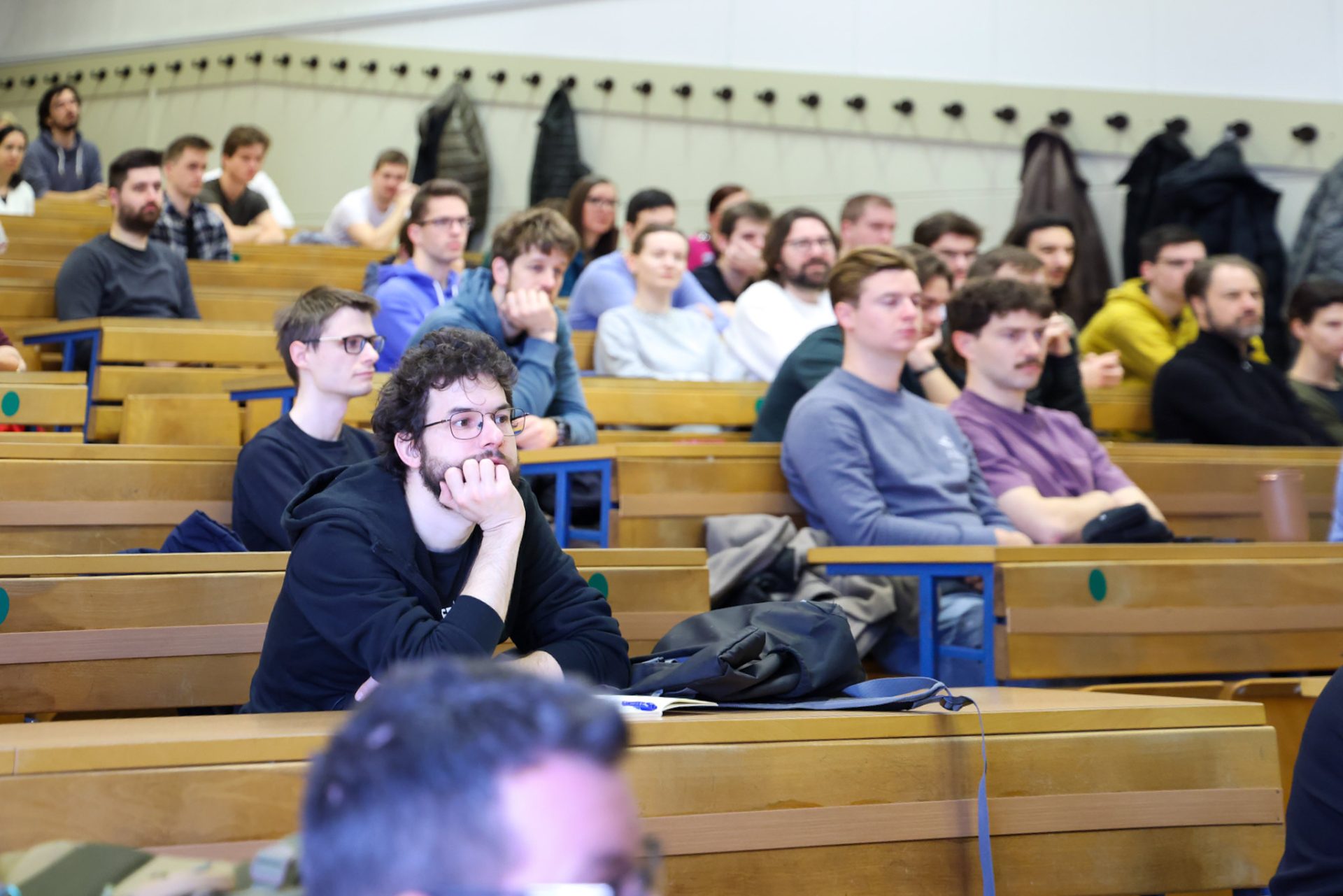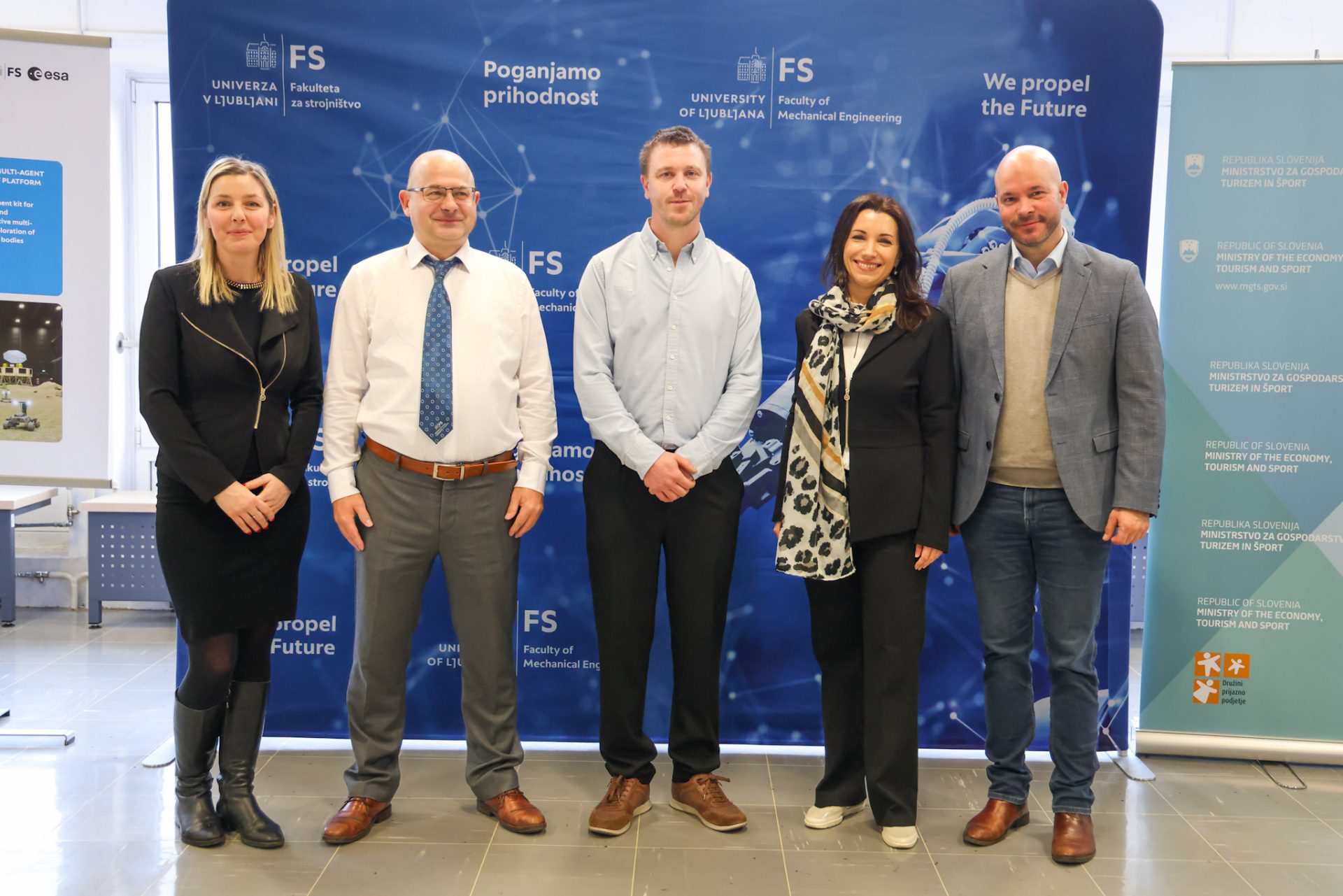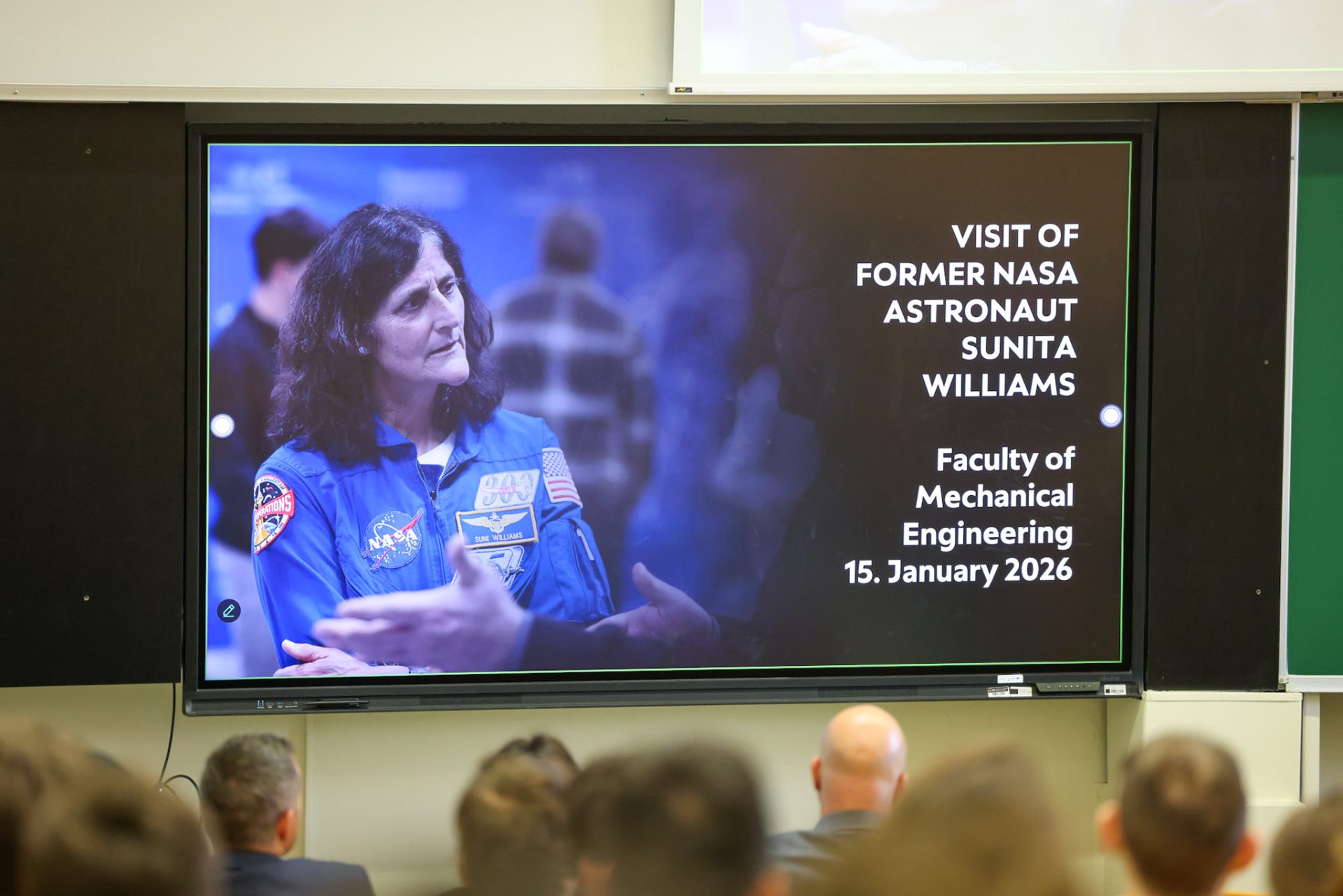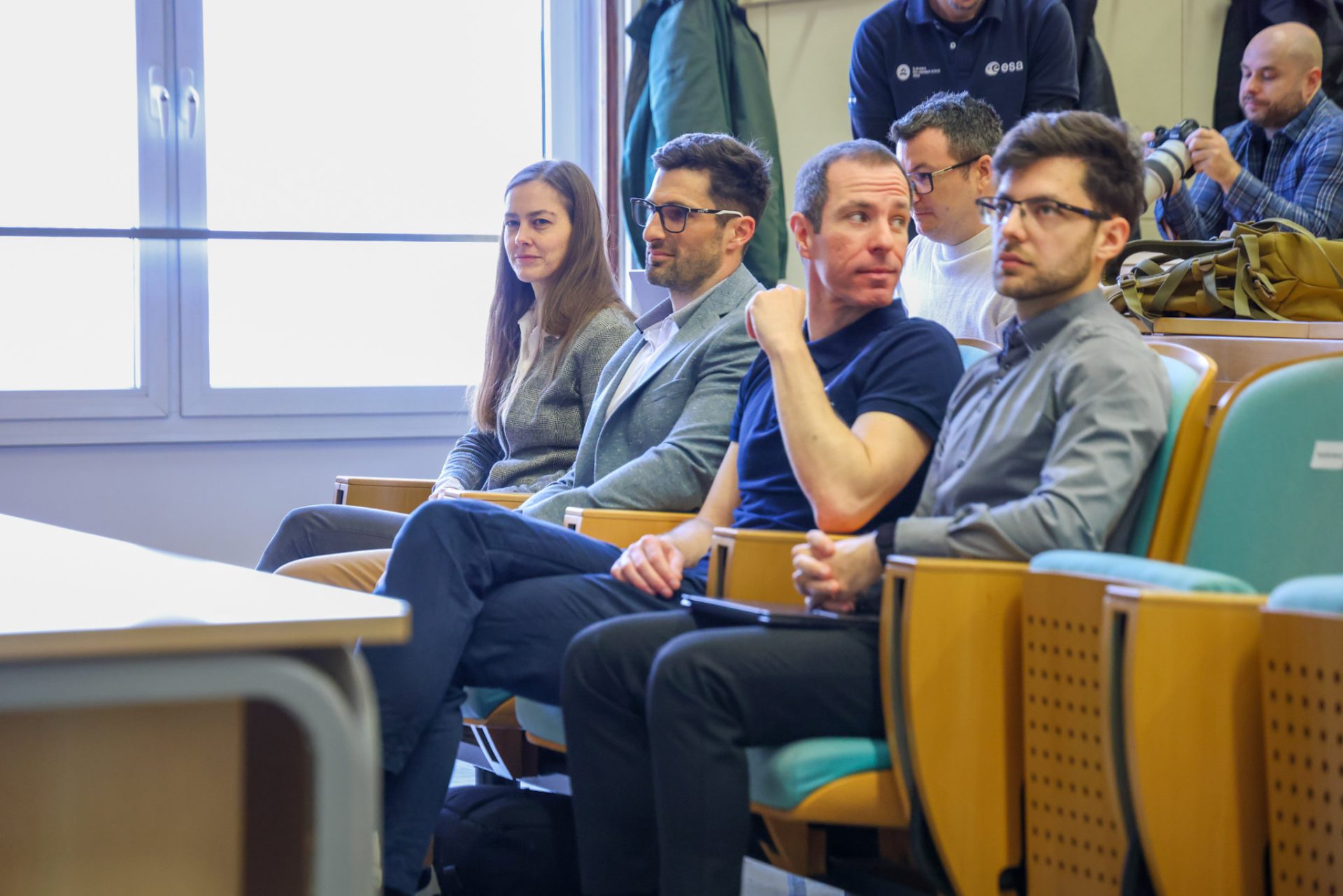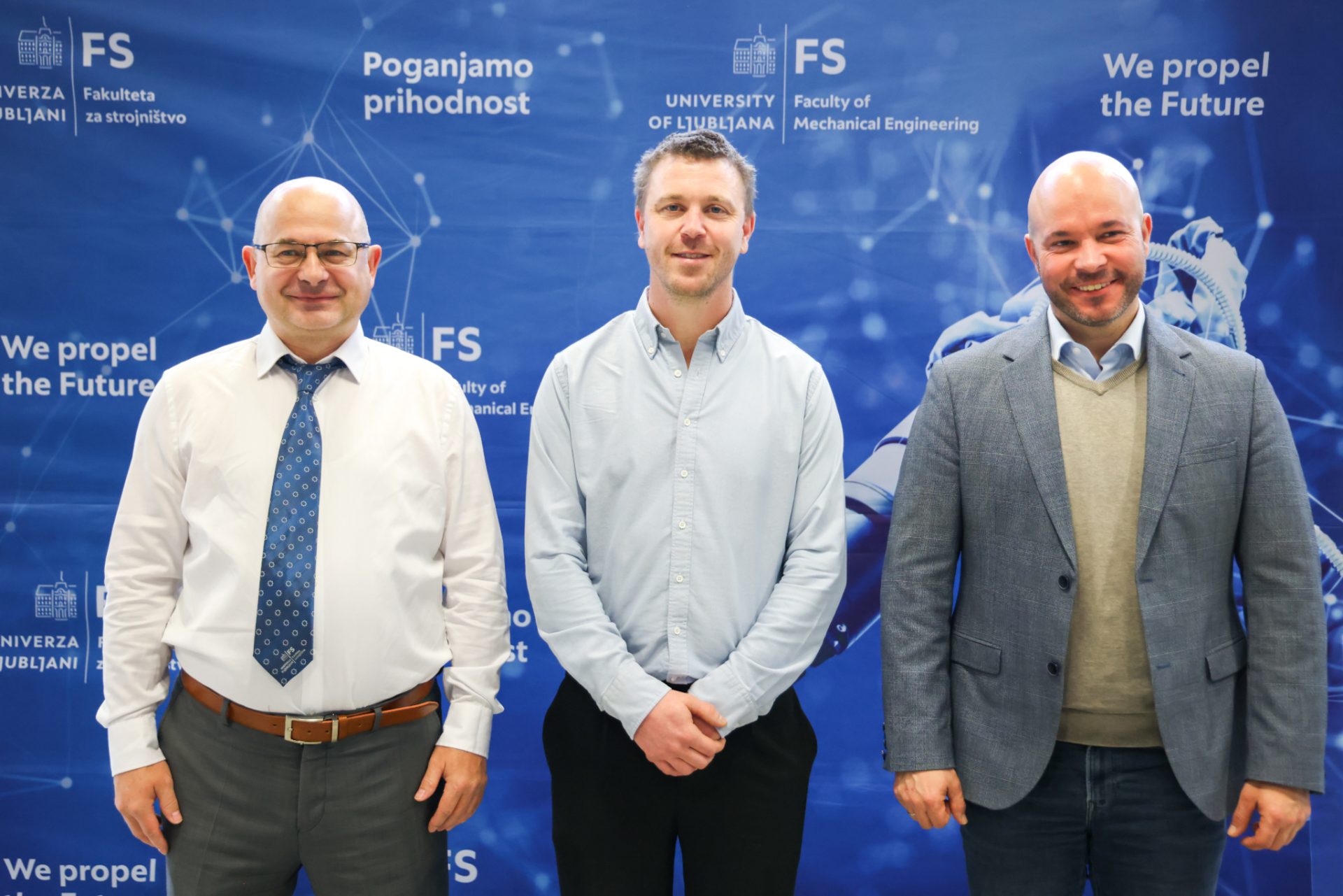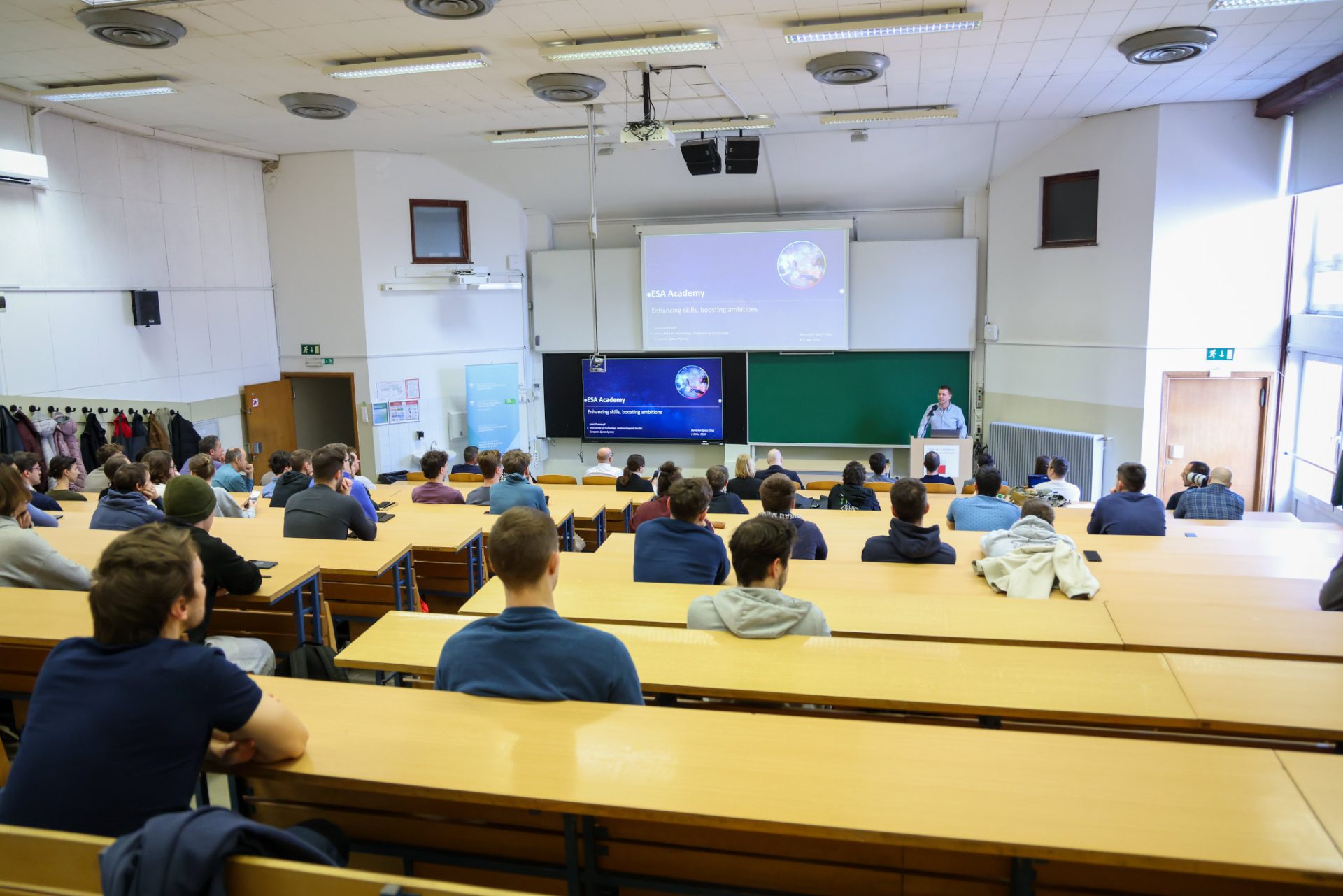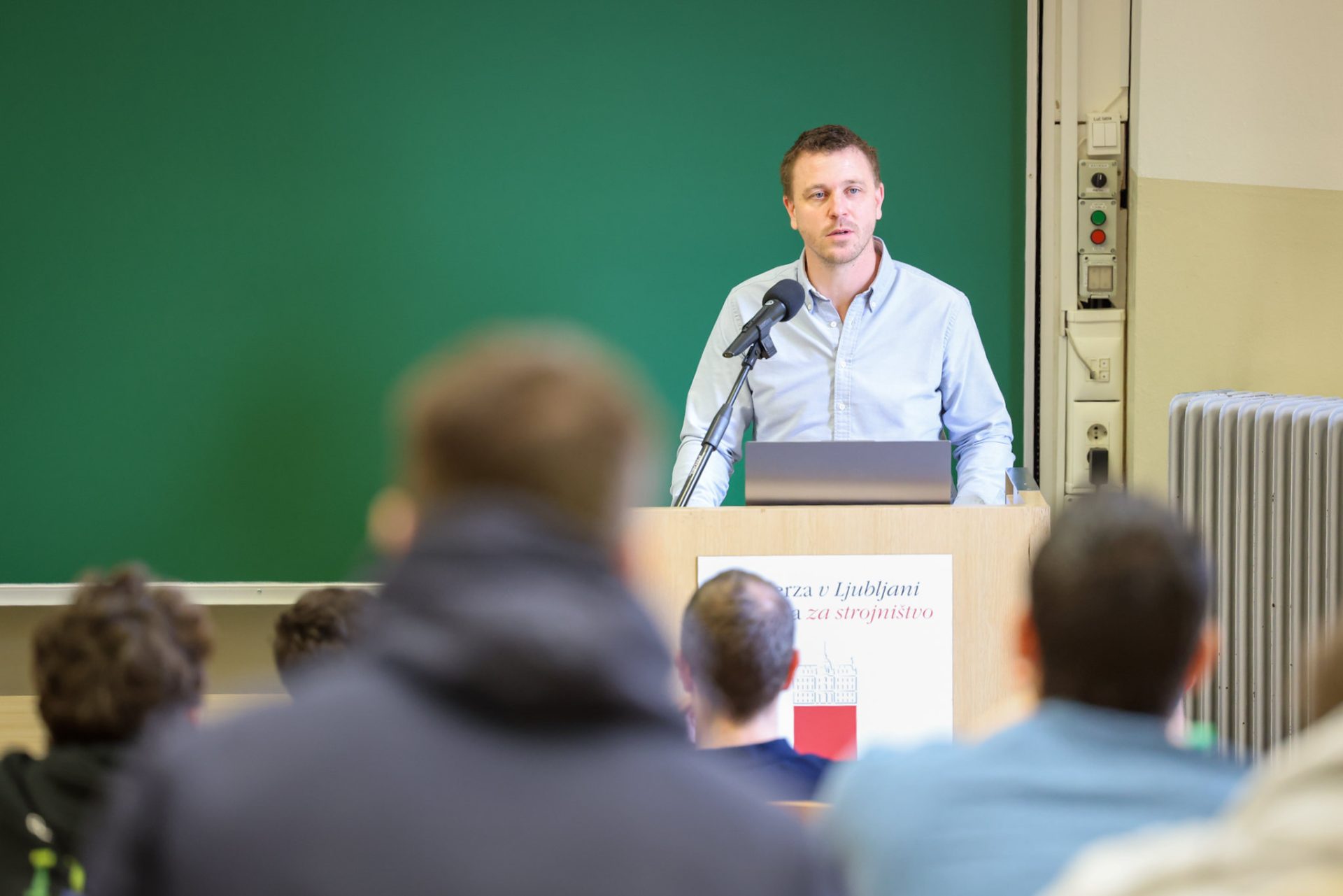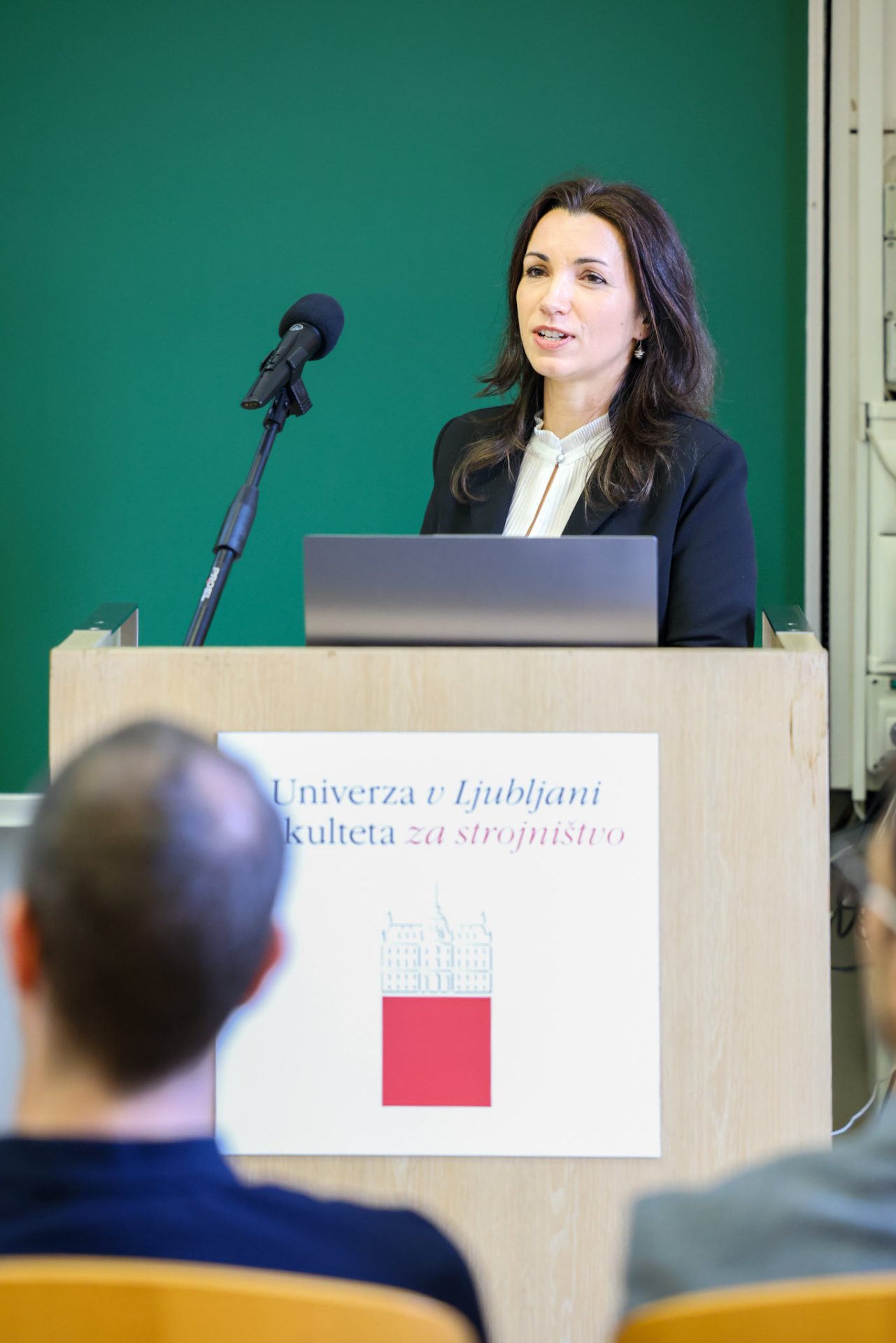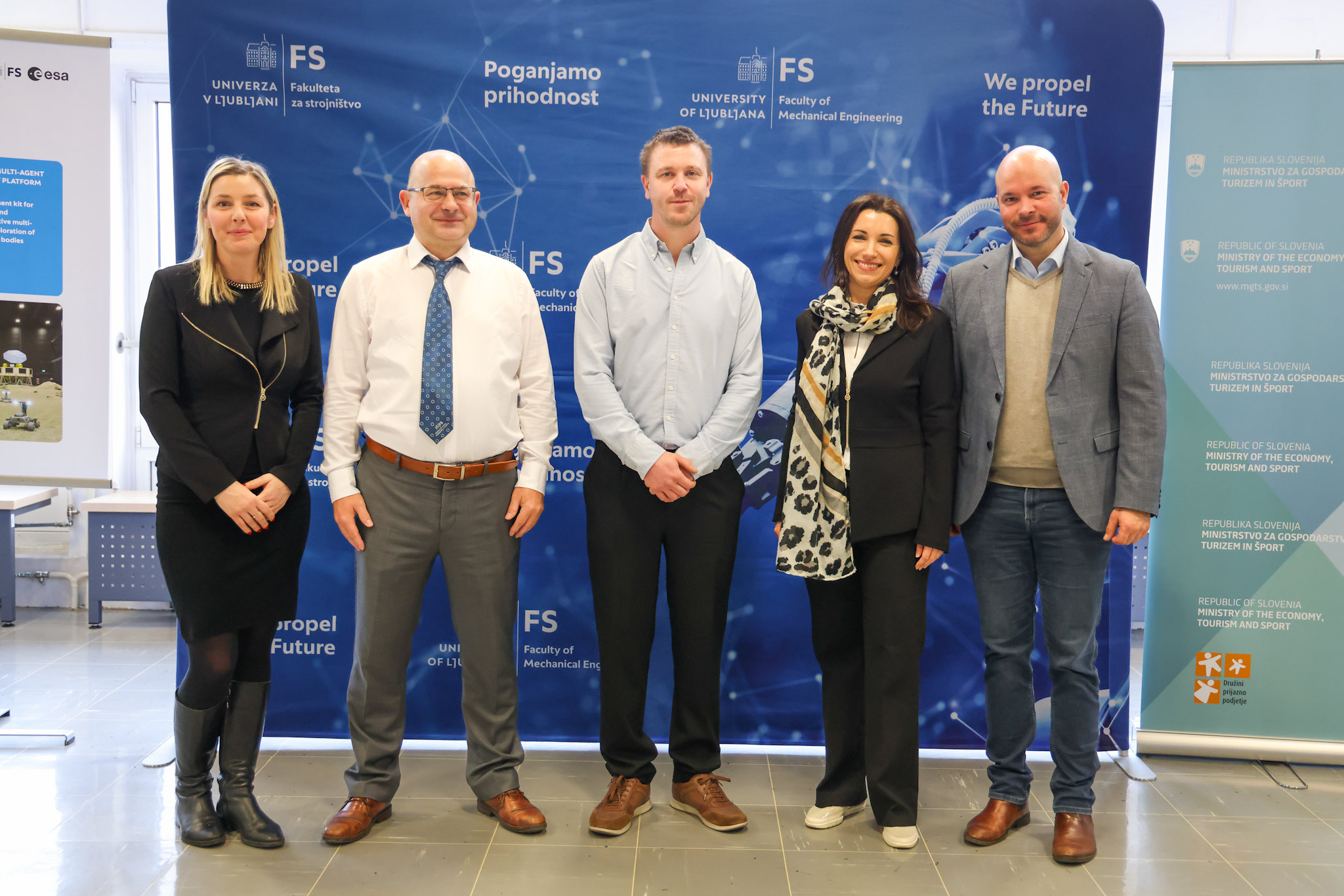
The Faculty of Mechanical Engineering at the University of Ljubljana today hosted one of the flagship events of the 2026 Slovenian Space Days, organised by the Ministry of the Economy, Tourism and Sport in cooperation with the European Space Agency (ESA), the Slovenian Space Office and Slovenian universities. Lecture hall V/8 was filled with students, researchers and young professionals interested in careers in the European space sector.
State Secretary Matevž Frangež underlined that the Slovenian Space Days open significant opportunities for young people in a rapidly evolving field:
“The Slovenian Space Days are an exceptional opportunity for young people to learn about educational, research and career pathways in the space sector and to take their first step in this direction. It is young people who, with their curiosity, knowledge and courage, will co‑create the future of Slovenia’s space sector and strengthen the country’s role in the global research arena.”
The focus on young talent and their potential aligns closely with the vision of the Faculty of Mechanical Engineering. Dean Prof. Jernej Klemenc noted: “At the UL Faculty of Mechanical Engineering, space is no longer the future – it is our development environment. We develop solutions for operation in microgravity and extreme conditions, from multi‑robot systems for lunar surface exploration to advanced technologies for monitoring astronauts’ health. Our goal is clear: to systematically translate knowledge and research into technologies that affirm Slovenia as a recognised and reliable partner in the European space domain.”
This emphasis on skills development and technology naturally guided the next part of the programme—a segment jointly curated by the European Space Agency and the Slovenian Space Office. Within this segment, the ESA Academy was presented by Joost Vanreusel, Head of Programme, and Jai Grover, Scientific Coordinator at ESI, who joined via video link. Vanreusel opened with the message: “The space sector is looking for people like you.” He stressed that Europe is actively seeking its next generation of space talent. Grover followed with concrete opportunities, useful resources and pathways for getting involved in the programme. Both speakers also outlined the application process, ESA’s expectations and practical tips for a successful application.
The event also highlighted the research excellence of the UL Faculty of Mechanical Engineering, where teams develop technologies for operation in microgravity and extreme environments. Three key development projects were presented, led by Assoc. Prof. Rok Vrabič – leading the development of an intelligent multi‑robot system for lunar surface exploration, PhD candidate Žan Boček – lead developer of the Cave 0g project on fluid dynamics and cavitation in microgravity and Asst. Prof. Janez Urevc – leading the development of a system for early detection of thrombosis in astronauts in microgravity
With this event, the Faculty strengthens its role as a hub where the next generation of engineers and experts is being formed—professionals who will help shape the future of European space technologies.
Photo: Živa Ogrin