



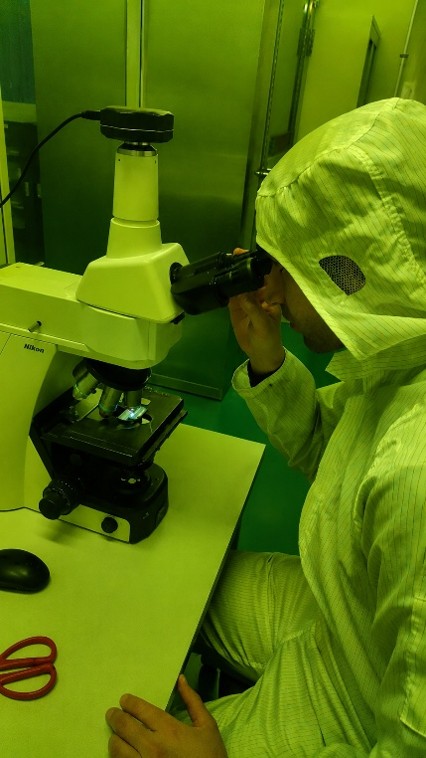
Researchers have developed a small and sensitive sensor that can detect very low levels of formaldehyde, a harmful pollutant often found in indoor air and industrial environments. This technology could help make future air-quality monitoring devices smaller, faster, and more suitable for everyday use.
Formaldehyde is a harmful gas that can be released from furniture, building materials, coatings, resins, and different industrial processes. Long-term exposure to formaldehyde may irritate the eyes, nose, and respiratory system and can pose other health risks like cancer. For this reason, reliable detection of formaldehyde is important in homes, workplaces, factories, and public spaces.
Today, formaldehyde is often measured using laboratory equipment. Although these methods are accurate, they usually require large instruments, trained specialists, and dedicated facilities. This makes them less practical for fast, portable, or continuous air-quality monitoring.
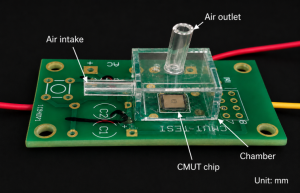
In this study, the research team developed a miniature sensor that can detect formaldehyde by measuring very small changes on the surface of a microchip. The chip was coated with a special sensing material. This coating helps capture formaldehyde molecules more effectively, allowing the sensor to detect even very low concentrations of the gas.
“In the future, this approach could contribute to the development of compact and portable air-quality monitoring devices for homes, workplaces, industrial safety, and environmental monitoring,” says author, Ehsan Kiani Harchegani, currently a member of the Laboratory for Alternative Technologies at the Faculty of Mechanical Engineering, University of Ljubljana.
This work was published in ACS Sensors, a leading journal in the field of sensor science published by the American Chemical Society. According to the latest available journal metrics, ACS Sensors has an Impact Factor of 10.9 and a CiteScore of 13.1.
The research was published in the prestigious scientific journal ACS Sensors, published by the American Chemical Society (ACS). According to the latest available bibliometric indicators, the journal has an Impact Factor of 10.9 and a CiteScore of 13.1.