



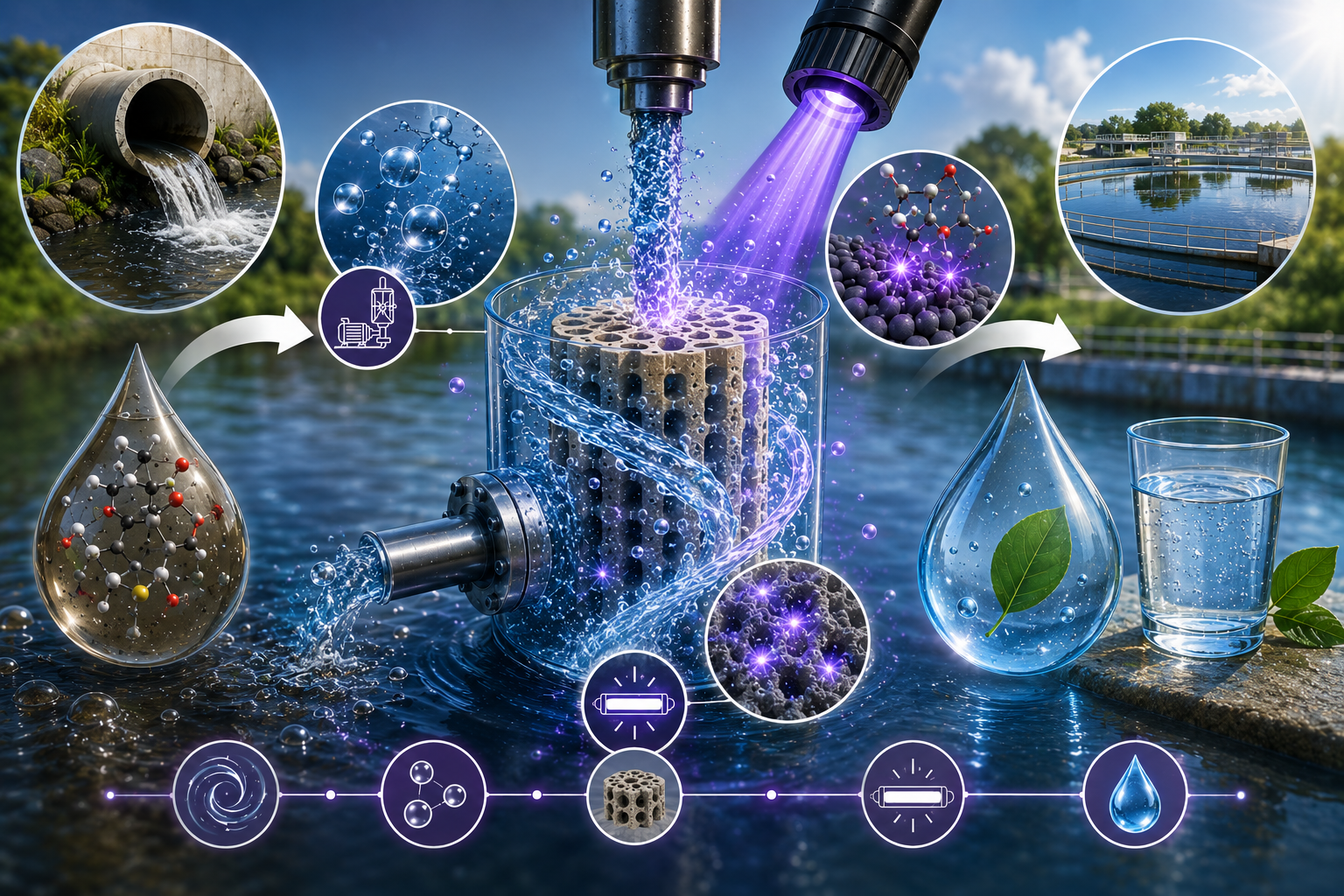
Bisphenols are hazardous micropollutants that can disrupt the hormonal systems of humans and animals and ultimately enter drinking water and the food chain. Researchers from the University of Ljubljana, the National Institute of Chemistry, and the Jožef Stefan Institute have developed an advanced approach for their removal from water using photocatalysis and hydrodynamic cavitation. The results of the study were published in the journal Ultrasonics Sonochemistry (IF = 9.7). The new technology represents an important step toward more efficient wastewater treatment and the future implementation of quaternary treatment in European wastewater treatment plants.
Micropollutants in water are becoming one of the major environmental challenges of modern society. Among them, bisphenols are particularly problematic. These chemicals are widely used in the production of plastics, packaging, and other industrial materials. As endocrine disruptors, they can affect the development, reproduction, and health of living organisms, while conventional wastewater treatment processes often fail to remove them efficiently. For this reason, the European Union is introducing requirements for quaternary wastewater treatment specifically aimed at the removal of micropollutants. Among the most promising technologies are advanced oxidation processes, which use highly reactive species to degrade persistent organic compounds. Researchers from the participating institutions investigated the combination of two advanced processes, photocatalysis and hydrodynamic cavitation, for the removal of five different bisphenols from drinking water and wastewater. They used titanium dioxide immobilized on ceramic monoliths, enabling a more stable and practical application of the system in real wastewater treatment plants. The results showed that some bisphenols could be almost completely removed within a short treatment time. The most successful results were achieved by combining hydrodynamic cavitation, photocatalysis, and the addition of hydrogen peroxide. The researchers also found that the composition of the water itself significantly affects treatment efficiency, as organic matter present in wastewater reduces the activity of reactive species. Nevertheless, the system demonstrated strong potential for future application in municipal wastewater treatment.
“Our goal is to develop technologies that enable efficient removal of micropollutants under real wastewater treatment plant conditions,” emphasize the authors of the study. An additional advantage of the developed system is the stability of the photocatalytic material, which retained its properties after several consecutive uses.
In the future, the researchers aim to further optimize the technology and bring it closer to industrial implementation in wastewater treatment plants, where it could significantly contribute to safer water and reduced environmental impact of micropollutants.
Article authors: Andraž Šuligoj, Mojca Zupanc, Jurij Gostiša, Pia Hrovat, Ester Heath, Nataša Novak Tušar, Urška Lavrenčič Štangar