



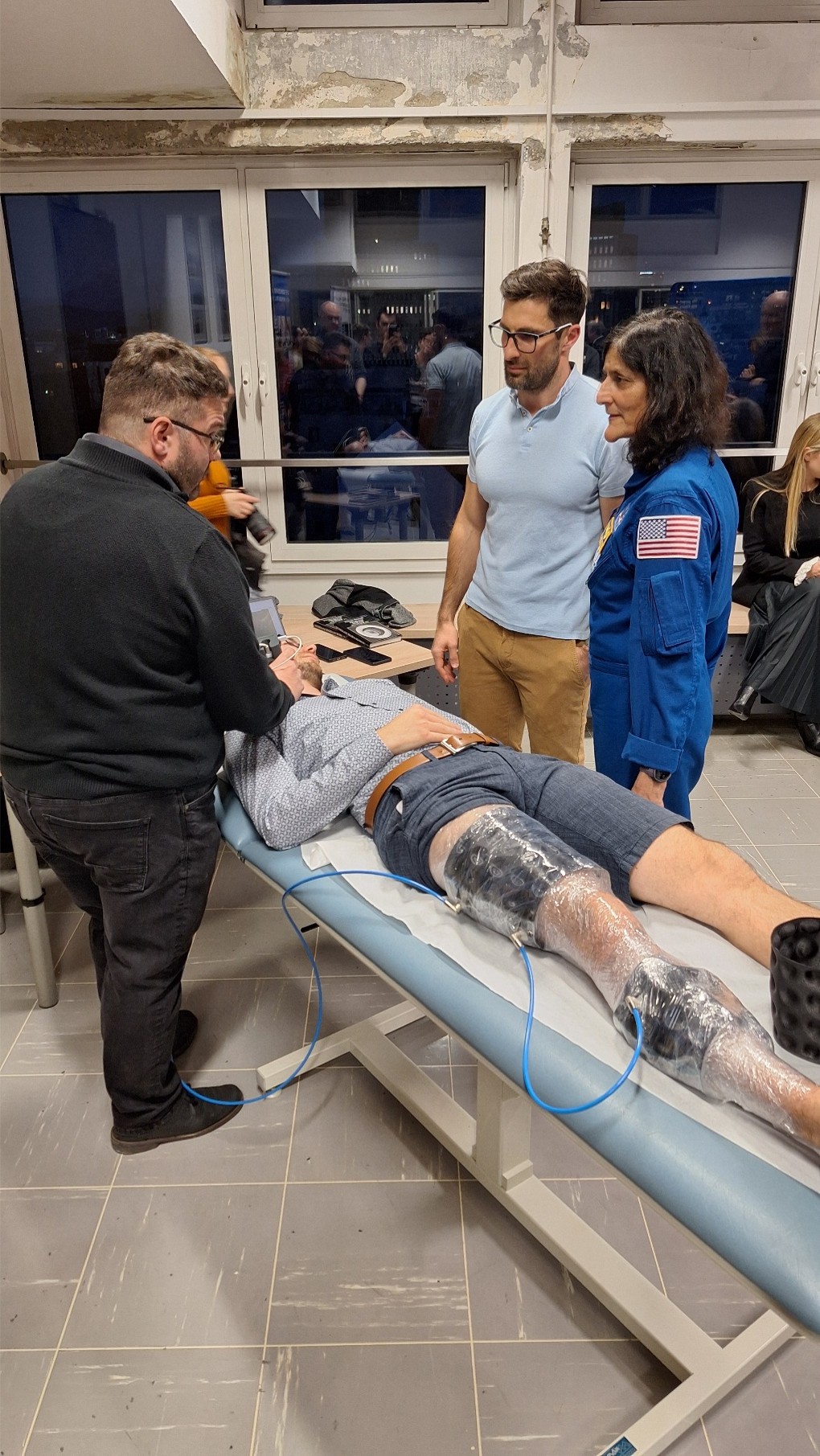
The Faculty of Mechanical Engineering at the University of Ljubljana, in collaboration with the European Space Agency (ESA), has launched the development of a system that will allow astronauts to independently assess their risk of venous thrombosis. The technology represents an important step toward autonomous healthcare during long-duration space missions, where immediate medical support from Earth may no longer be available.
In 2019, the first confirmed case of jugular vein thrombosis was reported aboard the International Space Station (ISS). The incident highlighted how prolonged exposure to microgravity can affect the venous system and pose potential health risks to crew members.
Today, diagnosing such conditions relies on ultrasound examinations performed by astronauts under direct guidance from physicians on Earth. While this approach is feasible in low Earth orbit, future missions to the Moon and Mars will face communication delays and limited connectivity, making greater medical autonomy essential.
Researchers at the Laboratory for Numerical Modelling and Simulation (LNMS) at the University of Ljubljana’s Faculty of Mechanical Engineering have been developing non-invasive technologies for monitoring jugular vein function for several years. As part of a new ESA-funded project led by the Faculty, the team will develop a system that enables astronauts to perform ultrasound examinations independently and automatically analyse the collected data directly aboard the International Space Station. The project is being carried out in collaboration with international partners from the space industry.
The system is based on compression ultrasound and enhances this established method by measuring the mechanical response of tissues and applying artificial intelligence algorithms to automatically identify the jugular vein. This approach simplifies the examination process and reduces the need for specialised medical expertise.
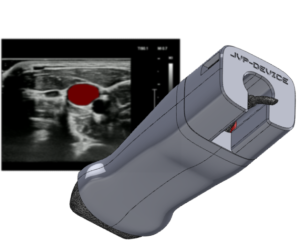
“Future missions to the Moon and Mars will not be able to rely on continuous medical support from Earth. Our goal is to develop technologies that allow astronauts to perform essential health assessments as independently as possible,” explain project leaders Andrej Bergauer, MD, and Asst. Prof. Janez Urevc.
The technology is expected to be tested aboard the International Space Station between 2028 and 2029. Beyond space exploration, the developed solution could also contribute to improved diagnosis of venous thrombosis and non-invasive monitoring of venous pressure in patients on Earth.