



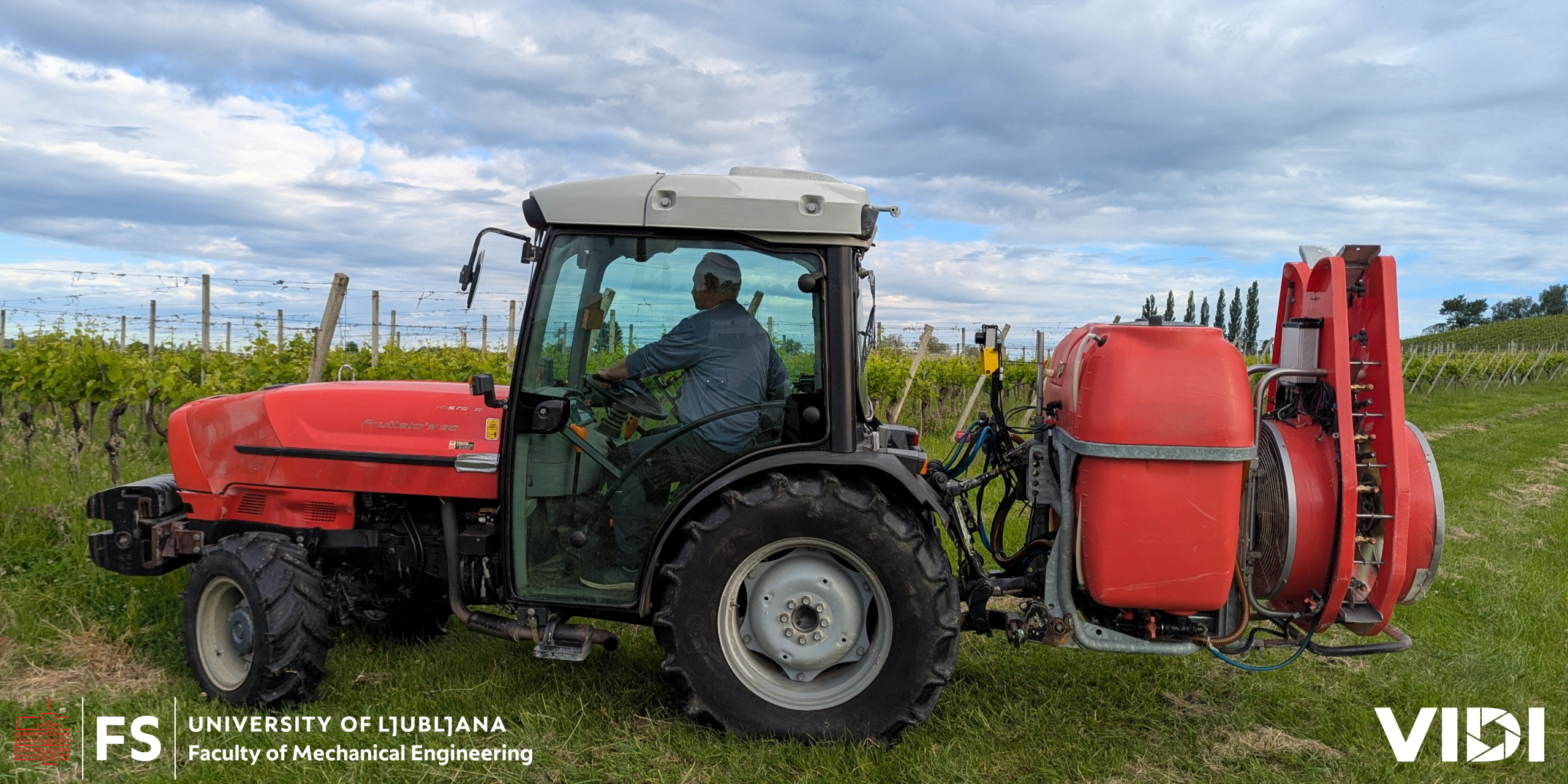
Researchers at the Faculty of Mechanical Engineering, University of Ljubljana, have developed VIDI, an upgrade that adds precision-spraying functionality to existing vineyard sprayers. Using LiDAR, the system detects the presence, density and shape of vegetation in real time, determines the required dose and adjusts the output of each individual nozzle accordingly.
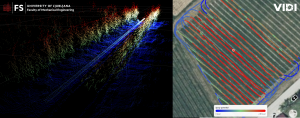
The development of the system builds on more than a decade of research and development in the field of spraying and the operation of agricultural machinery under real-world conditions. The starting point was a concrete challenge faced by users: conventional sprayers operate at a constant application rate, which is difficult to adjust manually during spraying to account for gaps, sparse vegetation or differences in plant size. As a result, sprayers often apply spray mixture even where there is not enough leaf area to retain the droplets, or where there are no plants at all. This leads to unnecessary spray mixture use, related costs and drift.
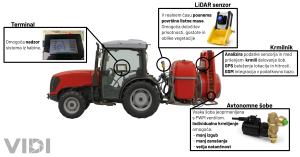
The VIDI retrofit adds vegetation detection and automatic spray adjustment at the level of each individual nozzle. As the sprayer moves through the vineyard, LiDAR detects the structure of the vegetation, while the controller processes the data, determines the required dose and sets the PWM valve duty cycle in real time for each nozzle individually. This allows the spray output to be adapted to the actual vegetation structure in the area covered by each nozzle. A key advantage of the solution is that it does not require replacement of the entire machine but is designed as a retrofit for existing sprayers.
Pilot systems are already in their second season of regular operation with three winegrowers, who together spray more than 150 hectares of vineyards. User experience shows that this approach can reduce spray mixture consumption by up to 20% while significantly easing the operator’s workload. The project supports sustainable development goals in the areas of responsible resource use, sustainable agriculture and innovation in agricultural machinery. The system is currently in the process of commercialisation and the formation of a spin-out company, with the next step being wider use in practice.